Athens is one of the few European capitals where world-class sightseeing genuinely costs zero. Between permanently free hilltop viewpoints, ancient neighborhoods that double as open-air museums, and a generous schedule of free-admission days at major archaeological sites, a visitor can fill two or three days without spending a single euro on entrance fees.
In this guide
The free layer is not the consolation prize here. Some of the city's most memorable experiences cost nothing at all: watching sunset from Areopagus Hill, getting lost in the whitewashed lanes of Anafiotika, browsing the Sunday flea market at Avyssinias Square. This guide covers every worthwhile free experience, from ancient sites to street art to day trips that need nothing more than a bus ticket. For a broader look at stretching a budget across accommodation, food, and transport, see our Athens on a budget guide.
What Ancient Sites Can You Visit for Free?
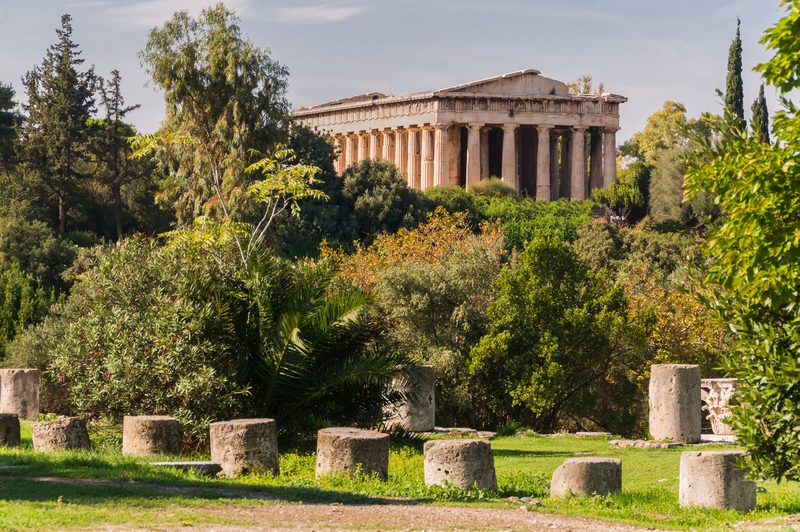
Athens has a two-tier system for free sightseeing: sites that are always free and never require a ticket, and major archaeological sites that open their gates for free on designated days throughout the year.
Always Free, No Ticket Required
Areopagus Hill (Mars Hill) sits directly below the Acropolis entrance and offers unobstructed views across the Ancient Agora to the city beyond. This rocky outcrop is where the Apostle Paul reportedly addressed the Athenians, and it requires no ticket at any time. It is open around the clock, though the rocks can be slippery, so wear proper shoes, especially at sunset when the marble gets crowded.
Pnyx Hill, a short walk west from Areopagus, is where the Athenian democratic assembly met in the 5th century BC. Up to 6,000 citizens gathered here to vote on laws and policy. Today it is a quiet, pine-shaded hilltop with views of the Acropolis from the west, a perspective most visitors miss entirely. Access is free at all times.
Hadrian's Arch stands at the junction of Amalias Avenue and Dionysiou Areopagitou Street, marking the boundary between ancient Athens and Hadrian's Roman city. There is no fence and no ticket. It is a street-level monument you can walk right up to. The Temple of Olympian Zeus is visible through its frame, making it one of the most photographed spots in Athens.
The Panathenaic Stadium (exterior) can be appreciated from the surrounding paths and hillside without paying the EUR 10 entrance fee. The view from the hill above gives a clear sense of the scale of the place, the only stadium in the world built entirely of marble and the site of the first modern Olympics in 1896.
Free on Designated Days
The Greek Ministry of Culture opens all state-run archaeological sites and museums free of charge on the first and third Sundays of every month from November through March. This includes the heavyweights:
- The Acropolis (normally EUR 30)
- The Ancient Agora and Temple of Hephaestus (normally EUR 20)
- The Roman Agora and Tower of the Winds (normally EUR 10)
- Hadrian's Library (normally EUR 10)
- Temple of Olympian Zeus (normally EUR 20)
- Kerameikos Cemetery (normally EUR 10)
- The National Archaeological Museum (normally EUR 20)
Additional free days throughout the year apply regardless of season:
- March 6: Melina Mercouri Memorial Day
- April 18: International Monuments Day
- May 18: International Museum Day
- Last weekend of September: European Heritage Days
- October 28: Ochi Day (Greek national holiday)
- Full Moon night in August: sites stay open into the evening, free of charge
On free-admission days, tickets must be collected in person at the site's ticket office. The online e-ticketing system closes for those dates. Arrive early at the Acropolis, as free days draw larger crowds than usual. The gates open at 8:00 and the quietest window is typically the first hour.
Who gets in free year-round: EU and EEA citizens under 25 with valid ID receive free admission to all state-run sites every day of the year. Non-EU visitors under 18 also enter free.
Time a winter visit for a first or third Sunday of the month and you can see the Acropolis, Ancient Agora, Temple of Zeus, Kerameikos, and the National Archaeological Museum without paying a cent in entrance fees. That is easily EUR 100 of sightseeing for nothing.
Note: The Acropolis Museum is a separate institution and is not included in the free-admission programme. It charges EUR 15 in summer and EUR 5 from November through March, with free entry on March 25 (Greek Independence Day) and October 28.
What Are the Best Free Viewpoints?
Athens is built around hills, and climbing them costs nothing. These five viewpoints are among the best urban panoramas in Europe.
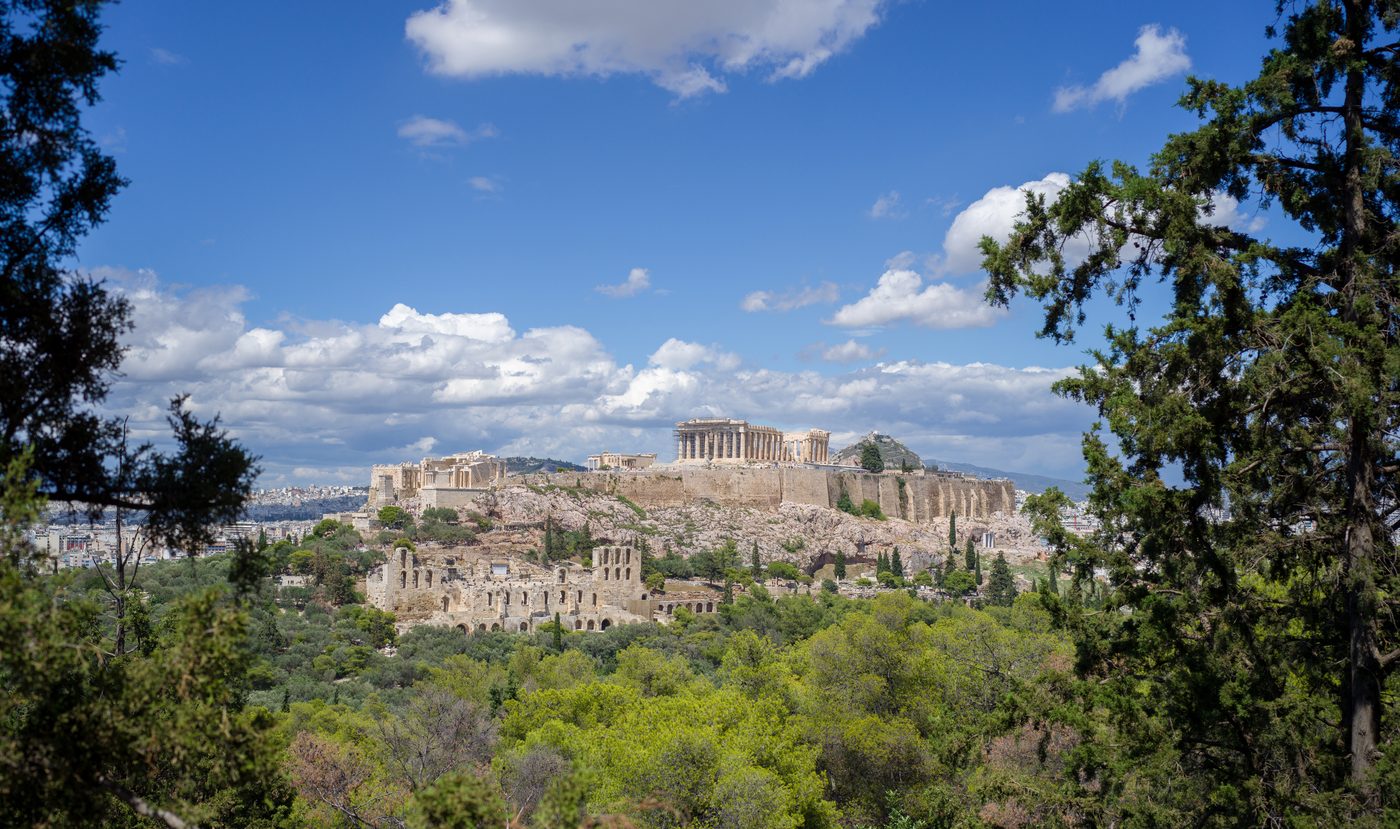
Areopagus Hill is the most popular sunset viewpoint in Athens, and for good reason. The marble-topped rock sits at the foot of the Acropolis, looking out over the Ancient Agora, the Temple of Hephaestus, and the sprawling city below. It gets packed at sunset in summer, so arrive 30 to 45 minutes before golden hour to claim a spot. Early morning is equally striking and nearly empty. Access is from the path leading to the Acropolis ticket office on Dionysiou Areopagitou Street.
Filopappou Hill offers a calmer alternative. Located southwest of the Acropolis, this wooded hill has multiple trails winding through pine and cypress trees to the Filopappos Monument at the summit (a 2nd-century Roman funerary monument). The views take in the Parthenon from an angle that few tourists see, with the Saronic Gulf visible on clear days. It is particularly beautiful in spring when wildflowers are in bloom. Access from Dionysiou Areopagitou Street, near the Acropolis Metro station. Open at all hours.
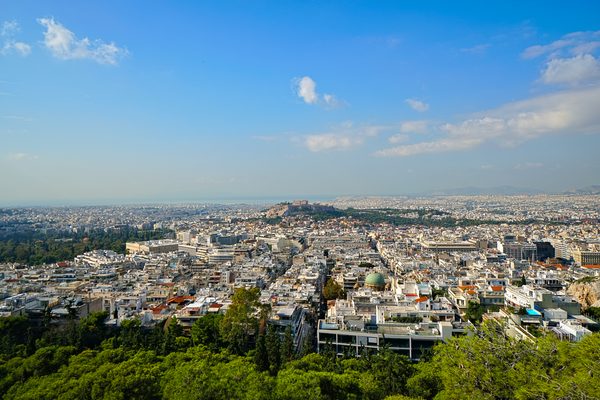
Lycabettus Hill is the highest point in central Athens at 277 metres, and the views are accordingly panoramic: the Acropolis, the city grid, the port of Piraeus, the Saronic islands, and on clear days, the mountains of the Peloponnese. The funicular railway costs EUR 10 return, but the footpath from Kolonaki is free and takes about 30 minutes at a steady pace. Start from the top of Ploutarchou Street or Aristippou Street. The small Chapel of St. George sits at the summit. Sunset from here is spectacular, but bring a layer. It is noticeably windier than the lower hills.
Strefi Hill in Exarchia is the locals' viewpoint. At 155 metres, it is lower than Lycabettus but offers a similar perspective without the tourist crowds. Paths wind through scrubby greenery to a summit with views of the Acropolis and Lycabettus. There is a small open-air theatre that hosts concerts in summer and a basketball court at the base. The hill has a pleasantly rough-around-the-edges character that matches its neighbourhood.
Pnyx Hill, besides its historical significance as the birthplace of democracy, provides a western-facing view of the Acropolis that catches the afternoon and evening light beautifully. It is less visited than Areopagus despite being a ten-minute walk away, making it a good fallback when the more famous viewpoint is too crowded.
Which Neighborhoods Are Worth Exploring on Foot?
Walking is the best way to experience Athens, and the historic centre is compact enough that all of these neighbourhoods connect within a 30-minute radius on foot. None require a ticket or a guide: just comfortable shoes and curiosity.
Plaka is the oldest continuously inhabited district in Athens, draped across the northern and eastern slopes of the Acropolis. Narrow pedestrian streets lined with neoclassical houses, bougainvillea, and small Byzantine churches. The restaurant strip along Adrianou Street is touristy, but duck into the side streets for genuine neighbourhood life: elderly residents watering balcony gardens, cats on doorsteps, quiet squares with a single cafe. Best in early morning or after 8pm when day-trippers have gone.
Anafiotika is Plaka's secret. Tucked into the rocky north slope of the Acropolis, this tiny cluster of whitewashed cubic houses was built in the 1840s and 1850s by stonemasons from the Cycladic island of Anafi who came to Athens to work on King Otto's palace. They built what they knew: island-style houses with blue doors, narrow stepped alleys, and cats everywhere. The result is a pocket of the Aegean islands in the middle of Athens. It takes fifteen minutes to walk through, but it is one of the most photogenic spots in the city. Enter from the upper end of Stratonos Street.
Monastiraki is the noisy, energetic heart of Athens. The square itself sits between the ancient Agora, the Tzistarakis Mosque (now a ceramics museum), and the metro station, with a direct sightline up to the Acropolis. The streets radiating outward are packed with shops, street food vendors, and buskers. Even if you buy nothing, the people-watching is first-rate. The area around Avyssinias Square transitions into the flea market zone, covered in the markets section below.
Psyrri extends northwest of Monastiraki and has transformed over the past two decades from a rough industrial quarter into one of the city's most interesting streetscapes. By day, it is quiet enough to appreciate the street art (more on that below) and browse the remaining traditional workshops. Leather craftsmen, metalworkers, and instrument makers still operate here alongside trendy cocktail bars. By night, especially Thursday through Saturday, the streets fill with live music spilling from tavernas and bars. Walk along Sarri Street, Protogenous Street, and the alleys between them.
Exarchia, north of the university campus, is Athens' countercultural heart. The neighbourhood is known for its anarchist politics and occasional protests, but it is also home to the city's best independent bookshops, vinyl record stores, and a cafe culture that skews intellectual. The buildings are covered in political murals and graffiti that range from angry slogans to sophisticated street art. Plateia Exarchion (the central square) is the gathering point. For a full account of the neighbourhood's character and safety, see our safety guide.
Koukaki and Makrigianni, south of the Acropolis, get less foot traffic but reward a wander with tree-lined streets and neighbourhood tavernas. The Dionysiou Areopagitou pedestrian promenade along the southern base of the Acropolis is one of the finest urban walks in Europe, passing the Acropolis Museum and the Odeon of Herodes Atticus before connecting to Filopappou Hill.
What Free Markets and Street Life Should You See?
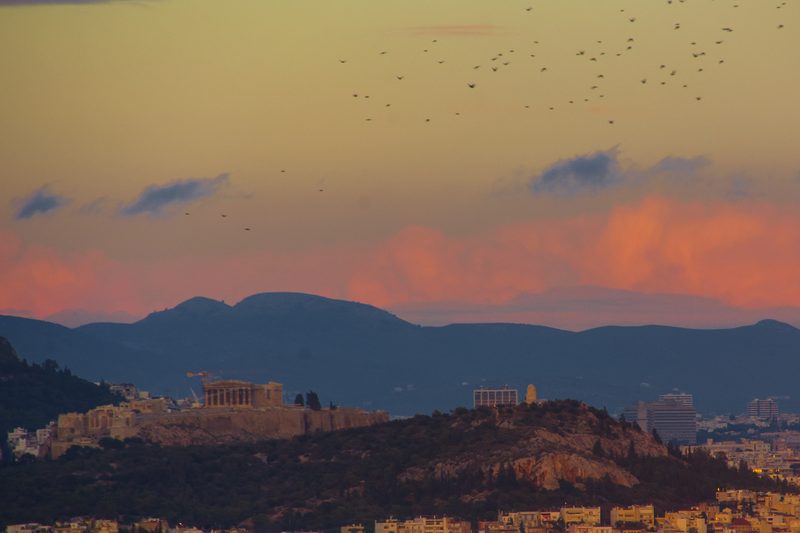
The Monastiraki Flea Market operates daily but comes alive on Sunday mornings, when street vendors set up along Ifestou Street, Avyssinias Square, and the surrounding alleys. You will find everything from genuine antiques and vintage furniture to old magazines, second-hand books, vinyl records, military surplus, and assorted junk. The permanent shops sell leather goods, musical instruments, and reproductions of ancient art. Sunday mornings get crowded by 11:00, so arrive earlier for the best browsing. Even if you buy nothing, the atmosphere is pure Athens: loud, chaotic, and endlessly interesting.
Varvakios Agora (Athens Central Market) is the city's main food market, located on Athinas Street between Monastiraki and Omonia. Established in 1886, the market is split into two halls: the meat market on the south side (an assault on the senses: whole carcasses hanging, butchers shouting, blood on the floor) and the fish and vegetable market on the north. The small tavernas inside the meat hall serve traditional dishes at rock-bottom prices: patsas (tripe soup), grilled meats, and bean stews for EUR 5-8 a plate. Browsing the market is free and worth it for the atmosphere alone. For more on Athens' food scene, see our food tours guide.
Ermou Street connects Syntagma Square to Monastiraki and is the main commercial pedestrian street. The shopping itself is standard high-street chains, but the walk passes the 11th-century Church of Panagia Kapnikarea, a Byzantine gem marooned in the middle of a modern shopping street, with free entry and a dark, icon-filled interior that rewards a five-minute detour.
Where Can You Find Free Parks and Green Spaces?
Athens is drier and more concrete-heavy than most European capitals, which makes its green spaces all the more valuable.
The National Garden stretches 15 hectares behind the Parliament building between Syntagma and the Zappeion. Originally the royal palace garden, it contains shaded walking paths, duck ponds, a small free zoo (goats, peacocks, chickens, a turtle pond), and ancient ruins half-hidden in the undergrowth. Open daily 7:00 to 22:00, and essential shade during Athens' fierce summer afternoons. The connected Zappeion gardens add formal plantings and an open-air cafe.
Filopappou Hill functions as both a viewpoint and a park. Its paths wind through pine and olive trees, past the ancient prison where Socrates is traditionally said to have been held, and up to the summit monument. It is the closest thing to countryside walking within central Athens.
Stavros Niarchos Foundation Cultural Centre (SNFCC) in Kallithea, about 4 kilometres south of the centre, houses the National Library and Greek National Opera in a Renzo Piano-designed complex. The real draw is the 21-hectare Stavros Niarchos Park, the largest publicly accessible Mediterranean garden in the world, with a labyrinth, running track, outdoor gym, and water jets for children. The SNFCC hosts a continuous programme of free events: outdoor cinema screenings, concerts, yoga sessions, and seasonal festivals. Reach it by bus from Syntagma (route 550) or tram to Tzitzifies.
Pedion Areos is Athens' largest urban park, near Victoria Metro station. Created to honour heroes of the Greek War of Independence, it contains monuments, mature plane trees, a playground, and the open-air Aliki Theatre that hosts free summer performances. Less manicured than the National Garden but bigger and quieter.
What Free Cultural Experiences Are Available?
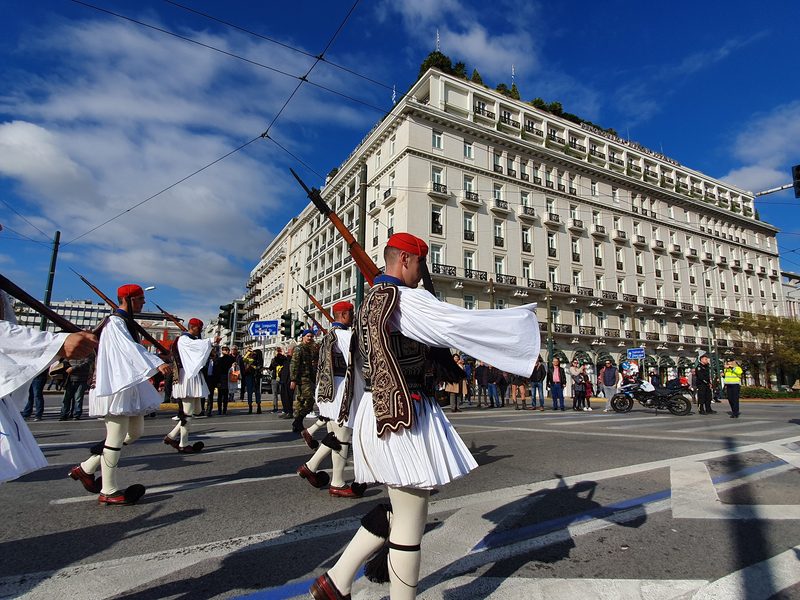
The Changing of the Guard at the Tomb of the Unknown Soldier in Syntagma Square costs nothing. A basic ceremony with two Evzones (the Presidential Guard in kilts, pompom shoes, and tasselled caps) takes place every hour on the hour. The Sunday 11:00 ceremony is the main event: a full platoon marches from their barracks along Vasilissis Sofias Avenue, accompanied by a military band, for a formal change of guard lasting about 30 minutes. Arrive by 10:40 for a good vantage point.
Street art has become one of Athens' defining visual features, born from the economic crisis of 2010-2018 and sustained by a thriving community of Greek and international artists. The best neighbourhoods for street art exploration:
- Psyrri: Look for the mural of Loukanikos, the protest dog who became a symbol of the Greek crisis. The streets around Sarri and Protogenous are dense with large-scale works.
- Metaxourgeio: Home to some of Athens' most acclaimed murals, including WD (Wild Drawing)'s "Knowledge Speaks, Wisdom Listens", an anamorphic owl symbolising Athena. The area around Kerameikou and Leonidou streets is particularly rich.
- Gazi: The old tram depot (OSY) features INO's "Last Supper in Athens," and the streets around Technopolis have an evolving gallery of large-scale works.
- Exarchia: More politically charged, with walls covered in everything from anarchist slogans to sophisticated political commentary. The art here is rawer and less curated than in other neighbourhoods.
Byzantine churches dot the city centre and are free to enter. The Church of Panagia Kapnikarea on Ermou Street dates to approximately 1050 AD and contains frescoes by the celebrated 20th-century hagiographer Fotis Kontoglou. The Church of Panagia Gorgoepikoos (known as the Little Metropolis), next to the Metropolitan Cathedral on Mitropoleos Square, is a tiny 12th-century church built entirely from ancient marble blocks. Its walls are studded with Classical, Roman, and Byzantine reliefs that make it a museum of decorative stonework in its own right. Both are working churches, so dress modestly (covered shoulders and knees).
Technopolis in Gazi, the converted 19th-century gasworks, hosts regular free exhibitions and cultural events. The industrial architecture alone makes a visit worthwhile.
Sunset spots beyond the hilltop viewpoints: the Monastiraki Metro station rooftop has a public area with Acropolis views (no purchase necessary), and the Dionysiou Areopagitou promenade near the Odeon of Herodes Atticus catches golden hour light on the Acropolis walls beautifully.
What Free Day Trips Can You Take From Athens?
The mountains and coastline surrounding Athens offer genuine free day trips where the only cost is a bus or tram ticket. On designated free-admission days, even the archaeological sites beyond Athens open their gates.
Free Hikes
Mount Hymettus rises directly east of Athens and is reachable by city bus. Trails wind through pine forest with views across the Attic plain to the Saronic Gulf. The mountain is known for its honey (hymettus is the ancient Greek word for the wild herbs that grow here) and for catching the famous violet light at sunset that gave Athens its classical epithet "violet-crowned." Half-day hike, free access.
Mount Penteli to the northeast is where the marble for the Parthenon was quarried. The ancient quarries are still visible, and trails pass through forested slopes with cooler temperatures than the city below. Reachable by suburban bus from central Athens.
Mount Parnitha is the highest mountain near Athens (1,413 metres) and a designated national park. Dense fir forest, marked trails, and a welcome escape from summer heat. Bus to Thrakomakedones reaches the trailheads. Full-day excursion.
Tatoi Palace forest is the former royal summer estate north of Athens, now a public park with walking trails through ancient oak and pine woodland. The palace itself is closed for restoration, but the grounds and forest paths are open and free.
Free Beaches
The Athens Riviera coastline stretches south from Faliro to Vouliagmeni, all reachable by tram (EUR 1.20) or bus. Free public beaches at Kavouri, Alimos, and Glyfada require nothing more than a towel. These are urban beaches rather than wilderness, but the water is clean and the Saronic Gulf views are excellent. Pack a picnic and the day costs almost nothing beyond transport.
Schinias Beach near Marathon is the best natural beach in the Athens region, a long pine-backed strand in a protected national park with shallow, warm water. The KTEL bus from Pedion Areos costs about EUR 4-5 each way. Combine it with the free Marathon burial mound (the Tumulus) for a history-and-beach day.
Archaeological Sites on Free Days
On the designated free-admission days listed above, the free-entry policy extends beyond Athens to all state-run sites in Greece. Some particularly worthwhile day trips on these dates:
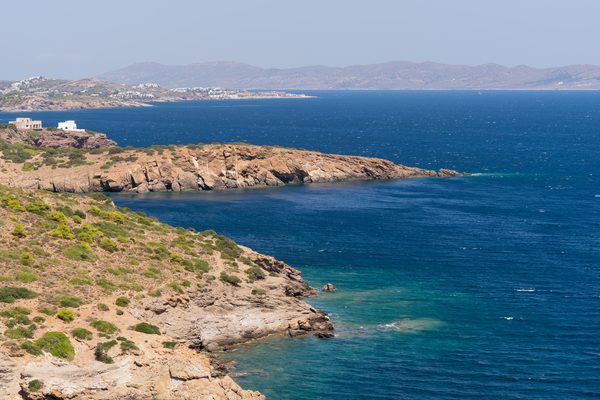
- Cape Sounion and the Temple of Poseidon. Normally EUR 10, free on designated days. The KTEL bus from Pedion Areos costs about EUR 7 each way along a coast road that hugs the sea most of the way. Time it for late afternoon to catch sunset over the Aegean from the temple cliff.
- Marathon Battlefield. The burial tumulus is always free. The on-site museum (normally EUR 5) opens free on the first and third Sundays November through March and on other designated days.
- Eleusis (Elefsina). Site of the ancient Mysteries, just 20 kilometres west of Athens by city bus (EUR 1.20). The archaeological site (normally EUR 10) goes free on designated days.
- Ancient Corinth. Reachable by KTEL bus (about EUR 9 each way). The site and museum (normally EUR 15) are free on designated days, making the total cost of the trip about EUR 18 in transport alone.
If you are visiting Athens in winter and can schedule around a first or third Sunday of the month, a single free day can realistically save EUR 50-80 in entrance fees across the Acropolis, Ancient Agora, a museum, and a day trip site.
How Do You Plan a Free Day in Athens?
Here is a sample itinerary combining the best free experiences into a full day. This works any day of the week, but is particularly rewarding on a Sunday morning or a designated free-admission day.
08:00: National Garden. Peaceful morning walk through shaded paths, duck ponds, and the small free zoo. Exit through the Zappeion gardens toward the Temple of Olympian Zeus.
09:00: Hadrian's Arch and Temple of Zeus (exterior). Photos at the arch, views of the columns. On a free-admission day, enter the site; otherwise, the exterior view is nearly as impressive.
09:30: Plaka and Anafiotika. Wind through Plaka's quiet morning streets up to Anafiotika's whitewashed lanes. Best in early light with few tourists.
10:30: Areopagus Hill and Pnyx. The classic panoramic view, then west to Pnyx. On a free day, this is the time to visit the Acropolis itself (crowd thins mid-morning).
11:00: Filopappou Hill. Quieter walk through the pines to the monument. On Sundays, time your return to Syntagma for the 11:00 Changing of the Guard.
12:30: Monastiraki and the Flea Market. Market atmosphere at its best on Sundays. Browse Avyssinias Square and the surrounding streets.
13:30: Varvakios Central Market. Walk north on Athinas Street. The tavernas inside serve filling plates for EUR 5-8, and the market hall itself is a sensory experience.
15:00: Psyrri Street Art Walk. Loop through Psyrri along Sarri Street for the densest concentration of murals. Pop into Kapnikarea church on Ermou Street.
17:00: Lycabettus Hill. If energy permits, hike up from Kolonaki for the 360-degree summit view. Thirty minutes through pine forest.
19:00: Sunset. Return to Areopagus (dramatic) or Filopappou (quieter). Watching the Parthenon catch the last light costs nothing and is worth more than most things that do.
This itinerary covers roughly 10-12 kilometres of walking. On a free-admission Sunday in winter, add the Acropolis, Ancient Agora, and a museum, and you have a day of sightseeing that would normally cost EUR 50+ in entrance fees, all for the price of a metro ticket.
For a structured one-day itinerary that includes paid sites, see our one day in Athens guide. For planning your visit around seasons and weather, check best time to visit Athens.
Athens proves that the best things in a city really can be free, provided you know where to look and when to go.
Planning more adventures from the capital? Browse our complete guide to the best day trips from Athens.
Last updated: 1 October 2026