Athens has more than 70 museums spread across its compact centre, but a handful stand out as genuinely world-class: the Acropolis Museum alone draws over 1.5 million visitors a year, while the National Archaeological Museum holds the richest collection of Greek antiquities on the planet. Whether you have a single afternoon or a full rainy day to fill between day trips, this guide covers which museums to prioritise, what they cost, and how to fit them into your itinerary.
In this guide
For a city that essentially invented Western civilisation, Athens delivers an embarrassment of museum riches. The challenge is not finding something worth seeing. It is narrowing down the list. The major museums cover everything from 5,000-year-old Cycladic figurines and Mycenaean gold to Byzantine icons, modern Greek painting, and contemporary art in a converted brewery. Most are clustered within walking distance of one another, connected by the metro, and priced reasonably by European standards.
This guide focuses on the museums that reward the most for your time. It covers practical details (ticket prices, opening hours, nearest metro stations) and, crucially, how museums fit into a broader Athens itinerary built around day trips.
Which Museums Should You Prioritise?
Not all Athens museums demand equal time. The table below ranks the essential ones by what they offer, how long they take, and what they cost. Use it to plan which ones fit your schedule.
| Museum | Highlights | Time Needed | Price (EUR) | Nearest Metro |
|---|---|---|---|---|
| Acropolis Museum | Parthenon Gallery, Caryatids, glass-floor excavation | 2-3 hours | 15 (summer) / 10 (winter) | Acropoli (Line 2) |
| National Archaeological Museum | Mask of Agamemnon, Antikythera Mechanism, Bronze Zeus | 2-4 hours | 20 | Victoria (Line 1) |
| Museum of Cycladic Art | Cycladic marble figurines, rotating exhibitions | 1-2 hours | 12 | Evangelismos (Line 3) |
| Benaki Museum of Greek Culture | Greek history from prehistory to independence | 1.5-2.5 hours | 12 (free Thu after 18:00) | Syntagma (Line 2/3) |
| Byzantine and Christian Museum | Icons, frescoes, manuscripts (3rd-20th century) | 1-2 hours | 8 | Evangelismos (Line 3) |
| EMST (Contemporary Art) | Greek and international contemporary art, Fix brewery | 1-2 hours | 10 | Syngrou-Fix (Line 2) |
| Ancient Agora Museum (Stoa of Attalos) | Agora excavation finds, ostraka, pottery | 0.5-1 hour | 20 (with Agora site) | Monastiraki (Line 1/3) |
| National Gallery | Greek painting and sculpture, post-Byzantine to modern | 1-2 hours | 6 | Evangelismos (Line 3) |
| Numismatic Museum | 500,000 coins, housed in Schliemann's mansion | 45 min-1.5 hours | 10 | Panepistimio (Line 2) |
| War Museum | Military history, Mycenaean to modern, outdoor aircraft | 1-1.5 hours | 6 | Evangelismos (Line 3) |
If you only have time for two museums, make them the Acropolis Museum and the National Archaeological Museum. They are the two heavyweights, and nothing else in Athens competes at their scale.
What Makes the Acropolis Museum Special?
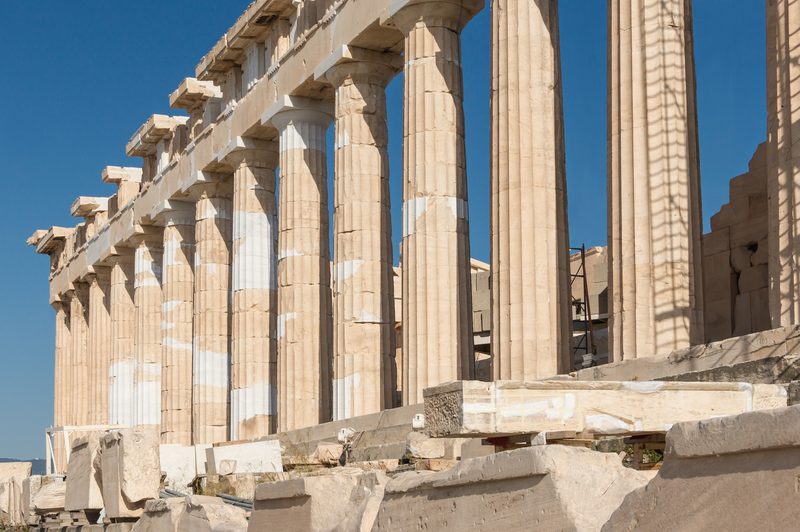
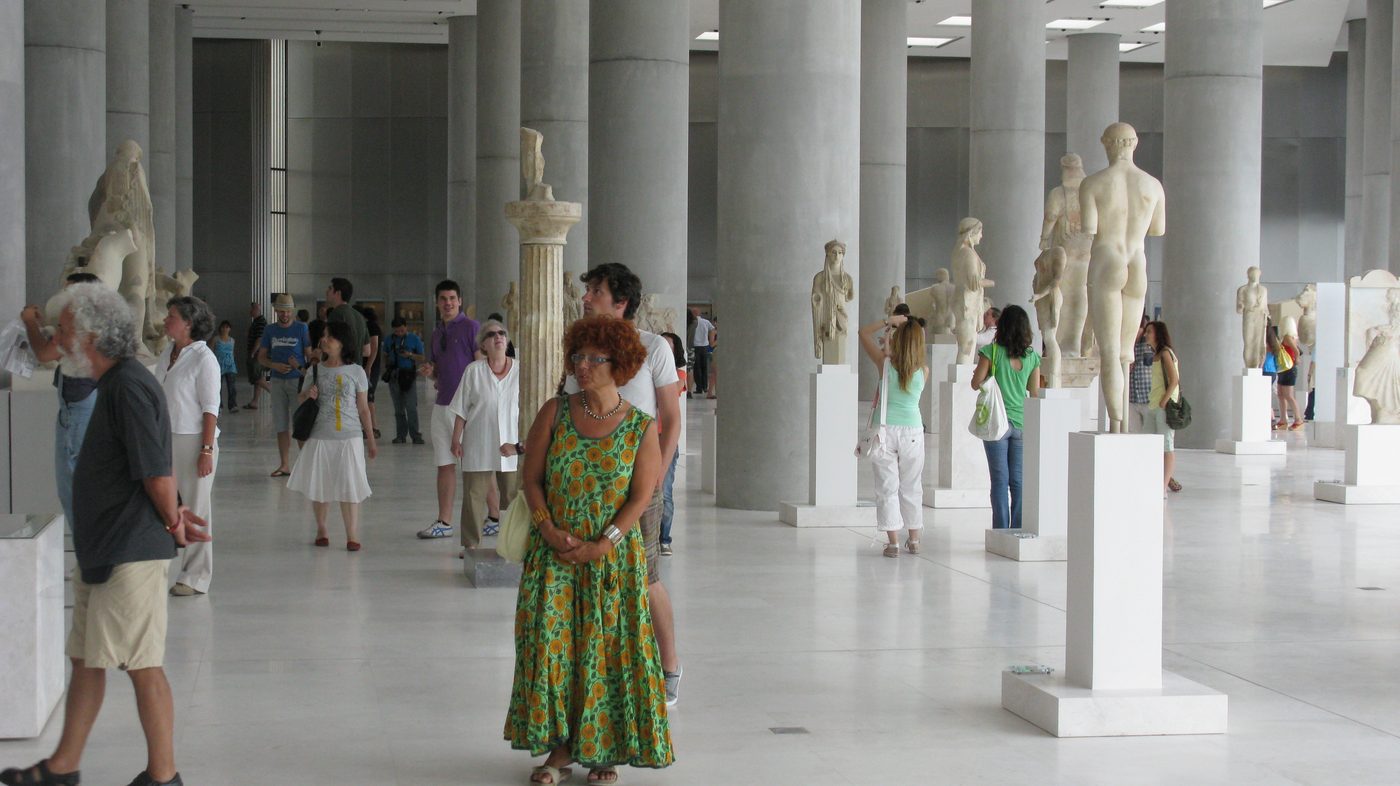
The Acropolis Museum is not just the best museum in Athens: it is one of the finest archaeological museums in the world, purpose-built to display the surviving treasures of the Acropolis hill. Designed by Swiss-American architect Bernard Tschumi and opened in 2009, the building itself is part of the experience: a glass-and-concrete structure that floats above an active archaeological excavation visible through the transparent floor of the ground level.
The Gallery of the Slopes of the Acropolis greets visitors on the ground floor, with finds from the sanctuaries and settlements that grew up around the Acropolis over millennia. The glass floor beneath your feet reveals the excavated remains of an ancient Athenian neighbourhood (houses, workshops, baths, streets) dating from the Classical period through the Byzantine era.
The Archaic Gallery on the first floor is a showstopper. Here you will find the original Caryatids: five of the six maidens who once held up the Erechtheion porch. (The sixth remains in the British Museum, a fact the museum does not let you forget.) The gallery also holds dozens of Archaic-period kore and kouros statues, painted pottery, and votive offerings, all displayed in natural light flooding through floor-to-ceiling windows.
The Parthenon Gallery occupies the entire top floor and is the emotional centrepiece of the museum. The gallery is oriented to align exactly with the Parthenon on the hill above, visible through the glass walls. The surviving sections of the Parthenon frieze, metopes, and pediment sculptures are mounted at the same height and position they occupied on the original temple. Where originals are missing, mostly in London, white plaster casts fill the gaps, making the absence viscerally clear.
The rooftop terrace offers some of the best views of the Acropolis in Athens, and the museum restaurant is a genuinely pleasant spot for lunch with a view.
Practical details:
- Tickets: EUR 15 (April-October), EUR 10 (November-March). Buy online at etickets.theacropolismuseum.gr to avoid the queue.
- Hours (summer): Monday 9:00-17:00, Tuesday-Sunday 9:00-20:00, Friday 9:00-22:00.
- Hours (winter): Monday-Thursday 9:00-17:00, Friday 9:00-22:00, Saturday-Sunday 9:00-20:00.
- Last entry: 30 minutes before closing.
- Metro: Acropoli station (Line 2), literally a 2-minute walk.
- Time needed: Allow 2-3 hours. Friday evenings are excellent for smaller crowds and the late opening.
- Important: The Acropolis Museum is NOT included in the Acropolis combined archaeological sites ticket. It is a separate museum with its own ticket.
The Friday late opening until 22:00 is one of Athens' best-kept secrets: the top-floor Parthenon Gallery with the Acropolis lit up outside the windows is worth rearranging your schedule for.
What Will You Find at the National Archaeological Museum?
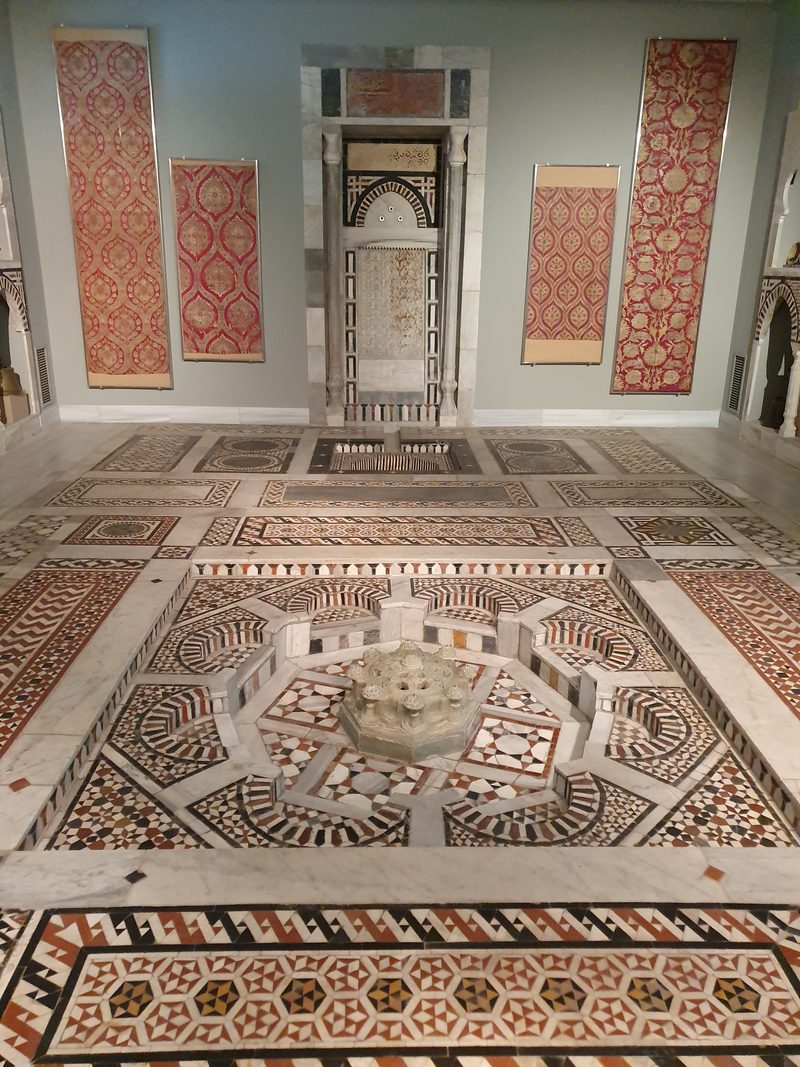
If the Acropolis Museum tells the story of one sacred hill, the National Archaeological Museum (NAM) tells the story of all Greek civilisation. It is the largest archaeological museum in Greece and one of the most important in the world, with over 11,000 exhibits spanning from the Neolithic era to Late Antiquity.
The museum occupies a grand neoclassical building near Exarchia, and it demands time. Rushing through in under two hours means missing things, and dedicated visitors can easily spend half a day here.
The Mycenaean Collection is the museum's crown jewel. The gold Mask of Agamemnon, whether or not it actually belonged to the legendary king, is one of the most recognisable archaeological finds on earth. The collection also includes gold cups, jewellery, weapons, and the contents of the shaft graves at Mycenae, excavated by Heinrich Schliemann in 1876. If you are planning a day trip to Mycenae and Nafplio, seeing these treasures first adds an enormous amount of context.
The Bronze Collection features the 460 BC Bronze Zeus (or Poseidon, depending which scholar you ask), one of the finest surviving Greek bronzes. Nearby sits the Jockey of Artemision, a Hellenistic bronze of a boy riding a horse at full gallop, pulled from the sea off Cape Artemision.
The Antikythera Mechanism is arguably the museum's most astonishing single object: a corroded lump of gears recovered from a shipwreck in 1901, now recognised as an ancient analogue computer used to predict astronomical positions and eclipses. It dates to around 100 BC and has no known parallel in the ancient world.
Other highlights include the Cycladic figurine collection (complementing what you will see at the Cycladic Art Museum), Egyptian antiquities, Thera (Santorini) frescoes from the Bronze Age city of Akrotiri, and an extensive sculpture gallery tracing Greek artistic development from the Archaic to the Hellenistic periods.
Practical details:
- Tickets: EUR 20 (reduced EUR 10), year-round.
- Hours (winter, Nov-Apr): Wednesday-Monday 8:30-15:30, Tuesday 13:00-20:00. Last entry 30 minutes before closing.
- Metro: Victoria station (Line 1) is a 10-minute walk. Omonia (Line 1/2) is also close but a less pleasant walk.
- Time needed: 2-4 hours. The Tuesday late opening (until 20:00) is useful for fitting it in around day trips.
- Closed: December 25-26, January 1, March 25, May 1, Easter Sunday.
What Other Museums Are Worth Your Time?
Beyond the two essential museums, Athens has a rich second tier that reward visitors with specific interests or an extra day in their schedule.
Museum of Cycladic Art
Founded by Greek collectors Nikolaos and Dolly Goulandris, this museum holds the world's most comprehensive collection of Cycladic art: those hauntingly minimalist white marble figurines from the 3rd millennium BC that inspired Modigliani, Brancusi, and Picasso. Over 3,000 items span Cycladic, Ancient Greek, and Cypriot art, though the Cycladic galleries on the upper floors are the main draw.
The museum also hosts excellent rotating exhibitions, often with a contemporary twist linking ancient forms to modern art. The building itself, a handsome neoclassical mansion on a quiet Kolonaki street, is a pleasant contrast to the scale of the big museums.
- Tickets: EUR 12 (reduced EUR 9 for students and seniors)
- Hours: Monday/Wednesday/Friday/Saturday 10:00-17:00, Thursday 10:00-20:00, Sunday 11:00-17:00. Closed Tuesday.
- Metro: Evangelismos (Line 3), 5-minute walk.
- Time needed: 1-2 hours.
Benaki Museum of Greek Culture
The Benaki is Athens' great generalist museum, covering Greek culture from prehistory through the Byzantine era to the War of Independence and beyond. Housed in a beautiful neoclassical building near the National Garden, its collection of over 100,000 objects includes everything from Neolithic pottery to El Greco paintings to a reconstructed reception room from a Macedonian mansion.
The third-floor galleries telling the story of the Greek Revolution and the formation of the modern Greek state are particularly compelling. This is the narrative context behind the archaeological artefacts you see elsewhere.
The Benaki also operates several satellite museums around Athens, including the Pireos Street Annexe for contemporary art and Islamic art collections.
- Tickets: EUR 12 (reduced EUR 9). Free on Thursdays from 18:00 to midnight.
- Hours: Monday/Wednesday/Friday/Saturday 10:00-18:00, Thursday 10:00-midnight, Sunday 10:00-16:00. Closed Tuesday.
- Metro: Syntagma (Line 2/3) or Evangelismos (Line 3).
- Time needed: 1.5-2.5 hours.
- Free admission under 22.
Byzantine and Christian Museum
Housed in the 1848 Villa Ilissia on Vasilissis Sofias avenue, this museum covers a period most visitors to Greece overlook: the Byzantine era. With over 25,000 artefacts from the 3rd to the 20th century, it traces how Greek culture evolved from pagan antiquity through Christianity, the Byzantine Empire, and Ottoman rule.
The collection of icons is outstanding, ranging from early Christian works to elaborate post-Byzantine pieces. Frescoes, manuscripts, textiles, and ecclesiastical objects fill the galleries. For visitors heading to Delphi or Eleusis, the museum provides context for understanding how ancient sanctuaries were transformed in the Christian era.
- Tickets: EUR 8 (reduced EUR 4).
- Hours: Wednesday-Monday 8:30-15:30. Closed Tuesday.
- Metro: Evangelismos (Line 3), 3-minute walk.
- Time needed: 1-2 hours.
National Museum of Contemporary Art (EMST)
Athens' contemporary art scene has exploded since the 2017 documenta exhibition put it on the global art map, and EMST is its flagship. The museum occupies the converted Fix brewery on Syngrou Avenue, a handsome industrial building that gives the collection a raw, appropriate setting.
The permanent collection focuses on Greek and international post-war and contemporary art, with rotating exhibitions that lean experimental. It is the museum most likely to surprise visitors who associate Athens purely with antiquity.
- Tickets: EUR 10 (reduced EUR 5). Your ticket is valid for a second visit within 30 days.
- Hours: Tuesday-Wednesday 11:00-19:00, Thursday 11:00-22:00, Friday-Sunday 11:00-19:00. Closed Monday.
- Free: First Thursday of each month, 18:00-22:00 (except July-August).
- Metro: Syngrou-Fix (Line 2), 3-minute walk.
- Time needed: 1-2 hours.
Museum of the Ancient Agora (Stoa of Attalos)
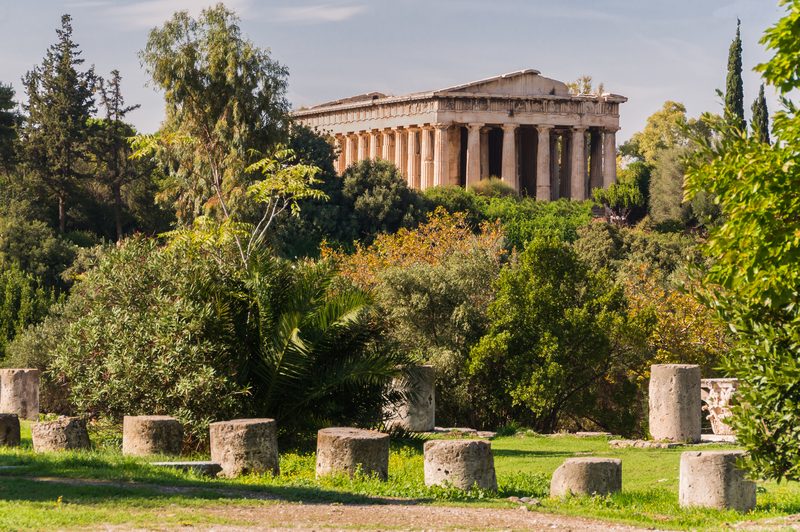
The Ancient Agora, the civic heart of Classical Athens where Socrates debated and democracy was practised daily, houses its museum inside the reconstructed Stoa of Attalos. The 2nd-century BC colonnade, rebuilt in the 1950s by the American School of Classical Studies, is itself as impressive as many of the objects inside.
The collection includes ostraka (pottery shards used for voting in ostracisms, with the names of famous Athenians still scratched into them), pottery, coins, and everyday objects that bring the ancient marketplace to life. The museum is included with the Ancient Agora ticket, so there is no additional cost.
If you are visiting the Acropolis (and you should be), the Agora is directly below and easily combined in the same morning. The one-day Athens itinerary covers this combination in detail.
- Tickets: EUR 20 (included with Ancient Agora admission).
- Hours (winter): 8:00-15:00 (Tuesday opens 10:00). Summer: 8:00-19:30.
- Metro: Monastiraki (Line 1/3) or Thissio (Line 1).
- Time needed: 30-60 minutes for the museum, plus 1-2 hours for the full Agora site.
National Gallery
Reopened in 2021 after a EUR 60 million renovation, the National Gallery is Athens' premier fine art museum. Its 20,000-work collection spans post-Byzantine painting through to the 20th century, with particular strength in Greek painters like Nikolaos Gyzis, Konstantinos Parthenis, and Yannis Tsarouchis.
The renovation transformed the building into a modern exhibition space that finally does justice to the collection. At EUR 6, it is also one of the best-value museums in Athens.
- Tickets: EUR 6. Free for EU visitors under 25.
- Hours: Monday/Thursday/Friday/Saturday/Sunday 10:00-18:00, Wednesday 12:00-20:00. Closed Tuesday.
- Metro: Evangelismos (Line 3), 5-minute walk.
- Time needed: 1-2 hours.
Numismatic Museum
The Numismatic Museum is as much about its building as its collection. It occupies the Iliou Melathron: the mansion built by Heinrich Schliemann, the archaeologist who excavated Troy and Mycenae. The neoclassical interior, with its Pompeian frescoes and mosaic floors, is worth seeing even if ancient coins are not your passion.
The collection of 500,000 coins traces monetary history from the invention of coinage in the 7th century BC through the Roman Empire, Byzantium, and the medieval period. The shaded garden cafe is one of the more pleasant spots on Panepistimiou avenue for a coffee break.
- Tickets: EUR 10 (reduced EUR 5).
- Hours (winter): Wednesday-Monday 8:30-15:30. Closed Tuesday.
- Metro: Panepistimio (Line 2) or Syntagma (Line 2/3).
- Time needed: 45 minutes to 1.5 hours.
War Museum
The War Museum surveys Greek military history from the Mycenaean era to the present, with particular emphasis on the Balkan Wars, World War I, World War II (including the Greek resistance and the Battle of Crete), and the Greek Civil War. Outdoor exhibits include vintage fighter aircraft and artillery pieces.
It is a niche interest museum, but for visitors interested in 20th-century history, or those heading to the Marathon battlefield, it provides useful context.
- Tickets: EUR 6 (reduced EUR 3).
- Hours (winter): Tuesday-Sunday 9:00-17:00. Summer: 9:00-20:00. Closed Monday.
- Metro: Evangelismos (Line 3).
- Time needed: 1-1.5 hours.
When Are Museums Free?
Greece has one of the most generous free admission policies in Europe, though the rules differ between state-run and privately operated museums.
State-run museums and archaeological sites (including the National Archaeological Museum, Byzantine Museum, Numismatic Museum, Ancient Agora, and War Museum) offer free admission on:
- The first and third Sundays of every month from November through March
- March 6 (Melina Mercouri Memorial Day)
- April 18 (International Monuments Day)
- May 18 (International Museums Day)
- The last weekend of September (European Heritage Days)
- October 28 (Ohi Day)
EU citizens under 25 get free admission to all state-run museums and archaeological sites year-round, upon showing an ID card or passport. Non-EU visitors under 18 also enter free.
The Acropolis Museum is NOT included in the state free-entry policy. It is a separately operated museum and always requires a paid ticket, though it does offer reduced admission during winter months.
The Benaki Museum offers free admission to its permanent collection every Thursday evening from 18:00 to midnight, a generous window that makes Thursday a strategic museum day.
EMST offers free admission on the first Thursday of each month from 18:00 to 22:00 (except July and August).
No multi-museum package ticket is currently sold. The state museums are ticketed individually, so if you want to see several on a budget, plan around the free-admission days below.
For visitors on a tight budget, our Athens on a budget guide and free things to do in Athens cover how to structure a visit around free admission days and other no-cost experiences.
How Do Museums Fit Into a Day Trip Schedule?
Most visitors to Athens are not here purely for museums: they are using Athens as a base for day trips to places like Delphi, Mycenae and Nafplio, Cape Sounion, and Epidaurus. Museums fit into this schedule in three ways.
Rest days between day trips. Full-day excursions to Delphi or Mycenae involve early starts and hours of bus travel. Scheduling a museum day between two day trips prevents burnout and gives your legs a break. A morning at the Acropolis Museum followed by an afternoon at the National Archaeological Museum makes a satisfying full day without the physical demands of an archaeological site.
Rainy day alternatives. Athens gets most of its rainfall between November and March, and a grey, wet day that would be miserable at an outdoor site is perfect for museum-hopping. The museums clustered around Evangelismos metro (Cycladic Art, Benaki, Byzantine, National Gallery, and War Museum) are all within a 10-minute walk of each other and could fill an entire rainy day without a dull moment.
Context before or after a day trip. Museums are vastly more meaningful when paired with the sites they relate to. The National Archaeological Museum's Mycenaean gold collection is exponentially more powerful if you visit it the day before or after your Mycenae trip. The Acropolis Museum makes more sense after you have walked the Acropolis itself. The Stoa of Attalos museum clicks into place when you have just explored the Ancient Agora.
Pair museums with food. Several museums are near excellent eating areas. The Acropolis Museum is a short walk from Koukaki's tavernas. The National Archaeological Museum is near Exarchia, one of the best neighbourhoods in Athens for cheap, authentic food (see our Athens food tours guide for recommendations). The Benaki's location near Kolonaki means good cafe options, and the museum's own rooftop cafe is worth a stop.
For visitors following our multi-day itineraries, here is how museums slot in:
- One day in Athens: The Acropolis Museum is the only museum you can realistically fit in.
- Two days: Add the National Archaeological Museum on day two.
- Three days: Day three is perfect for the Cycladic Art or Benaki museum between day trips.
- Four days: You have room for a full museum day. See the combinations below.
What Are the Best Museum Combinations?
Athens' museums cluster geographically, making it easy to visit two or three in a half-day without wasting time on transport. Here are the most efficient groupings.
The Acropolis Cluster (morning, 3-4 hours) Start at the Acropolis Museum (2 hours), then walk downhill to the Ancient Agora and its museum in the Stoa of Attalos (1.5 hours). Both are connected by a pleasant walk through Makrigianni and Plaka. This pairs perfectly with an Acropolis visit in the same morning: see the Acropolis first (opens 8:00), then the museum, then the Agora.
The Evangelismos Cluster (half-day, 3-5 hours) Exit Evangelismos metro and you are within a 10-minute radius of the Museum of Cycladic Art, the Benaki Museum, the Byzantine and Christian Museum, the National Gallery, and the War Museum. Pick two or three based on your interests. A strong combination: Cycladic Art (1 hour), then the Benaki (1.5 hours), with lunch at a Kolonaki cafe between them.
The Big Two (full day, 5-6 hours) The Acropolis Museum (morning, 2-3 hours) and the National Archaeological Museum (afternoon, 2-3 hours). These are in different parts of the city (Line 2 from Acropoli to Omonia, then a walk), but the metro makes it straightforward. Have lunch in Exarchia between the two. This is the definitive Athens museum day.
The Package Ticket Route (2-3 days) The National Archaeological Museum, Byzantine Museum, and Numismatic Museum pair well across two or three days. The Numismatic Museum, in Schliemann's mansion on Panepistimiou, makes a pleasant 45-minute stop on the way to or from the NAM.
The Thursday Evening Free Route (3-4 hours) On Thursday, visit the Benaki Museum from 18:00 (free admission to the permanent collection) and combine it with any of the Evangelismos-area museums visited earlier in the day. The Benaki stays open until midnight on Thursdays, making for a cultured evening.
The Contemporary Route (half-day, 3-4 hours) For visitors who have seen enough antiquity, pair EMST at Syngrou-Fix (1.5 hours) with the National Gallery near Evangelismos (1.5 hours). Line 2 connects the two stations in one stop. The Benaki Pireos Street Annexe, a 15-minute walk from EMST, adds contemporary and Islamic art if time allows.
Athens has enough museums to fill a week without repeating a single gallery. Most visitors will not have that long, but with the right pairings and a bit of schedule awareness, even two or three museum stops can transform a trip from sightseeing into genuine understanding. The best time to visit Athens guide can help you plan around weather and free admission days.
Planning more adventures from the capital? Browse our complete guide to the best day trips from Athens.
Heading to Santorini? See our guide to the best day trips from Santorini.
Last updated: 27 August 2026