The Athens Metro carries over a million passengers daily across three colour-coded lines and 66 stations, covering everything from the port of Piraeus to the international airport. Since January 2025 you can ride it by tapping a contactless bank card at the gate.
In this guide
For visitors using Athens as a launching pad for day trips, the metro is not just a way to see the city. It is the connective tissue linking hotels to ferry ports, bus terminals, train stations, and coastal tram lines. A single EUR 1.20 ticket buys 90 minutes of travel across the entire network (airport excluded), and the system is clean, air-conditioned, and genuinely easy to navigate. This guide covers every practical detail: which line goes where, what tickets cost, how to buy them, and, critically for this site, how to use the metro to reach day trip departure points across Attica and beyond.
How Does the Athens Metro Work?
The Athens Metro consists of three lines, each identified by a colour: Green (Line 1), Red (Line 2), and Blue (Line 3). Together they form a network of 66 stations spread across the greater Athens area, from the northern suburb of Kifissia to Piraeus port on the coast, and from the western neighbourhood of Nikaia to Athens International Airport in the east.
Trains run from approximately 05:30 in the morning until 00:30 at night on weekdays, with extended service until around 02:00 on Friday and Saturday nights. During peak hours (roughly 07:00-10:00 and 16:00-20:00), trains arrive every 3 to 5 minutes. Off-peak, expect a train every 5 to 10 minutes. The exception is the airport stretch of Line 3, where trains run every 36 minutes throughout the day.
All three lines share a unified ticketing system with Athens' buses, trolleybuses, and tram. One ticket works everywhere: buy it once, validate it once, and transfer freely within the validity window.
What Do the Three Lines Cover?
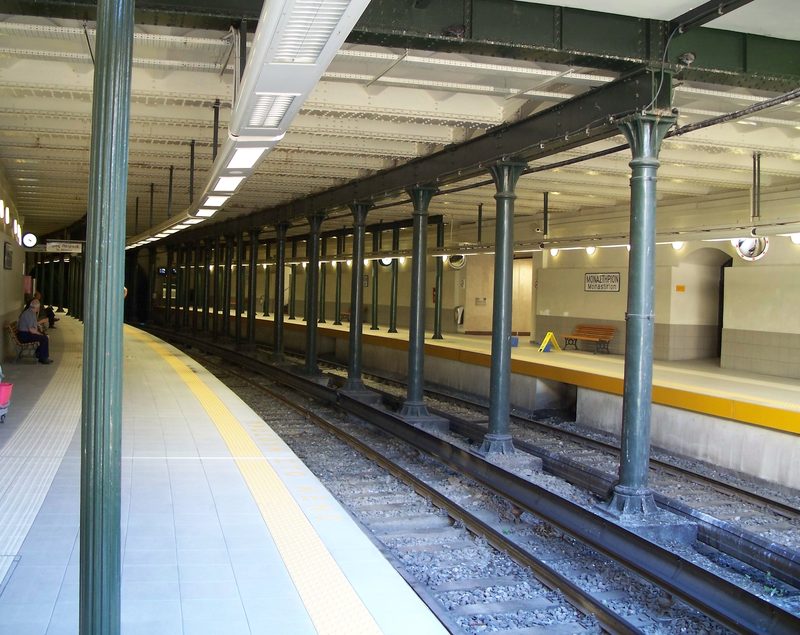
Line 1 (Green): Piraeus to Kifissia
Line 1 is the oldest railway in Greece, running since 1869 as a surface railway before being incorporated into the modern metro system. It runs roughly north-south through the city, connecting Piraeus port in the southwest to the leafy suburb of Kifissia in the north, with 26 stations along the way.
Key stations for visitors:
- Piraeus. The main ferry port for the Saronic Gulf islands. Step off the metro and the ferry gates are a short walk away. Essential for day trips to Aegina, Hydra, Poros, Agistri, Spetses, and Salamis.
- Monastiraki. Heart of old Athens. Interchange with Line 3. Walking distance to the Acropolis, Plaka, Ancient Agora, and Monastiraki Flea Market. The starting point for our self-guided walking tour and the default station for anyone on a one-day Athens itinerary.
- Omonia. Interchange with Line 2. Central Athens hub. Nearby hotels, the National Archaeological Museum (a 15-minute walk), and useful bus connections.
- Victoria. Two stops north of Omonia. The closest metro station to the National Archaeological Museum (10-minute walk) and relatively near the Liosion KTEL bus terminal for buses to Delphi and Meteora.
- Attiki. Interchange with Line 2. Useful transfer point if coming from the Red Line.
- Kifissia. Northern terminus. A pleasant upscale suburb in its own right, and a starting point for excursions into northern Attica or toward Mount Parnitha.
The stretch between Piraeus and Monastiraki runs above ground in places, offering glimpses of the port and the city skyline that you will not get on the other two lines.
Line 2 (Red): Anthoupoli to Elliniko
Line 2 runs roughly northwest to southeast, from the residential neighbourhood of Anthoupoli through the city centre to Elliniko near the old airport site on the southern coast. It has 20 stations.
Key stations for visitors:
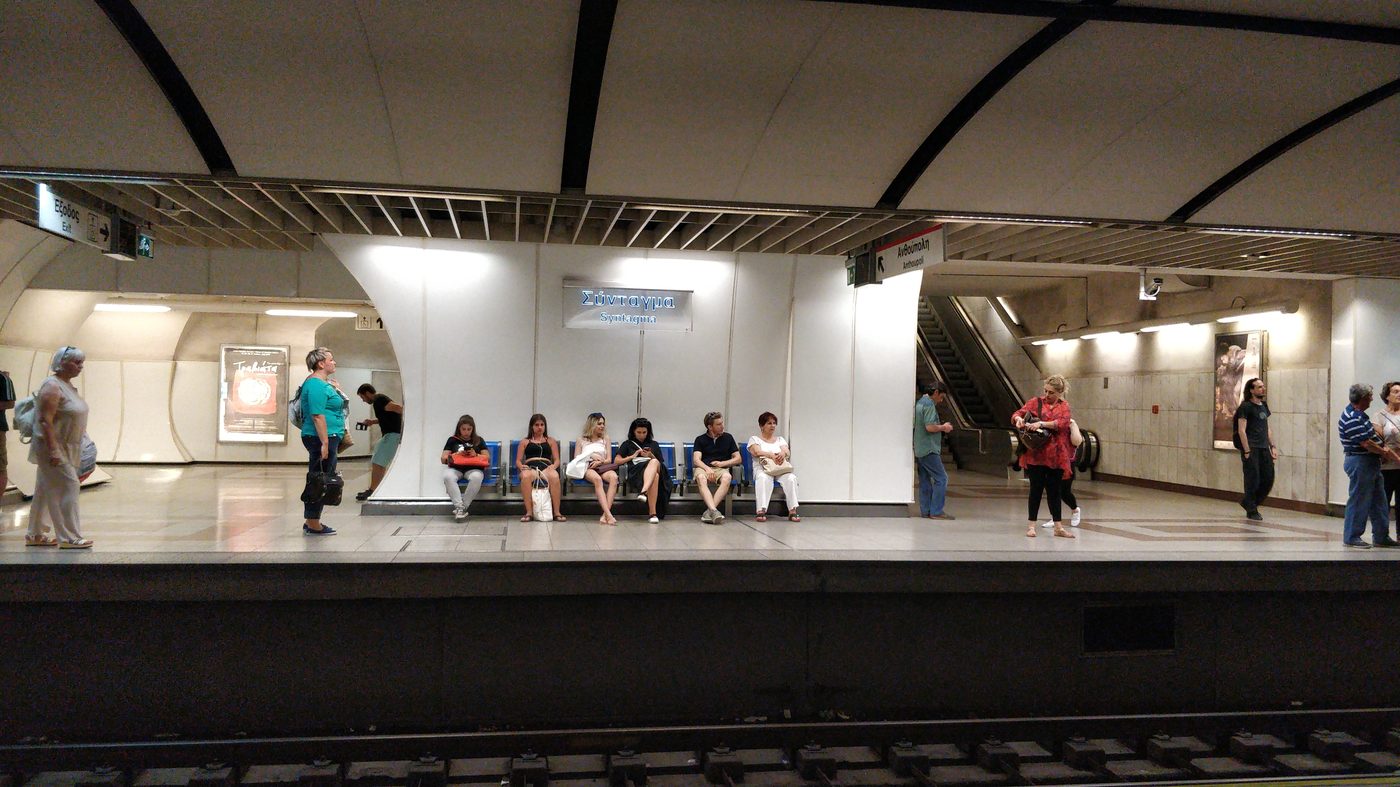
- Syntagma. The most important interchange station in the network, connecting Lines 2 and 3. Syntagma Square sits directly above, with the Greek Parliament, the Changing of the Guard at the Tomb of the Unknown Soldier, and connections to the tram heading down the coast. A must-see even if just passing through.
- Acropolis. The station for the Acropolis and Acropolis Museum. The station itself doubles as an archaeological exhibit, with glass cases displaying artefacts found during construction. If visiting the Acropolis on a day in Athens, this is the stop.
- Omonia. Interchange with Line 1.
- Attiki. Interchange with Line 1.
- Larissa Station. Athens' central railway station for national rail services (Hellenic Train). This is the transfer point for suburban rail (Proastiakos) services to Corinth, Kiato, and beyond. Relevant for anyone planning an Ancient Corinth day trip by train.
- Elliniko. Southern terminus, close to the coast and the Hellinikon development site. Within reach of the Athens Riviera, though the tram from Syntagma is more direct for beach day trips.
- Agios Antonios. The closest metro station to the Liosion KTEL bus terminal (Terminal B), about a 10-minute walk.
Line 3 (Blue): Nikaia to Athens Airport
Line 3 is the line most visitors encounter first, since it provides the direct connection between Athens International Airport and the city centre. It runs from Dimotiko Theatro in Nikaia (near Piraeus) through central Athens to the airport, covering 21 stations.
Key stations for visitors:
- Athens Airport (Eleftherios Venizelos). The eastern terminus. For full details on getting from the airport to the city, see the dedicated Athens airport to city center guide.
- Syntagma. Interchange with Line 2. The main stop for central Athens when arriving from the airport.
- Monastiraki. Interchange with Line 1. One stop past Syntagma, and the better choice if heading to Plaka, Thissio, or Piraeus via Line 1.
- Doukissis Plakentias. An important suburban station where Line 3 meets the Proastiakos suburban railway. Useful for connections toward Corinth or the airport via suburban rail.
- Evangelismos. For the Benaki Museum, Kolonaki neighbourhood, and the National Garden. Another station with notable archaeological displays.
- Dimotiko Theatro / Piraeus. The western terminus, located in the Nikaia-Piraeus area. Provides an alternative route to Piraeus port alongside Line 1.
Airport service note: Not every Line 3 train goes to the airport. Many terminate at Doukissis Plakentias. Platform displays clearly indicate which trains continue to the airport. Always check before boarding. Trains to the airport depart from Syntagma roughly every 36 minutes.
How Much Do Tickets Cost?
Athens public transport uses a unified fare system managed by OASA. The same tickets work on the metro, buses, trolleybuses, and tram. Prices below are as of 2025-2026:
| Ticket Type | Price | Notes |
|---|---|---|
| Single ticket (90 min) | EUR 1.20 | Valid across metro, bus, tram, trolleybus. Does not cover airport routes. |
| 24-hour ticket | EUR 4.10 | Unlimited rides for 24 hours. Excludes airport express lines. |
| 5-day ticket | EUR 8.20 | Five consecutive days. Excludes airport routes. |
| 3-day tourist ticket | EUR 20.00 | 72 hours unlimited travel plus two airport trips (metro or express bus). Best value for short stays. |
| Airport metro (one-way) | EUR 9.00 | Reduced: EUR 4.50 |
| Airport metro (return) | EUR 16.00 | Valid for 30 days. |
| Airport express bus (one-way) | EUR 5.50 | Reduced: EUR 2.70 |
Reduced fares apply to children aged 7-12, students with a valid ISIC card, and EU citizens over 65 with ID. Children under 6 travel free.
Multi-ticket packs offer modest savings: a 10+1 pack costs EUR 12.00 (effectively EUR 1.09 per ride), and a 5-pack costs EUR 5.70.
For most visitors spending two or three days in Athens with a day trip or two mixed in, the 3-day tourist ticket at EUR 20 is the clear winner. It covers the airport transfers that would otherwise cost EUR 18 round-trip, plus unlimited city travel for 72 hours. Even the 24-hour ticket at EUR 4.10 pays for itself after four single rides. For more transport savings tips, see the Athens on a budget guide.
How Do You Buy Tickets?
Contactless tap (Tap2Ride): Since January 2025, the simplest option is to tap a contactless Visa or Mastercard (or Apple Pay / Google Pay on your phone or smartwatch) directly at the metro gates. No ticket purchase needed. The system charges EUR 1.20 per trip and automatically caps your daily spending at EUR 4.10, the equivalent of a 24-hour pass. After that cap is reached, additional rides that day are free. Airport journeys are charged at their respective fares (EUR 9.00 for metro, EUR 5.50 for bus). Important: always tap the same card or device for every journey to ensure the daily cap applies correctly. Note that American Express, Maestro, JCB, and Diners Club cards are not supported.
Ticket machines: Every metro station has automated ticket machines with multilingual interfaces (Greek, English, French, German). They accept coins, notes, and credit/debit cards. The machines sell single tickets, 24-hour passes, 5-day passes, airport tickets, and multi-ticket packs. They are generally reliable, though queues can form at busy stations like Syntagma and Monastiraki during peak tourist season.
Staffed kiosks: Most stations have a staffed booth near the entrance where you can buy tickets with cash. These are useful if the machines are busy or if you need a personalised card for long-term passes.
OASA app: The official OASA app allows you to purchase and store digital tickets on your phone. It works but is not essential for short visits. Contactless tap is simpler.
Validation is mandatory. If using a paper or reloadable card ticket, you must validate it by tapping at the yellow readers on the gates when entering the metro (or onboard buses and trams). An unvalidated ticket is treated the same as no ticket. Inspectors conduct random checks, and the fine for travelling without a valid ticket is EUR 60, 50 times the cost of a single ride. It is not worth the gamble.
How Does the Metro Connect to Day Trips?
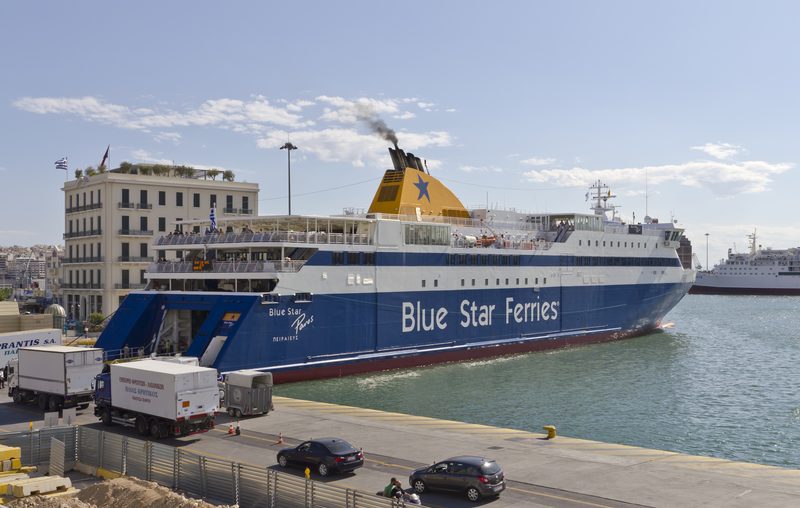
This is the section that matters most for anyone using this site. The Athens Metro does not just move people around the city. It is the first link in the chain for nearly every day trip departing from Athens. Here is how each connection works.
Piraeus Port via Line 1: Saronic Island Ferries
Piraeus is the busiest passenger port in Europe and the departure point for ferries to the Saronic Gulf islands. Line 1 (Green) runs directly to Piraeus station, which sits within walking distance of the ferry terminal gates.
From Monastiraki, the journey to Piraeus takes about 25 minutes. From Omonia, roughly 20 minutes. Aim to arrive at Piraeus at least 30 minutes before your ferry departure to allow time to find the correct gate (the port is large and gates are spread across several kilometres of waterfront).
Day trips reachable via Piraeus ferries: - Aegina: 40 minutes by flying dolphin, 75 minutes by conventional ferry - Hydra: 90 minutes by hydrofoil - Poros: 60 minutes by hydrofoil - Agistri: 55 minutes by ferry (or via Aegina) - Spetses: 2 hours by hydrofoil - Salamis: short ferry from Perama (bus from Piraeus) - Saronic Islands cruise: organised cruises depart from Piraeus - Kea: ferry from nearby Lavrio port, not Piraeus (see below)
Tip: The Line 3 (Blue) extension to Dimotiko Theatro also reaches the Piraeus area, providing an alternative route from Syntagma without changing lines. However, Line 1 remains the most direct option for the main ferry gates.
KTEL Bus Terminals: Delphi, Meteora, and Mainland Day Trips
Athens has two main intercity bus (KTEL) terminals, and neither sits directly on a metro station. Getting to them requires a short bus ride or taxi from the nearest metro stop.
Liosion Terminal (Terminal B) serves central Greece and Thessaly. This is where buses to Delphi and Meteora depart. The nearest metro stations are: - Agios Antonios (Line 2, Red), about a 10-minute walk north - Kato Patisia (Line 1, Green), similar distance
From either station, follow signs toward Liosion Street. Alternatively, take bus A10 from Larissa Station (metro Line 2).
Kifissos Terminal (Terminal A) serves the Peloponnese, western Greece, Epirus, and the Ionian islands: buses to Nafplio, Mycenae, Epidaurus, and Monemvasia leave from here. There is no metro station nearby. Take city bus 051 from Omonia Square (near the metro) to Kifissos, a journey of about 20 minutes. Alternatively, bus X93 from the airport stops at Kifissos en route.
The lack of direct metro access to either KTEL terminal is arguably the biggest gap in Athens' public transport for day trippers. Budget an extra 20-30 minutes for the connection, and check return bus schedules before committing to a late afternoon departure.
Larissa Station via Line 2: Suburban Rail to Corinth
Larissa Station is Athens' central railway station, served by metro Line 2 (Red) at the aptly named Larissa Station stop. From here, the Proastiakos suburban railway operates services along the coast to Corinth (Examilia station) and onward to Kiato.
This is the practical route for an Ancient Corinth day trip by public transport. The suburban train takes approximately one hour to reach Corinth, and the archaeological site is a short taxi or local bus ride from the station. Trains run several times daily, and a standard OASA ticket does not cover this route. You will need to buy a Hellenic Train ticket at Larissa Station.
Doukissis Plakentias station on Line 3 also connects to the Proastiakos, offering an alternative boarding point for suburban rail if you are coming from the airport direction.
Syntagma to the Coast via Tram: Athens Riviera Beaches
The Athens tram connects Syntagma Square to the coast, running south to Palaio Faliro where the line splits: one branch (T7) continues southeast along the waterfront through Alimos, Elliniko, Glyfada, and Voula, while another heads to Piraeus. The tram uses the same tickets as the metro.
For a day on the Athens Riviera beaches, take metro Line 2 or 3 to Syntagma and transfer to the tram. The ride from Syntagma to the Glyfada area takes roughly 45-50 minutes. The tram is slower than a bus or taxi, but the coastal scenery makes the journey pleasant rather than frustrating. Lake Vouliagmeni is beyond the tram terminus and requires a bus or taxi from Voula.
Kifissia via Line 1: Northern Attica
The northern terminus of Line 1 puts you in Kifissia, an upscale suburb at the foot of Mount Parnitha. While the trailheads for Parnitha require onward transport (bus or taxi), Kifissia itself is a worthwhile stop with its shaded streets, neoclassical mansions, and the Goulandris Natural History Museum.
Monastiraki and Syntagma: Your Central Base
Even when a day trip does not start from a metro-connected point, chances are good that the metro gets you most of the way. Monastiraki and Syntagma are the two stations to know:
- Monastiraki (Lines 1 and 3), for Piraeus-bound ferries, the Plaka and Thissio neighbourhoods, and quick connections across all three lines.
- Syntagma (Lines 2 and 3), for the tram to the coast, the airport metro, buses to KTEL terminals, and easy walking access to Kolonaki and the National Garden.
Between these two stations, most of Athens' day trip infrastructure is within reach. For a practical example of how all these connections come together, see the five-day Athens itinerary.
What Should You Know Before Riding?
Validate every time. Whether using a paper ticket or a reloadable card, tap it at the yellow reader when entering the metro. With contactless bank cards, simply tapping at the gate handles everything automatically. Inspectors in plain clothes conduct checks inside trains, and the EUR 60 fine is non-negotiable.
Mind the gap at Line 1 stations. Line 1's older stations have a slightly larger gap between the train and the platform compared to the newer Lines 2 and 3. Watch your step, especially with wheeled luggage.
Luggage is manageable. There are no luggage restrictions on the metro. Trains on Lines 2 and 3 are modern, spacious, and air-conditioned with room for suitcases. Line 1 trains are slightly older but still adequate. Avoid rush hours (07:00-09:30 and 17:00-20:00) if travelling with large bags.
Accessibility. Lines 2 and 3 are fully accessible, with lifts and ramps at every station. Line 1 has been retrofitted and most stations now have step-free access, though a few older stops may have limited facilities. Platform edges have tactile strips, and audio announcements are made in Greek and English.
Safety. The Athens Metro is generally safe at all hours. Standard city precautions apply: keep an eye on bags and pockets, especially in crowded trains during peak times. Pickpocketing can occur on busy Line 1 trains between Monastiraki and Piraeus.
Air conditioning. All trains and most station platforms on Lines 2 and 3 are air-conditioned, a genuine blessing in the summer months. Line 1 trains are also air-conditioned, though the above-ground sections can warm up on hot days.
Station museums. Several metro stations double as archaeological displays. Syntagma station features artefacts from an ancient cemetery and Roman-era water channels, uncovered during construction. Acropolis station showcases casts of the Parthenon frieze and original finds. Monastiraki, Evangelismos, and Panepistimio stations also have notable displays. These are free to view. Just pause on the way to the platform.
Wi-Fi and connectivity. Free Wi-Fi is available at metro stations and on some trains. Coverage underground can be patchy between stations for mobile data. Download offline maps before descending.
Are There Alternatives to the Metro?
The metro is the backbone of Athens' public transport, but it is not the only option. Here is when other modes make more sense:
Buses and trolleybuses: Athens has an extensive bus network covering areas the metro does not reach. Key examples: bus 051 from Omonia to Kifissos KTEL terminal, the X95/X96 airport express buses (which run 24 hours, unlike the metro), and coastal bus routes to Cape Sounion. Buses use the same tickets as the metro.
Tram: Best for reaching the Athens Riviera coastline from Syntagma. Slower than the metro but scenic. The T7 line runs from Voula to Piraeus along the coast, with the T6 connecting inland from Syntagma to Pikrodafni. Same tickets apply.
Suburban rail (Proastiakos): Operated by Hellenic Train, the suburban railway connects Piraeus, central Athens (Larissa Station), the airport, and continues west to Megara, Corinth, and Kiato. It is faster than the metro for reaching Corinth (about one hour versus driving). Requires a separate Hellenic Train ticket for journeys beyond the OASA urban zone.
Taxis and ride-hailing: Athens taxis are metered and reasonably priced. FREENOW (formerly Beat) is the dominant ride-hailing app, with Uber and Bolt also available. Taxis make sense for groups of three or four heading to the KTEL bus terminals, for destinations not on the metro, or for early morning departures where the metro has not started running yet. The flat airport taxi fare is EUR 50 by day and EUR 65 between midnight and 05:00.
Rental cars: Not useful within Athens itself (traffic and parking are hostile), but a rental car opens up day trip flexibility to places like Delphi, Mycenae and Nafplio, Cape Sounion, or the Nemea wine region without relying on bus schedules.
What About Line 4?
Athens is building a fourth metro line, which will serve the eastern and central parts of the city currently without direct metro access, including the neighbourhoods of Kypseli, Galatsi, Kolonaki, Zografou, and Goudi. The line will add 15 new stations across 13 kilometres.
As of early 2026, tunnel boring is well advanced (one of the two tunnel boring machines has completed roughly 90 percent of its route) and construction is underway at 11 of the 15 stations. The tunnels are expected to be finished by the end of 2026, but fitting out stations and testing means passenger service is realistically expected around 2029-2030.
For now, Line 4 does not affect visitor planning. When it opens, it will improve access to university areas, hospitals, and neighbourhoods that currently rely on buses, but the core tourist and day trip connections will remain on Lines 1, 2, and 3.
The Athens Metro is one of the most visitor-friendly systems in southern Europe: affordable, clean, and well-connected to the ferries, buses, and trains that make day trips from Athens so accessible. Tap your card, check the line colour, and go.
Planning more adventures from the capital? Browse our complete guide to the best day trips from Athens.
Last updated: 28 September 2026