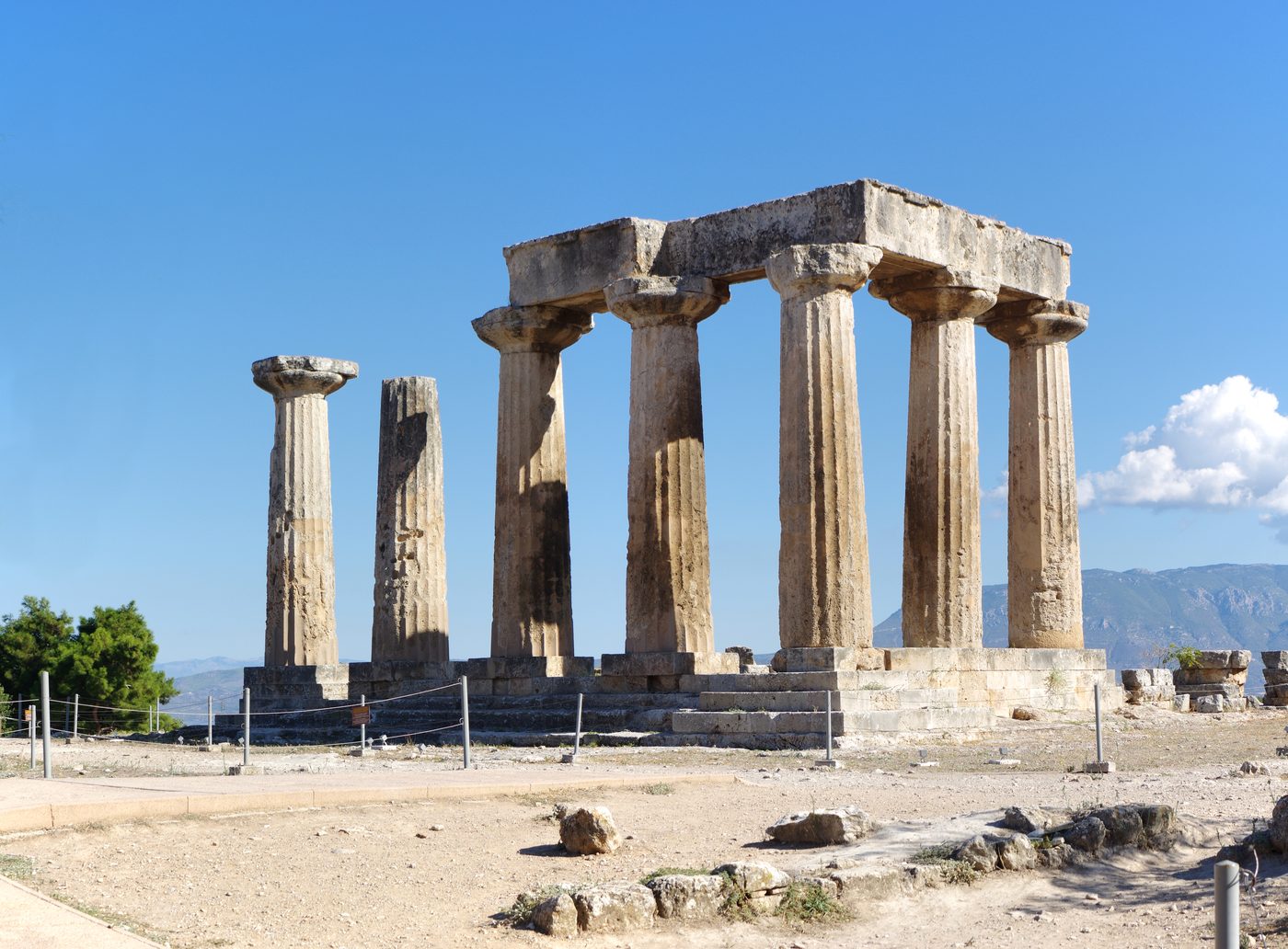
One of the most powerful cities in the ancient world, a Roman provincial capital, and the place where the Apostle Paul preached for 18 months. Ancient Corinth packs serious history into a compact site. Add the dramatic Corinth Canal and the fortress of Acrocorinth, and you have a half-day trip that punches well above its weight.
In this guide
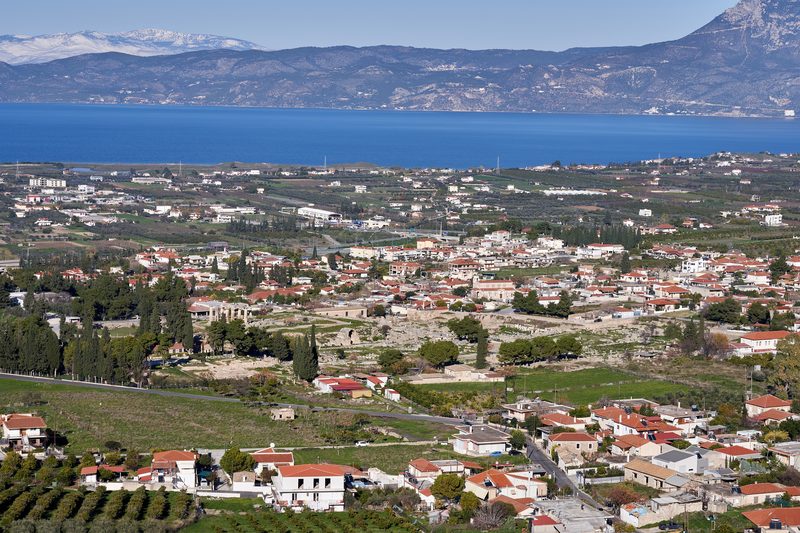
Ancient Corinth is about 80 km west of Athens, just past the point where the Peloponnese meets the mainland. The ruins sit 8 km southwest of modern Corinth, at the foot of the massive rocky hill of Acrocorinth. It's one of the closest major archaeological sites to Athens and one of the least crowded: most tour buses head to Mycenae and Epidaurus instead, leaving Corinth surprisingly peaceful.
The Corinth Canal
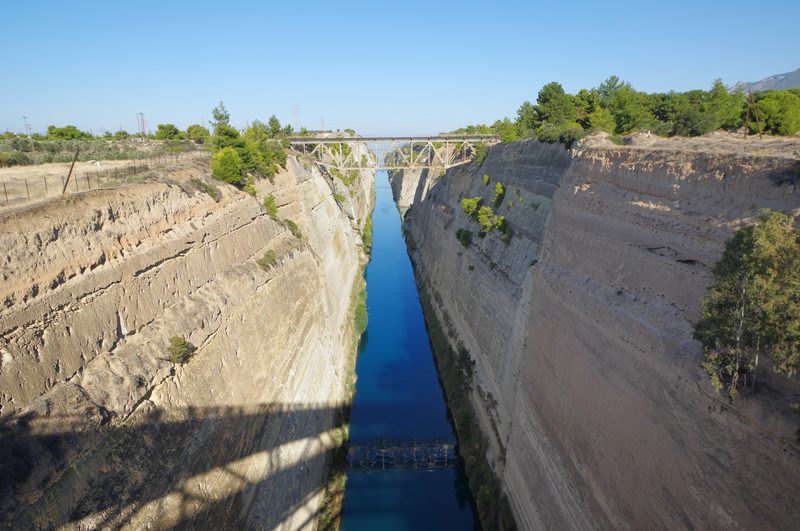
You'll cross it on the way. The canal cuts through the narrow Isthmus of Corinth, connecting the Ionian Sea to the Aegean. It's 6.4 km long, 21 metres wide at water level, and 80 metres deep, a sheer-walled trench carved through solid rock.
The idea of a canal here goes back to the 7th century BC. Periander, tyrant of Corinth, considered it. Nero actually broke ground in AD 67 with 6,000 Jewish prisoners of war. It wasn't completed until 1893.
Stop at the pedestrian bridge on the old national road for photos. It takes 5-10 minutes and the view straight down is impressive. There's a small parking area and a couple of cafes.
What Can You See at Ancient Corinth?
The Archaeological Site
Ancient Corinth was strategically positioned between two seas and two land masses. By 400 BC it had a population of 90,000. The Romans destroyed it in 146 BC, then rebuilt it under Julius Caesar in 44 BC as a Roman colony. It became the capital of the Roman province of Achaea, effectively the capital of Greece.
Temple of Apollo. Seven standing Doric columns from around 560 BC, among the oldest stone temples in Greece. This is the iconic image of Corinth. In the morning light, with Acrocorinth rising behind, it's a genuinely striking sight.
The Agora (Forum). The vast central marketplace of Roman Corinth. One of the largest Roman forums excavated anywhere. You can trace the outlines of shops, temples, and administrative buildings.
The Bema. A raised marble platform in the agora where the Apostle Paul was brought before the Roman proconsul Gallio (Acts 18). This is one of the few New Testament locations that has been positively identified archaeologically.
Peirene Fountain. A natural spring that has been flowing for at least 3,000 years. The Romans built an elaborate multi-storey facade around it. The spring still runs.
The Museum. Small but excellent. Houses finds from the site including Roman mosaics, pottery, sculptures, and a collection of surgical instruments. Worth 30 minutes.
Allow 1-1.5 hours for the main site and museum.
I've visited Ancient Corinth half a dozen times and never waited in a queue. On a weekday morning, I've had the Temple of Apollo entirely to myself, something that's impossible at Delphi or the Acropolis.
Acrocorinth
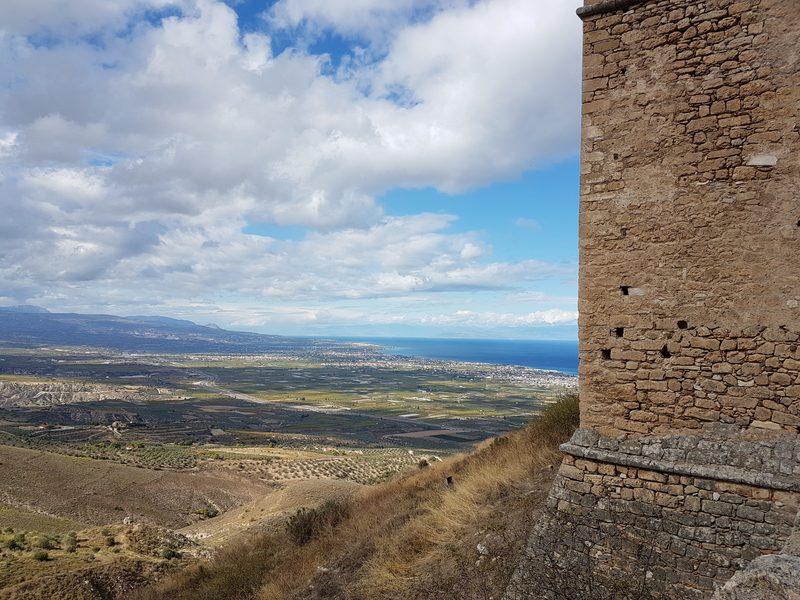
The massive flat-topped rock that looms over Ancient Corinth. A fortress has stood here since at least the 6th century BC. Every civilisation that controlled Greece (Classical Greek, Roman, Byzantine, Frankish, Venetian, Ottoman) added to the fortifications. The result is a layer cake of military architecture spanning 2,500 years.
Getting there: A 5-minute drive from the ancient site, or a steep 45-minute walk. The road is narrow and winding but paved.
The climb: From the car park, you walk up through three successive gates. The path is rough and steep in places: allow 30-45 minutes to reach the top, more if you explore the interior.
At the top: The views are extraordinary. On a clear day you can see both gulfs: the Corinthian to the north and the Saronic to the south. Inside the walls you'll find the remains of a mosque, churches, cisterns, and the ruins of the Temple of Aphrodite, which in antiquity reportedly employed a thousand sacred prostitutes.
Entrance fee: 5 EUR (full), 3 EUR (reduced).
Warning: Acrocorinth closes at 15:30 year-round. Plan accordingly.
Allow 1.5-2 hours including the climb and exploration.
How Do You Get There From Athens?
By Car (1-1.5 hours)
Take the A8/E94 motorway west from Athens. Cross the Corinth Canal (stop for photos on the old road bridge), then follow signs to Ancient Corinth. About 8 km south of modern Corinth. Free parking at the archaeological site.
Tolls total about 5-8 EUR each way.
By Bus
KTEL buses from Kifissos station in Athens to Corinth run every 30 minutes from 05:30 to 22:30. Journey time about 90 minutes. Cost around 9 EUR one way.
The bus drops you in modern Corinth. From there, you'll need a taxi (about 10 EUR) or local bus to the ancient site. Getting to Acrocorinth by public transport is difficult: a taxi from the ancient site is the practical option.
By Train
Trains run from Athens Larissa station to Corinth every 2 hours. About 1 hour, comfortable. From Corinth station, taxi to the ancient site.
By Guided Tour
Several operators run half-day tours from Athens covering the Canal, Ancient Corinth, and sometimes Acrocorinth. Prices range from 50-100 EUR. A good option if you don't want to drive.
Many full-day Peloponnese tours combine Corinth with Mycenae, Epidaurus, and Nafplio.
Entrance Fees (2026)
| Site | Full | Reduced |
|---|---|---|
| Ancient Corinth (site + museum) | 15 EUR | 8 EUR |
| Acrocorinth | 5 EUR | 3 EUR |
Free for EU citizens under 25 and non-EU citizens under 18.
Opening hours: - Summer: 08:00-20:00 (Ancient Corinth), 08:30-15:30 (Acrocorinth) - Winter: 08:30-15:30 (both; Ancient Corinth is closed on Tuesdays)
What Should You Know Before Going?
- Do Corinth as a morning trip. Leave Athens by 08:00, stop at the Canal, visit the site and Acrocorinth, have lunch at one of the tavernas near the ancient site, and you're back in Athens by mid-afternoon.
- Acrocorinth is exposed. No shade, uneven terrain, steep climb. Bring water, wear proper shoes, and skip it in the midday heat of summer.
- Winter closing times are early. Both sites close at 15:00 November-March. If you want to see both, arrive by 10:00 at the latest.
- Corinth is less crowded than Mycenae or Delphi. You might have the Temple of Apollo almost to yourself on a weekday morning.
- The museum has good context. Visit it before walking the site if you want to understand what you're looking at.
Skip the cafes by the site entrance: they're overpriced and forgettable. Drive five minutes into the village of Archaia Korinthos instead; the tavernas there serve proper home cooking at half the price.
What Else Can You Visit Nearby?
Corinth sits at the gateway to the Peloponnese, making it a natural first stop on longer day trips:
- Mycenae (45 km south): combine for a full Peloponnese archaeology day.
- Nafplio (60 km south): add lunch in Nafplio after Corinth and Mycenae.
- Nemea (35 km south): ancient stadium and wine region. Good for a wine-and-ruins combo.
- Loutraki (10 km north): seaside town with thermal spas. Quick detour for a swim.
When Is the Best Time to Visit?
Spring and autumn for comfortable temperatures and manageable light.
Summer works for the main site (it's compact) but Acrocorinth is brutal in the heat.
Winter is atmospheric and crowd-free, but watch those 15:00 closing times.
Ancient Corinth is 80 km from Athens. The drive takes about 1-1.5 hours. The Corinth Canal is on the way.
Planning more adventures from the capital? Browse our complete guide to the best day trips from Athens.
Last updated: 27 August 2026