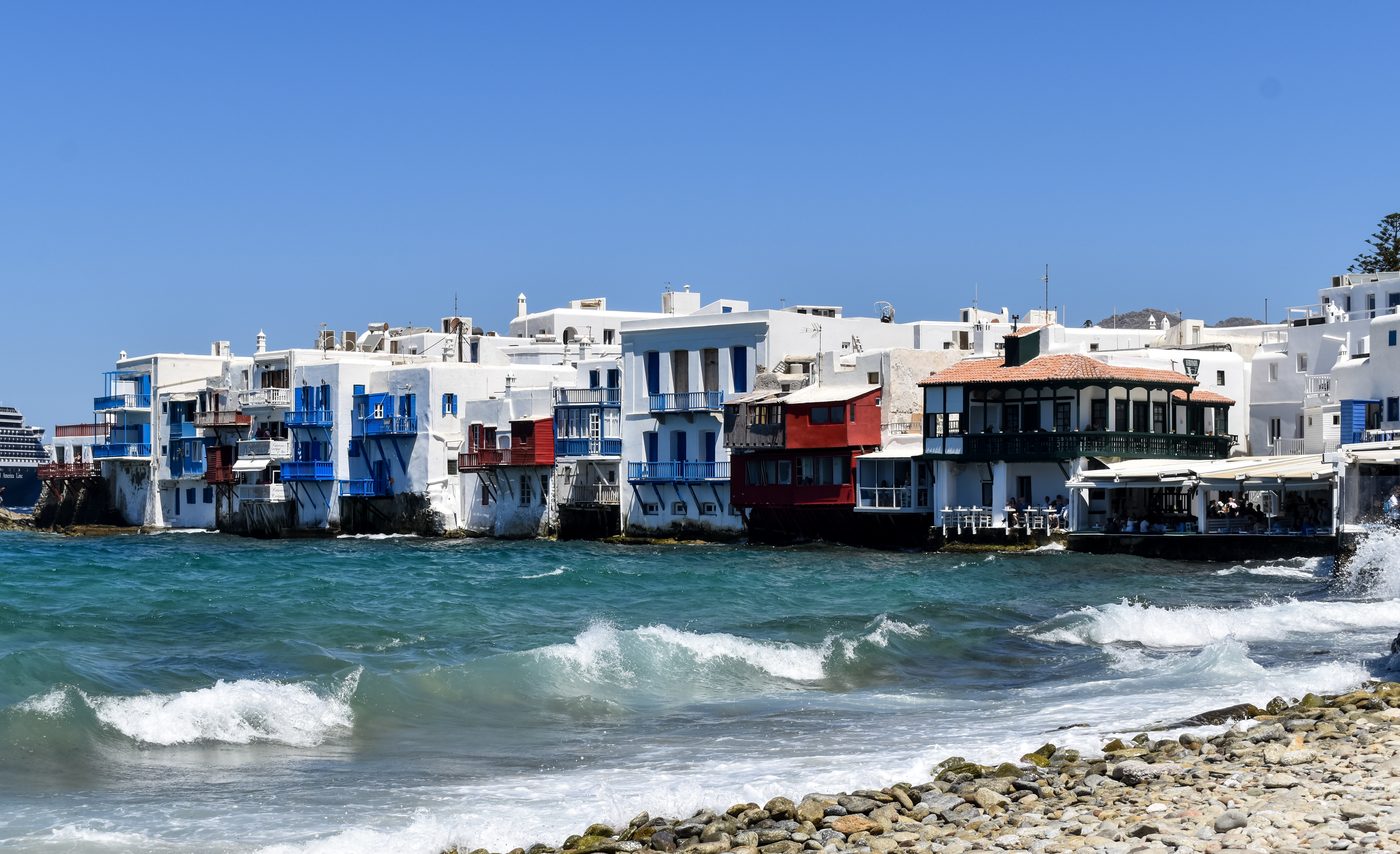
The ferry from Athens to Mykonos takes as little as 1 hour 50 minutes on the fastest high-speed catamaran and up to around 5 hours on a conventional car ferry. Tickets start from roughly EUR 27 in low season and run EUR 38--70 for a fast summer seat. Two Athens-area ports serve the route: Rafina (faster crossings, cheaper fares, closest to the airport, 11+ sailings a day in summer) and Piraeus (central Athens, high-speed from 2h40m). For most travellers, the high-speed boat from Rafina is the smart pick.
In this guide
Athens to Mykonos is one of the busiest, best-served ferry corridors in the Aegean, and the crossing is short enough that a fast ferry rivals a flight on total door-to-door time. This guide covers ferries first and in full (ports, durations, operators, prices, and where you actually arrive), then the flight option, so it answers everything from "how long is the ferry" to "should I just fly."
What Are Your Options for Getting to Mykonos?
| Method | Journey Time | One-Way Cost | Frequency (Summer) | Best For |
|---|---|---|---|---|
| High-speed ferry (Rafina) | 1h50m--2h30m | EUR 38--70 | Very frequent (part of 11+ daily) | Speed + value, airport arrivals |
| Conventional ferry (Rafina) | 4h20m--4h30m | from ~EUR 27 | Several daily | Budget, cars, deck experience |
| High-speed ferry (Piraeus) | 2h40m--2h55m | from ~EUR 44 | 2--4 daily | Central Athens departures |
| Conventional ferry (Piraeus) | 4h--5h50m | from ~EUR 44 | 1--2 daily | Budget from central Athens |
| Flight (ATH--JMK) | 40 min (3--3.5 hrs door-to-door) | EUR 45--150+ | 10--15 daily | Very short trips, peak season |
How Long Is the Ferry From Athens to Mykonos?
It depends entirely on the port and the boat.
- From Rafina, high-speed: as fast as about 1 hour 50 minutes on a SeaJets catamaran, the quickest way to reach Mykonos by sea.
- From Rafina, conventional: roughly 4 hours 20 to 4 hours 30 minutes (Golden Star Ferries around 4h30m, Fast Ferries around 4h20m), often with a stop at Tinos or Andros.
- From Piraeus, high-speed: about 2 hours 40 to 2 hours 55 minutes on SeaJets.
- From Piraeus, conventional: roughly 4 hours to 5 hours 50 minutes on Blue Star Ferries, usually via Syros or Tinos.
The short version: if speed matters, the fastest crossing leaves from Rafina, not Piraeus. Rafina faces east toward the Cyclades, which trims real distance off the route.
Which Port Does the Ferry Leave From: Piraeus or Rafina?
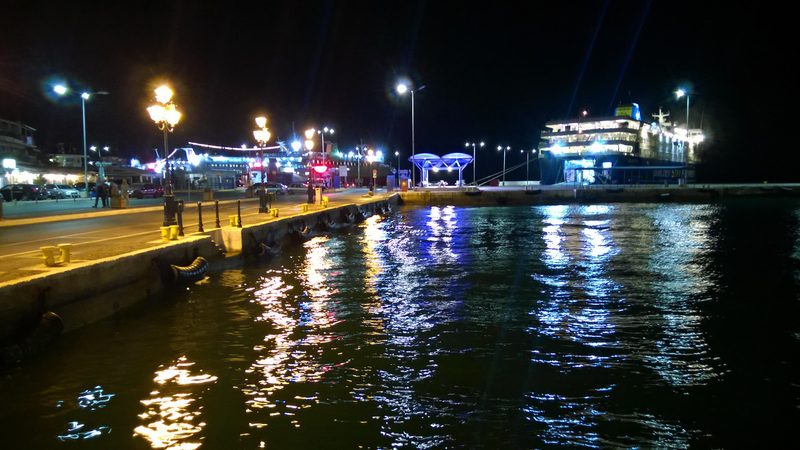
Ferries to Mykonos leave from two Athens-area ports, and choosing the right one is the single most important decision on this route. Unlike the Santorini corridor, where Piraeus handles almost everything, Mykonos is split between the two, and Rafina arguably has the edge.
Rafina sits about 30 km east of central Athens on the Attic coast and is close to Athens International Airport. It is the main departure point for the northern Cyclades (Andros, Tinos, Mykonos), with SeaJets, Golden Star Ferries and Fast Ferries running a combined 11 or more departures a day in peak summer, the first around 07:20. Getting there:
- KTEL bus from central Athens (KTEL Attika terminal near Pedion tou Areos / Victoria metro): inexpensive, roughly 1 hour to 1h15 depending on traffic.
- KTEL bus from Athens Airport: the key advantage: travellers flying in can be at Rafina port in about half an hour, without going into the city at all.
- By taxi: from central Athens roughly EUR 50--70 and 45--75 minutes; from the airport far quicker and cheaper.
Rafina is a pleasant fishing town with waterfront tavernas, so arriving early for a boat is no hardship.
Piraeus is the main port of Athens and the easiest option if you are staying in the city centre, thanks to a direct metro link. It serves Mykonos year-round but with fewer daily sailings than Rafina in summer: SeaJets high-speed and Blue Star conventional, the first departure around 07:00. Getting there:
- Metro Line 1 runs directly to Piraeus from Monastiraki and Thissio (about 20--25 minutes, EUR 1.20). For the full network, see the Athens Metro Guide.
- By taxi from central Athens: about 25 minutes, around EUR 25.
- From Athens Airport: Metro Line 3 (about 60 minutes) or the X96 bus (24/7), both slow. Anyone landing at the airport should head to Rafina, not Piraeus.
Bottom line: stay in central Athens and want simplicity? Piraeus. Landing at the airport, or want the fastest and cheapest crossing? Rafina. (Lavrio, Attica's third port, does not run regular Mykonos service.) You can check current Piraeus to Mykonos schedules and compare live sailing times and operators before you commit to a port.
How Much Do Ferry Tickets Cost?
Fares vary by port, vessel type, seat class and season. Realistic ranges:
From Rafina: - Conventional deck/economy seat: from around EUR 27 in low season. - High-speed economy seat: roughly EUR 38--70 in summer. - Business/VIP seat: EUR 70--110.
From Piraeus: - Standard seat: from around EUR 44, rising with season and seat class. - High-speed and Blue Star fares sit at the higher end of the corridor.
Vehicles (conventional ferries only): cars from roughly EUR 74 out of Rafina; motorcycles EUR 25--45. Children under four usually travel free; ages 4--10 typically get a 50 percent discount.
Where to book: Ferryscanner and Ferryhopper both compare every operator side-by-side with real-time availability, which makes it easy to spot the best mix of time and price. Booking direct on operator websites works too. Popular summer sailings, especially morning high-speed departures from Rafina on Fridays and weekends, do sell out, so do not count on walking up on the day in peak season. Always check the total price at checkout, as some platforms add a service fee on top of the headline fare.
Which Ferry Companies Sail to Mykonos?
SeaJets runs high-speed catamarans from both ports, the only operator serving Mykonos from Piraeus and Rafina. From Piraeus, about 2h40m--2h55m; from Rafina, as fast as around 1h50m. Fastest option overall, but aircraft-style seating with little or no outdoor deck, and it can be a rough ride when the summer meltemi wind blows hard.
Golden Star Ferries operates from Rafina with both high-speed and conventional vessels, typically around 4h30m on the conventional crossing. Modern fleet, high frequency, cabins on some sailings. Rafina only.
Fast Ferries (Cyclades Fast Ferries) runs conventional service from Rafina, around 4h20m, carrying both passengers and cars. Budget-friendly, outdoor decks, slower. Rafina only.
Blue Star Ferries operates conventional service from Piraeus (roughly 4h to 5h50m, often via Syros or Tinos). Big, stable ships with sun decks, cafeterias and cabins (the comfortable choice in rough weather), but slower and limited to one or two Mykonos sailings a day. Hellenic Seaways (same Attica Group) occasionally adds high-speed sailings from Piraeus in peak summer.
For most summer travellers, the high-speed boat from Rafina is the sweet spot: fast enough to rival a flight door-to-door, substantially cheaper, and no luggage fees.
Where Do Ferries Arrive on Mykonos?
All ferries now dock at the New Port at Tourlos, about 2 km north of Mykonos Town (Chora). This has been the case since 2019; the old port in Chora now handles only small boats, yachts and the excursion boats to Delos. Tourlos is modern and functional, with a taxi rank, a bus stop and a few mini-markets and cafes. Getting into town:
- KTEL bus: meets arriving ferries; about 10 minutes to Fabrika station, EUR 2.
- Sea Bus: a shuttle boat to the old port every 30 minutes (about 8 minutes, EUR 2), often faster than the road in high season.
- Taxi: roughly EUR 10--15, but Mykonos taxis are notoriously scarce in summer.
If you are heading straight to a south-coast beach hotel (Ornos, Platis Gialos, Elia), arrange a transfer or take a beach bus from Fabrika. Dragging luggage through Chora's narrow lanes is nobody's idea of a holiday start.
Should You Take the Ferry or Fly?
Three airlines fly Athens (ATH) to Mykonos (JMK): Aegean Airlines (the bulk of the schedule, year-round, checked bag on most fares), Sky Express (competitive fares, jets and ATR turboprops) and Volotea (seasonal, roughly April--October). There is no Ryanair on this route, so no true ultra-low-cost air option. In peak summer the combined schedule runs 10--15 flights a day each way.
The flight itself is about 40 minutes, one of the shortest in Greece, but door-to-door from central Athens is realistically 3 to 3.5 hours once you add getting to the airport (see the Athens Airport to City Center guide), checking in, and transferring from JMK to your hotel. That is barely faster than the high-speed ferry from Rafina.
| Factor | Fast ferry (Rafina) | Flight |
|---|---|---|
| Door-to-door time | ~3 hours | 3--3.5 hours |
| Typical one-way cost | EUR 38--70 | EUR 70--150+ (peak) |
| Luggage | Free, unlimited | Extra on cheapest fares |
| From the airport | ~20--30 min to port | Domestic transfer/terminal |
| Rough-weather risk | Can be bumpy in meltemi | Unaffected |
| Flexibility | Easy to change/cancel | Yield-managed, pricey late |
Take the ferry if you are arriving at or leaving from the airport, budget matters, you have heavy luggage or a car, or you want to see the Cyclades from the water. Take the flight if the trip is very short, you are worried about a rough peak-season meltemi crossing, or you are connecting from an international flight on a tight schedule. Prone to seasickness or bringing a vehicle? Choose the big conventional ferry: it rides rough seas far better than a catamaran.
The arithmetic: staying in central Athens for a summer trip, the fast ferry from Rafina gets you to Mykonos Town in about three hours for EUR 40--60. A flight takes three to three-and-a-half hours door-to-door for EUR 70--120. The ferry usually wins on both price and simplicity unless there is a specific reason to fly.
When Should You Book?
Mykonos is one of the most in-demand islands in Greece and books up earlier than most. High-speed departures from Rafina regularly sell out on Friday and Saturday mornings in July and August. Book those one to two weeks ahead, and cabins on conventional sailings two to three weeks ahead. Most ferry operators allow free cancellation or a date change up to 24--48 hours before departure, a genuine advantage over flights.
Flight prices follow aggressive yield management: best fares land three to four months out (EUR 50--70 on Aegean), moderate one to two months ahead, and spike hard inside two weeks: last-minute peak weekends can hit EUR 150--300+. The golden rule: if your dates are fixed, book the fast ferry or the flight early; if you are flexible, the ferry gives the most last-minute options, with a boat leaving Rafina within hours most summer mornings.
Can You Visit Mykonos as a Day Trip From Athens?
Not really, and probably not wisely. A two-hour fast ferry each way beats a Santorini day trip on paper, but a 07:20 boat out and a 19:00 boat back leaves perhaps seven hours on the island: enough to wander Chora, eat a long lunch and see Little Venice, but a rigid, rushed day that misses the point of Mykonos. The island deserves at least two nights; three or four allows a Delos excursion, a beach day and a proper evening out.
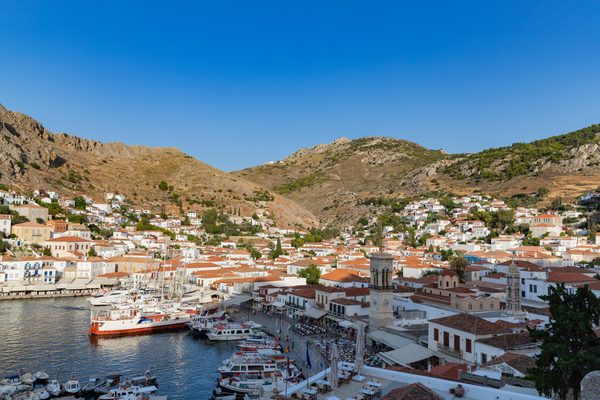
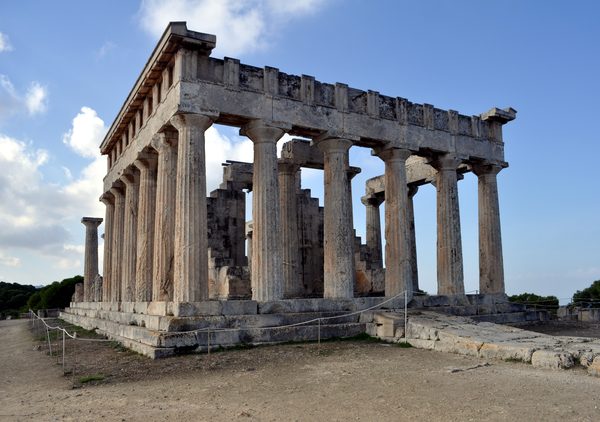
For day trips that genuinely work in a single day, the Saronic Islands are the natural fit: Aegina is 40 minutes by fast ferry, Hydra about 90. See the best day trips from Athens guide for the full range, and the Athens to Santorini guide if you are weighing up the other headline Cycladic route.
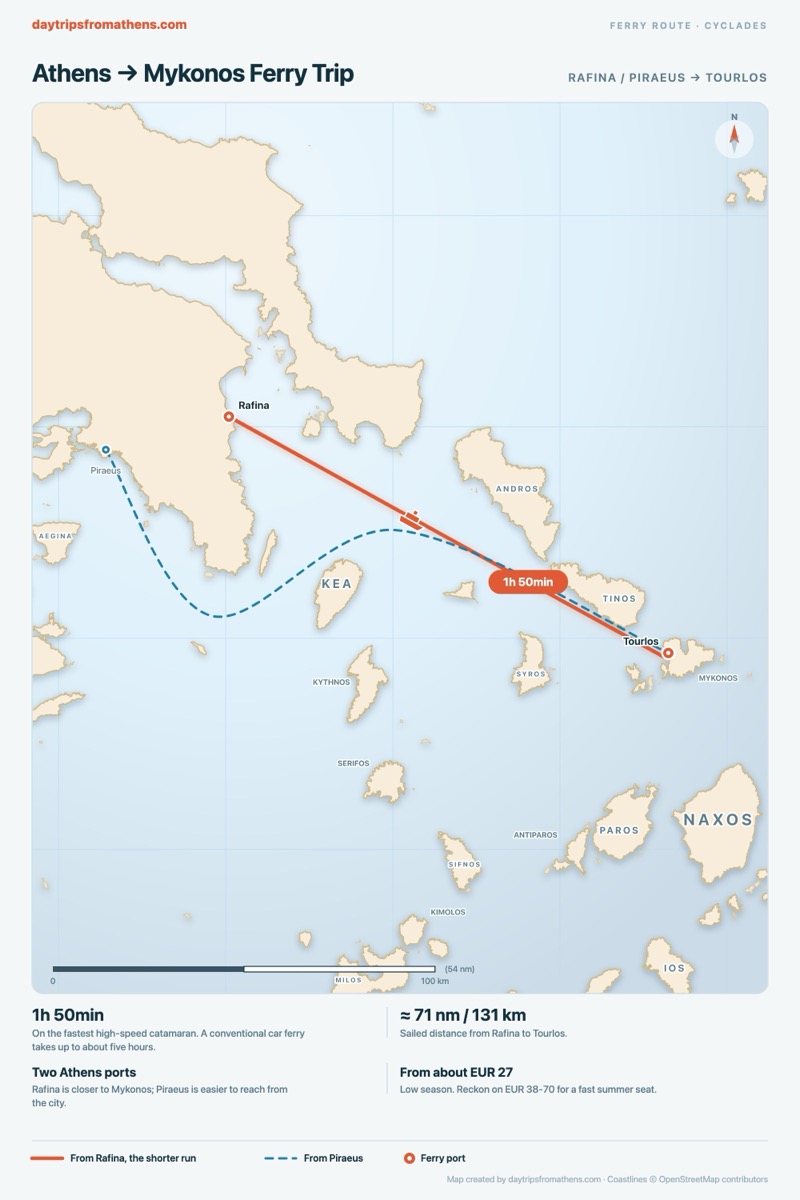
Athens to Mykonos is one of the fastest, best-served ferry routes in the Aegean. The high-speed crossing from Rafina (as quick as 1h50m, from around EUR 38, luggage included) is hard to beat on this particular route. Flights save almost no time and cost more. For most travellers, the morning catamaran from Rafina is the right call.
Planning more adventures from the capital? Browse our complete guide to the best day trips from Athens.
Heading to Santorini? See our guide to the best day trips from Santorini.
Heading to Mykonos? See our guide to the best day trips from Mykonos.
Last updated: 2 August 2026