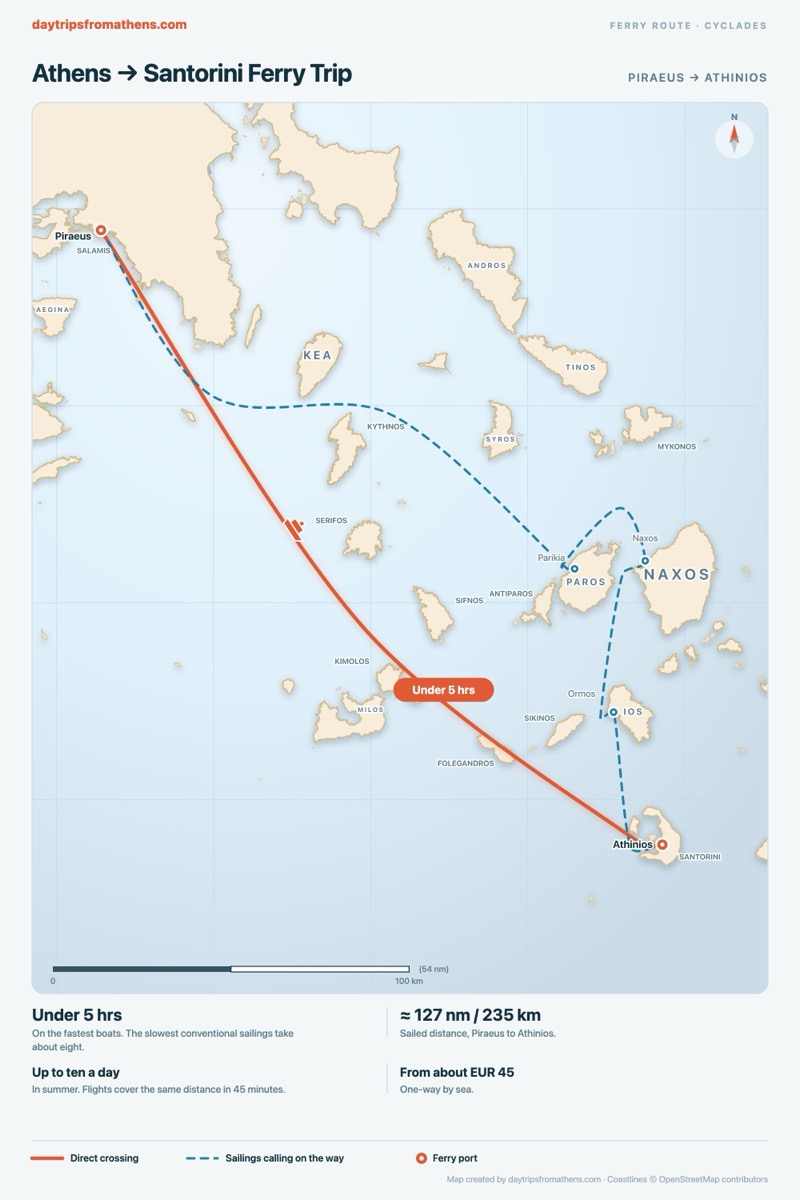
Santorini sits roughly 200 km southeast of Athens across the Aegean Sea. Up to ten ferries make the crossing daily in summer (the fastest in under five hours, the slowest in eight), while half a dozen flights cover the same distance in 45 minutes. One-way fares start around EUR 45 by sea and EUR 35 by air, making this one of the most competitive and well-served routes in Greece.
In this guide
The Athens-to-Santorini corridor is arguably the single most popular island connection in the country, and for good reason. Whether arriving on a sunrise catamaran that threads through the Cyclades or stepping off a short-hop turboprop, every traveller has options here. The question is which one suits the trip. This guide covers both ferries and flights in full practical detail, including ports, operators, prices, and the trade-offs of each.
What Are Your Options for Getting to Santorini?
Before diving into the details, here is the quick comparison:
| Method | Journey Time | One-Way Cost | Frequency (Summer) | Best For |
|---|---|---|---|---|
| High-speed ferry (Piraeus) | 4.5--5.5 hours | EUR 70--110 | 4--6 daily | Island-hoppers, scenic route |
| Conventional ferry (Piraeus) | 7.5--8 hours | EUR 45--60 (deck) | 2--3 daily | Budget travellers, car transport |
| Ferry from Rafina | 5--6 hours | EUR 80--110 | 1--2 daily | Those near airport or east Athens |
| Flight | 45 min (3.5--4 hrs door-to-door) | EUR 35--150+ | 8--12 daily | Short trips, time-poor, peak season |
The rest of this article breaks down each option so there are no surprises at the port or airport.
How Do Ferries to Santorini Work?
Which Ports Do Ferries Leave From?
Ferries to Santorini depart from two Athens-area ports: Piraeus and Rafina. The vast majority, roughly 95 percent of sailings, leave from Piraeus.
Piraeus is the main port of Athens and the largest passenger port in Europe. It handles year-round service to Santorini with up to nine or ten daily crossings in peak summer. Getting there from central Athens is straightforward:
- Metro Line 1 runs directly to Piraeus station from Monastiraki and Thissio. The ride takes 20--25 minutes and costs EUR 1.20. From Syntagma, change at Monastiraki, one stop away.
- Bus 040 connects Syntagma Square to Piraeus around the clock (including overnight for early-morning ferries). It takes about 50 minutes and costs EUR 1.40.
- The X80 express bus runs from Syntagma to Piraeus every 30 minutes from May through October.
- By taxi, the trip from central Athens to the port takes about 25 minutes and costs around EUR 25.
- From Athens Airport, take Metro Line 3 all the way to Piraeus (about 60 minutes, EUR 9) or the X96 bus (EUR 5.50, about 90 minutes, runs 24/7).
For a deeper look at the metro system, see the Athens Metro Guide.
Piraeus also serves the western Cyclades, a separate chain from Santorini's. Fast catamarans reach Milos in three to four hours, which is worth knowing if you are pairing Santorini with somewhere quieter.
Rafina is a smaller port on the east coast of Attica, about 30 km from central Athens and just 25 km from the airport. It serves a seasonal Santorini route (April to October) with one or two daily departures, primarily operated by Golden Star Ferries and occasionally SeaJets. Getting there:
- KTEL bus from Nomismatokopio (near Victoria metro station): EUR 3--4, roughly 75 minutes.
- KTEL bus from Athens Airport: EUR 3, about 30--40 minutes, departures every 30--60 minutes.
- By taxi from central Athens: approximately EUR 50--60 depending on traffic.
Rafina makes the most sense if you are flying into Athens and heading straight to Santorini, since it is much closer to the airport than Piraeus. Otherwise, Piraeus offers far more choice and frequency.
Lavrio, the third Attica port, does not operate regular ferry services to Santorini.
What Ferry Types Are Available?
Two fundamentally different vessel types serve the route, and the choice between them shapes the entire experience.
High-speed catamarans and hydrofoils are operated primarily by SeaJets from Piraeus and Golden Star Ferries from Rafina. These sleek vessels cut the crossing to 4.5--5.5 hours. The trade-offs: passengers are mostly confined to aircraft-style seating indoors, there is limited or no outdoor deck access, the ride can be rough in the meltemi winds that blow across the Aegean from July through September, and they cost roughly double the price of a conventional ferry. Most high-speed services do not carry cars, though SeaJets accepts vehicles on select sailings (from around EUR 128).
Conventional ferries are the workhorses of the route. Blue Star Ferries operates the flagship conventional service from Piraeus, with Fast Ferries also running seasonal sailings. These large vessels take 7.5--8 hours but offer an entirely different experience: open sun decks, multiple lounges, cafeterias, bars, and the option to book a private cabin for the journey. They are significantly cheaper, more stable in rough weather, and the only reliable option for transporting a car (from around EUR 95--130). The Blue Star Ferries route through the Cyclades (with possible stops at Paros, Naxos, and Ios) is one of the iconic Greek ferry experiences.
Hellenic Seaways, which is part of the same Attica Group as Blue Star Ferries, occasionally operates high-speed vessels on the route as well.
Which Ferry Companies Operate This Route?
Blue Star Ferries is the dominant conventional operator. Their ships (Blue Star Delos, Blue Star Paros) are large, modern, and reliable. Pros: spacious, outdoor decks, cabins available, car-friendly, stable in rough seas. Cons: the 8-hour journey is a serious time commitment. Deck seats start around EUR 57 in summer 2026.
SeaJets runs the most high-speed departures from Piraeus, typically with multiple daily sailings in summer. Their fleet includes large catamarans like the WorldChampion Jet. Pros: fastest crossing (as low as 4h30), frequent departures. Cons: expensive (from EUR 70--110), no outdoor deck, can be rough in wind, cramped seating on older vessels.
Golden Star Ferries operates high-speed service from Rafina with stops at Mykonos, Naxos, and other Cycladic islands. Pros: convenient from the airport, modern vessels. Cons: seasonal only, limited to 1--2 daily departures, from EUR 82.
Fast Ferries runs conventional service on the route, primarily in summer. Their fares can undercut Blue Star. Deck seats start around EUR 48. Pros: budget-friendly. Cons: smaller fleet, seasonal schedules.
How Much Do Ferries Cost?
Prices vary by operator, vessel type, seat class, and season. Here are realistic ranges for summer 2026:
Conventional ferries (Blue Star, Fast Ferries): - Deck/economy seat: EUR 45--60 - Numbered airline-style seat: EUR 55--75 - Two-berth cabin: EUR 90--130 - Four-berth cabin: EUR 70--100 per person (often the best value for families)
High-speed ferries (SeaJets, Golden Star, Hellenic Seaways): - Economy seat: EUR 70--110 - Business/VIP seat: EUR 100--140 - No cabins available on high-speed vessels
Vehicle transport: - Car on conventional ferry: EUR 95--130 - Car on SeaJets (where accepted): from EUR 128 - Motorcycle: EUR 32--50
Prices are generally 10--20 percent lower outside peak season (roughly April--May and October). Children under four travel free on most operators; ages 4--10 receive a 50 percent discount.
Where to book: Ferryhopper and Ferryscanner are the two best comparison platforms. They show all operators side by side with real-time availability. Booking direct through Blue Star Ferries or SeaJets websites works too, but you lose the ability to compare easily. Tickets can also be purchased at port agencies on the day, though summer sailings do sell out, particularly high-speed ferries on Friday/Saturday departures.
Book at least a few days ahead in July and August. For conventional ferries with cabin bookings, two to three weeks ahead is wise during peak season.
What Is the Ferry Experience Like?
Boarding typically begins 30--60 minutes before departure. For Piraeus, arrive at least 45 minutes early (90 minutes if travelling with a vehicle). The port is enormous. Ferries depart from gates E6 through E9 for Cyclades routes, and finding the right gate in the pre-dawn darkness is a rite of passage for first-time visitors. Signage exists but is not always intuitive. Download your boarding pass (QR code) to your phone in advance.
On a conventional ferry like Blue Star, the experience is pleasant. There are multiple deck levels with indoor lounges (air-conditioned, some with power outlets), a self-service cafeteria, a bar, a small shop, and, crucially, open sun decks at the stern and bow where you can watch the islands pass by. Luggage has no weight limit and is simply stored in the hold or brought to your seat. The ship typically stops at Paros (after about 4 hours), then Naxos, then Ios, before arriving at Santorini. Each stop is a brief window to watch passengers and vehicles disembark on distant island quays.
On a high-speed catamaran, the experience is closer to a bus or plane. Passengers sit in numbered seats, there is limited movement between decks, and stepping outside is usually not permitted while underway. A snack bar operates. The ride is smooth in calm weather but can become genuinely uncomfortable when the meltemi wind kicks up. Motion sickness is a real consideration from mid-July through August.
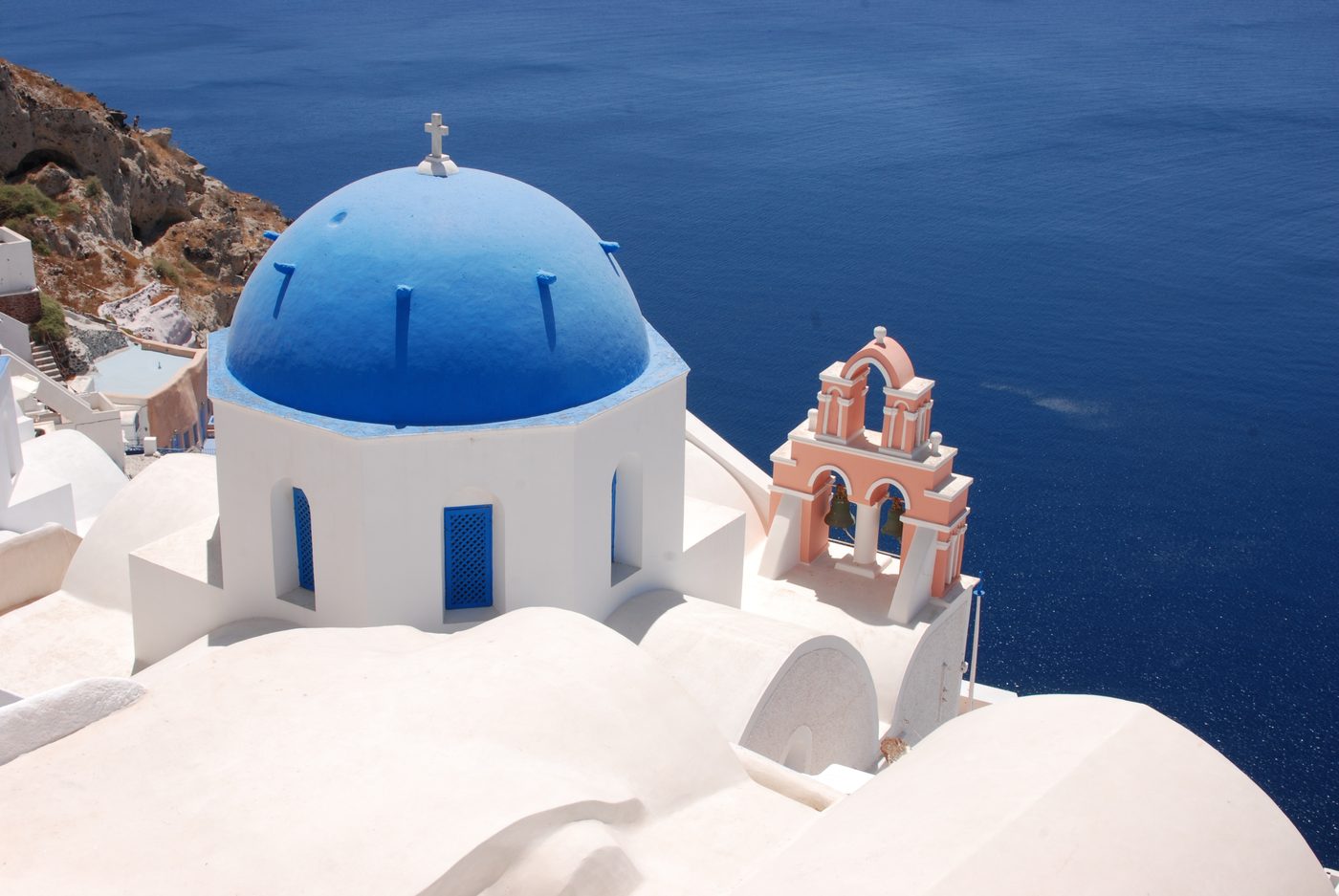
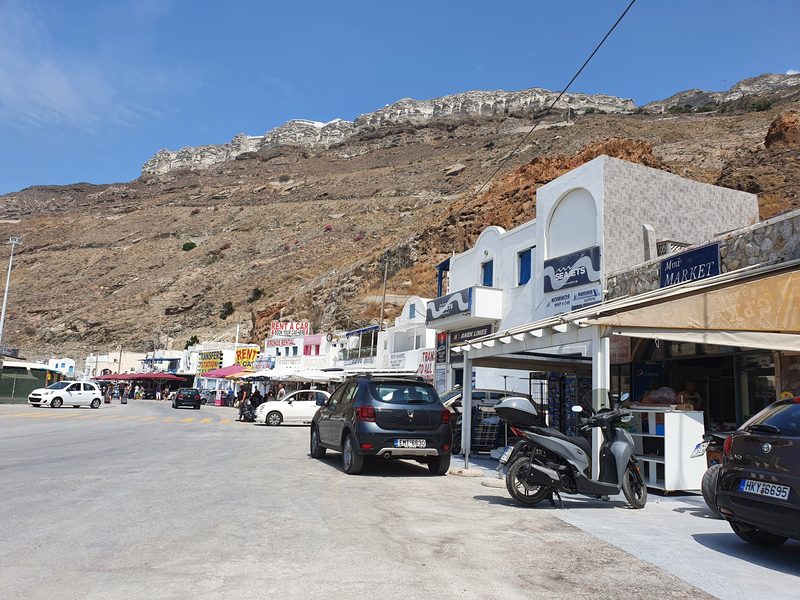
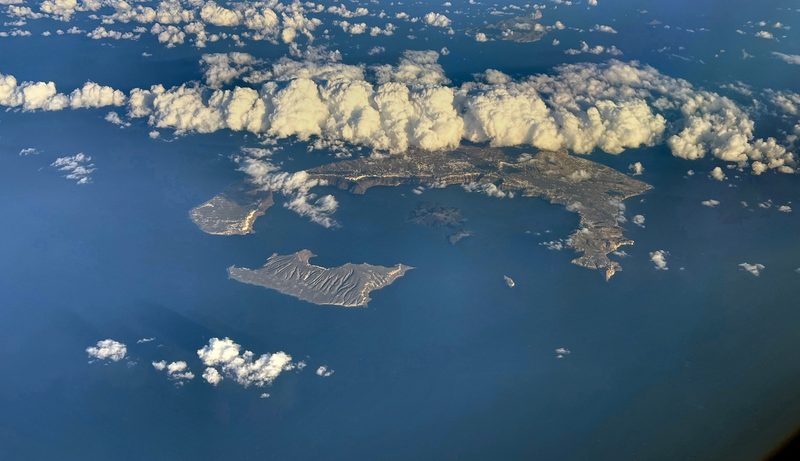
Arriving at Santorini, ferries dock at Athinios port, located at the base of the caldera cliffs on the island's southwest coast. The arrival is dramatic. The ship sails into the caldera between Santorini and Thirassia, with the caldera walls rising 300 metres on either side. This is, hands down, one of the most spectacular arrivals in the Mediterranean, and one of the strongest arguments for taking the ferry.
How Do Flights to Santorini Work?
Which Airlines Fly Athens to Santorini?
Four airlines operate the ATH--JTR route, with frequency ramping up sharply in summer:
Aegean Airlines is the Greek flag carrier and carries nearly half of all passengers on this route. It operates multiple daily flights year-round using Airbus A320-family jets. Aegean offers complimentary snacks and drinks even in economy, and a generous 23 kg checked bag allowance is included in most fare classes. This is the most reliable and comfortable option.
Sky Express is a Greek regional carrier that has grown rapidly. It operates turboprop and jet aircraft on the route with high frequency: up to 30--55 weekly flights in summer. Fares tend to be competitive (from EUR 42), and the airline includes a small checked bag in most fares. The ATR turboprops are noisier but perfectly safe.
Ryanair flies the route seasonally (typically April--October, though some winter flights exist). Ryanair offers the lowest headline fares, sometimes as low as EUR 25--35 one-way, but the true cost climbs once carry-on bag restrictions and checked luggage fees (EUR 20--40) are factored in. No seat assignment without paying. Boarding can feel chaotic.
Volotea operates a small number of seasonal flights, generally from spring through autumn. Fares are competitive but frequency is limited (around 7 weekly flights), making it more of a supplementary option than a primary one.
In peak summer, the combined schedule offers 8--12 daily flights in each direction.
How Long Is the Flight?
The flight itself takes approximately 45--50 minutes gate to gate. However, total door-to-door travel time from central Athens to a Santorini hotel is realistically 3.5--4 hours once you factor in:
- Getting to Athens Airport (40--60 minutes from central Athens by metro or bus; see the Athens Airport to City Center guide for details)
- Arriving 60--90 minutes before departure
- The 45-minute flight
- Collecting luggage at Santorini (15--20 minutes)
- Transferring to your hotel (10--30 minutes depending on location)
This is notably shorter than even the fastest ferry, but it is not the massive difference some travellers expect. A high-speed ferry from Piraeus takes roughly 5--6 hours total from central Athens, including the metro ride to the port. The real time saving of flying is about 1.5--2 hours compared to a fast ferry.
How Much Do Flights Cost?
Flight prices on this route are highly seasonal and volatile:
| Period | Typical One-Way Fare | Notes |
|---|---|---|
| Off-peak (Nov--Mar) | EUR 35--60 | Limited flights, best deals |
| Shoulder (Apr--May, Oct) | EUR 45--80 | Good availability |
| Peak (Jun--Sep) | EUR 70--150 | Book early for lower fares |
| Last-minute peak | EUR 150--250+ | July/August departures |
Budget carrier fares (Ryanair, Volotea) start as low as EUR 25--35 but add EUR 20--40 for a checked bag. A Ryanair flight with a 20 kg suitcase often costs EUR 55--75 in reality.
Full-service fares (Aegean, Sky Express) include checked luggage and start around EUR 50--60 off-peak, rising to EUR 80--120 in summer. Aegean's GoLight fare (no checked bag) can be cheaper but negates the airline's main advantage.
The key insight: when booked early, flights and high-speed ferries cost roughly the same (EUR 70--110). But flights booked last-minute in July can cost EUR 200+, while ferry prices are more stable.
What About the Airports?
Athens International Airport (ATH), officially Eleftherios Venizelos, is a modern, well-connected airport located 30 km east of central Athens. Getting there:
- Metro Line 3: EUR 9, about 40 minutes from Syntagma. Runs 05:30--23:30.
- Bus X95: EUR 5.50, about 60 minutes from Syntagma. Runs 24/7.
- Taxi: EUR 50 (flat rate to city centre, day rate) or EUR 65 (midnight--05:00).
The airport has a single main terminal. Domestic flights use gates in the B area. Security queues are generally manageable, but allow extra time in summer.
For full transport details, see Athens Airport to City Center.
Santorini Airport (JTR), officially Thira National Airport, is small and famously basic. There is one terminal building, one runway, and limited infrastructure. In peak summer, the arrivals area fills quickly and queues form outside. There is no jet bridge; you walk across the tarmac. A handful of car rental desks, a cafe, and an ATM are about it.
Transfers from the airport:
- Bus to Fira: EUR 2, about 10 minutes. Timed to flight arrivals but can fill up.
- Taxi to Fira: EUR 30--35. Taxis are limited. Pre-booking is strongly recommended.
- Taxi to Oia: EUR 35--45, about 25 minutes.
- Shared shuttle: EUR 15--20 per person, bookable in advance.
The airport is 6 km from Fira and 17 km from Oia. There is no direct bus to Oia from the airport; transfer in Fira.
Ferry vs Flight: Which Should You Choose?
This is genuinely situation-dependent. Use this framework:
Choose the flight if: - The trip is short (a week or less) and every day on the island counts. - Travel is during peak season and you have booked early enough to get reasonable fares. - Motion sickness is a concern (the meltemi winds make July--August crossings rough on fast ferries). - Travelling light with minimal luggage. - Coming from or returning directly to the airport.
Choose the conventional ferry if: - Budget matters: deck seats are the cheapest way to reach Santorini. - Transporting a car, motorcycle, or large amounts of luggage. - The journey itself is part of the experience (caldera arrival, island-hopping, sun decks). - Travelling with young children who need space to move around. - Flexibility is needed: ferry tickets are easier to change or cancel than flights.
Choose the high-speed ferry if: - Planning to island-hop (Paros, Naxos, or Ios en route to Santorini). - Preferring sea travel but not wanting an 8-hour commitment. - Travelling with luggage that budget airlines would charge extra for.
In practice: for a simple point-to-point trip in summer, a flight booked 3--4 weeks ahead usually costs the same as a fast ferry and saves two hours. The conventional ferry only wins on price or when the scenic experience matters. But for island-hopping itineraries, ferries are the clear choice: you cannot easily visit Naxos and Ios by air.
When Should You Book?
Ferries: Conventional ferry deck seats rarely sell out except on Friday and Saturday departures in August. Booking a few days ahead is usually sufficient. However, high-speed ferries sell out regularly in July and August, particularly morning departures. Book these one to two weeks ahead. Cabin bookings on Blue Star should be made two to three weeks ahead in peak season.
Most ferry operators allow free cancellation or date changes up to 24--48 hours before departure. This flexibility is one of the ferry's underrated advantages.
Flights: Prices on this route follow classic airline yield management: the earlier you book, the lower the fare. For summer travel: - 3--4 months ahead: best prices (EUR 50--70 on Aegean). - 1--2 months ahead: moderate prices, good seat selection. - Less than 2 weeks: prices spike, especially Fridays and weekends. - Day-of: expect EUR 150+ in summer, if seats remain at all.
Ryanair and Volotea occasionally run flash sales dropping fares to EUR 20--30, but these are unpredictable and sell out in hours.
The golden rule for this route: if you know your dates, book the flight or fast ferry early. If your plans are flexible, the conventional ferry gives you the most last-minute options.
What About Santorini's Port?
All ferries arrive at Athinios Port (sometimes written as Afinios), located on the southwest coast of Santorini at the base of the caldera cliffs. It is the island's only commercial ferry port.
Athinios is about 8 km from Fira (the island's main town) and 20 km from Oia. A steep, switchback road climbs from the port up to the caldera rim. This road is the single biggest bottleneck on arrival, and traffic can be severe when multiple ferries dock close together.
Getting from the port to your hotel:
- Public bus: EUR 2.50, about 20 minutes to Fira. Buses are timed to ferry arrivals but can fill up quickly. From Fira's bus station, connections run to Oia (30 minutes), Kamari, Perissa, and Akrotiri.
- Taxi: Around EUR 35 to Fira. Taxis at the port are extremely limited: there are fewer than 30 taxis on the entire island. Pre-booking through your hotel or a transfer service is highly recommended, especially in peak season.
- Pre-booked private transfer: EUR 40--60 to most destinations. This is the most stress-free option and worth the premium for late-evening arrivals when buses may not be running.
A new port at Monolithos on the east coast has been approved by the Greek government, intended to provide greater capacity and an emergency evacuation route. As of early 2026, the project remains in the planning and regulatory approval stage, with no confirmed construction start date. For the foreseeable future, Athinios is the port to plan around.
One note: cruise ships do not use Athinios. They anchor in the caldera and tender passengers to the Old Port below Fira. This is a separate port entirely and has no connection to ferry services.
Can You Do Santorini as a Day Trip From Athens?
Not practically.
Even the fastest ferry takes nearly five hours each way, which means 10 hours on a boat for a handful of hours on the island. A flight is theoretically possible (depart Athens at 07:00, arrive by 08:00, return at 20:00), but you would spend more time in airports than on Santorini, the cost would be EUR 150--300+ for same-day return flights, and the experience would be rushed to the point of absurdity.
Santorini deserves at minimum two nights, ideally three or four. A day trip does not do it justice and is not a good use of time or money.
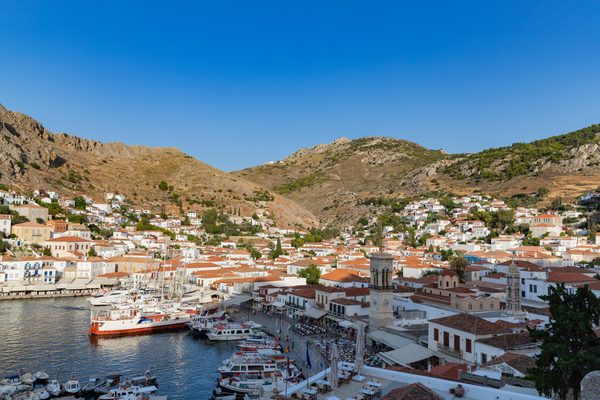
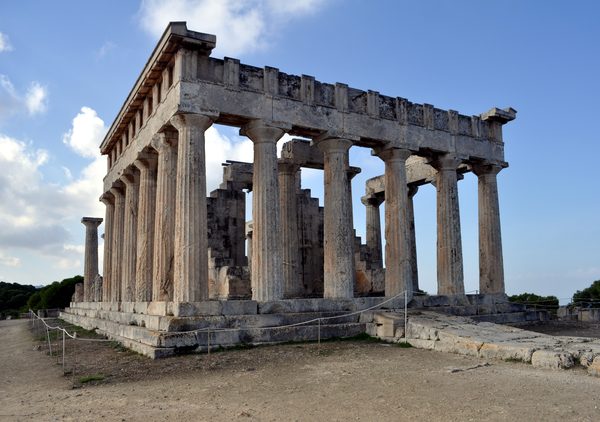
For genuine day trips from Athens that work within a single day, the Saronic Islands are the natural choice: Aegina is 40 minutes by fast ferry, Hydra about 90 minutes, and a three-island Saronic cruise covers multiple islands in one day. For a broader look at what is realistically doable in a day, see the full best day trips from Athens guide.
If a longer Athens-based trip is on the table, the five-day Athens itinerary shows how to combine city exploration with island and mainland excursions, and yes, Santorini can be worked in as a two- or three-night extension.
Athens to Santorini is one of the best-connected routes in Greece, with ferries from Piraeus running year-round and multiple daily flights in summer. For budget travellers with time, the conventional ferry is unbeatable. For those watching the clock, a flight booked early costs no more than a fast ferry and saves hours. Either way, the destination is worth the journey.
Planning more adventures from the capital? Browse our complete guide to the best day trips from Athens.
Heading to Santorini? See our guide to the best day trips from Santorini.
Heading to Mykonos? See our guide to the best day trips from Mykonos.
Last updated: 28 September 2026