The closest Greek island to Athens and the easiest to reach: Aegina is a 40-minute ferry ride from Piraeus, with a 2,500-year-old Doric temple, the best pistachios in Greece, and a harbour town that feels a world away from the capital.
In this guide
Aegina sits in the Saronic Gulf, just 27 km from Piraeus. It's been inhabited for over 4,000 years and was once a major maritime power that rivalled Athens itself. Today it's a working island with fishing boats, pistachio groves, and a slower pace of life. Unlike the more touristed Cyclades, Aegina feels authentically Greek. Locals outnumber visitors for most of the year.
How Do You Get There From Athens?
By Ferry from Piraeus
Ferries run throughout the day, year-round. Piraeus is connected to central Athens by Metro Line 1 (Green Line), about 25 minutes from Monastiraki.
You can compare ferry prices and book at Ferryscanner.
| Ferry Type | Journey Time | Cost (one way) | Frequency |
|---|---|---|---|
| Regular ferry | 1 hr 10 min | 8-10 EUR | Roughly hourly |
| Fast ferry (Flying Dolphin/catamaran) | 40 min | 14-16 EUR | Roughly hourly |
The first ferry departs around 06:30, with the last return from Aegina around 19:45 (later in summer).
Tips: - Book in advance for summer weekends. Ferries can sell out. - The regular ferry is half the price and only 30 minutes slower. It also has an open deck where you can sit outside. - Arrive at Piraeus 30-45 minutes before departure. The port is large and finding the right gate takes time.
By Organised Day Cruise
Several operators run 3-island day cruises covering Aegina, Poros, and Hydra. These give you 1.5-2 hours on Aegina, enough for the harbour but not the Temple of Aphaia. If Aegina is your main interest, go independently by ferry.
What Can You See and Do?
Aegina Town
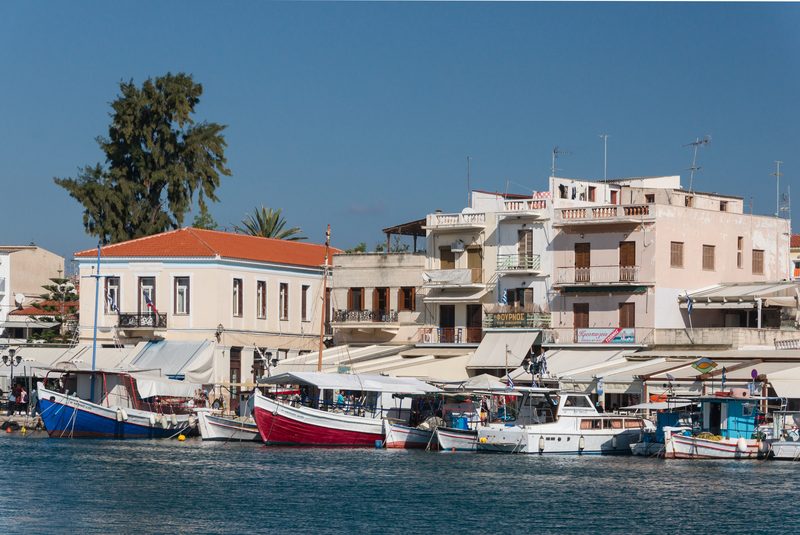
All ferries dock at the main harbour. The waterfront is a crescent of neoclassical buildings, fish restaurants, and cafes. Behind it, narrow streets with churches, shops, and market stalls selling pistachios in every form imaginable.
The town was briefly the first capital of independent Greece (1828-1829), before the capital moved to Nafplio and then Athens. The Kapodistrias buildings from that period still stand.
The fish market at the harbour is worth a visit: small, authentic, and a reminder that this is still a fishing island.
The pistachio ice cream from the little kiosk on the harbour (next to the fish market) is the best I've had anywhere in Greece. Get it before you do anything else.
Temple of Aphaia
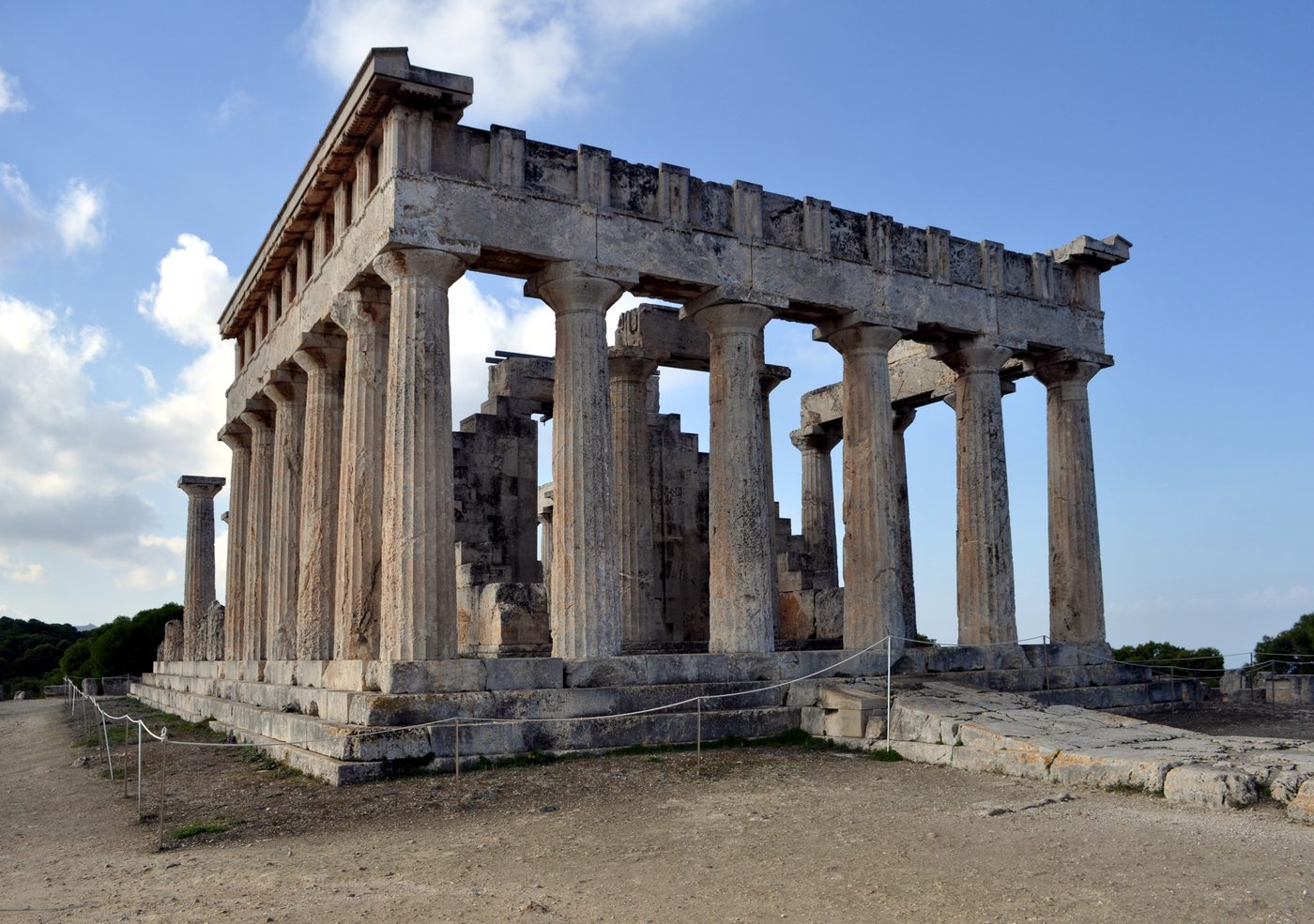
The main archaeological draw. Built around 490 BC, the Temple of Aphaia is one of the best-preserved Doric temples in Greece. Twenty of the original 32 columns still stand, set on a wooded hilltop with views across the sea to both Athens and the Peloponnese.
The temple forms one corner of the so-called "Sacred Triangle", an equilateral triangle connecting the Temple of Aphaia, the Parthenon, and the Temple of Poseidon at Sounion. Whether this was intentional or coincidental is still debated.
Getting there: The temple is about 13 km east of Aegina town. Options: - Bus: Buses to Agia Marina pass the temple. Runs several times per day. About 20 minutes, 2 EUR. - Taxi: About 15 EUR one way. Agree on a return pickup. - Scooter/bike rental: Available in town. The ride is scenic but hilly.
Entrance fee: 10 EUR (full), 5 EUR (reduced). Free for EU citizens under 25.
Opening hours: 08:00-20:00 (summer), 08:00-17:00 (winter).
Agios Nektarios Monastery
One of the largest churches in Greece, built in honour of Saint Nektarios, the most recently canonised Orthodox saint (canonised 1961, died 1920). The monastery is on the road to the Temple of Aphaia and can be combined with a temple visit. Free entry.
Pistachios
Aegina's pistachios have Protected Designation of Origin status. The island's volcanic soil and dry climate produce a smaller, more intensely flavoured nut than you'll find anywhere else.
Pistachio shops line the harbour. You'll find them raw, roasted, salted, candied, ground into butter, baked into pastries, and distilled into liqueur. Free samples are standard. Budget 10-15 EUR for a good-sized bag to take home.
The annual Pistachio Festival runs in September. If you're visiting then, it's worth timing your trip around it.
Beaches
Aegina's beaches are decent without being spectacular. The best options:
- Agia Marina. The most popular beach, on the east coast near the Temple of Aphaia. Sandy, organised, good for families (Aegina tops our list of Athens day trips with toddlers and babies). Can get busy in summer.
- Marathonas. A long sandy beach on the east coast. Quieter than Agia Marina. Good tavernas nearby.
- Perdika. A fishing village on the south tip with a small beach and excellent seafood tavernas. Boats run from here to the tiny island of Moni for swimming.
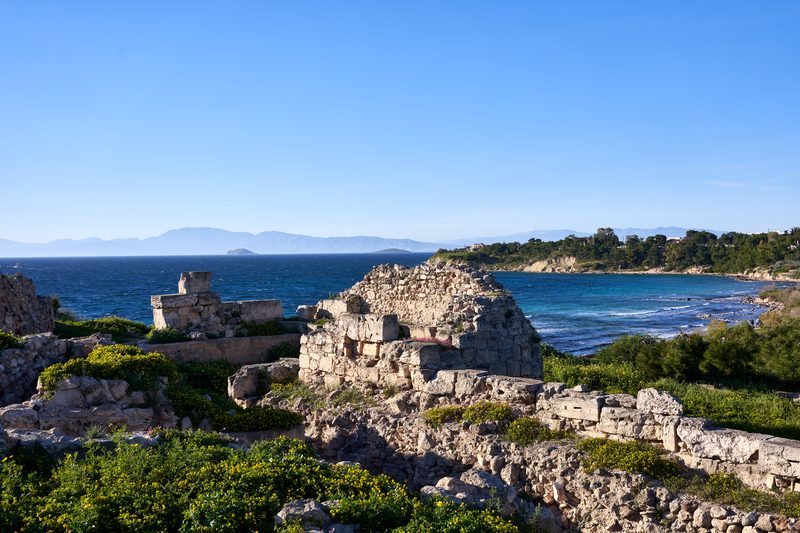
- Klima/Kolona. Near Aegina town. The archaeological site of ancient Kolona sits right next to the beach. Swim with a view of a 6th-century BC temple column.
Cycling the Island
Aegina is small enough (about 87 sq km) that cycling is a realistic way to see it. Bike rental shops are near the harbour. The roads are quiet outside town, though some stretches are hilly. A loop from town to the Temple of Aphaia and back via Agia Marina is about 25 km.
How Should You Plan Your Day?
- 08:30: ferry from Piraeus (fast ferry or regular)
- 09:15-09:45: arrive Aegina. Coffee on the harbour.
- 10:00: bus or taxi to Temple of Aphaia (stop at Agios Nektarios on the way)
- 11:30: beach at Agia Marina, or return to town
- 13:00: lunch in Aegina town or Perdika (fish taverna)
- 15:00: browse pistachio shops, wander the backstreets
- 16:30: final swim at Kolona beach
- 18:00: ferry back to Piraeus
What Should You Know Before Going?
- Aegina is popular with Athenians on weekends. Visit on a weekday if you can.
- The bus network is limited but functional. Main routes connect the town to Agia Marina (via the Temple of Aphaia) and Perdika. Check times on arrival. Services are infrequent.
- Bring cash for the bus, small shops, and some tavernas.
- Scooter rental is widely available and gives the most freedom. Expect 15-25 EUR per day.
- Don't skip Perdika if you have time. The fishing village on the south coast has arguably the best seafood tavernas on the island.
Take the slow ferry back. It costs half as much, and the open deck with the evening sun on the Saronic Gulf is the best part of the day.
When Is the Best Time to Visit?
May-June and September-October are ideal. Warm enough to swim, pleasant for walking, and the island isn't overrun.
July-August are hot and busy, especially on weekends.
September for the Pistachio Festival.
Winter is quiet but the island is still inhabited and operating. Ferries run year-round. Some restaurants close, but the town doesn't shut down.
Aegina is 27 km from Piraeus. The fast ferry takes 40 minutes. Regular ferries take 1 hour 10 minutes.
Planning more adventures from the capital? Browse our complete guide to the best day trips from Athens.
Last updated: 27 August 2026