Two days in Athens is the sweet spot. You have enough time to absorb the ancient city properly, explore a neighbourhood or two beyond the tourist core, and still get out of town for one of the finest half-day trips in Greece: the Temple of Poseidon at Cape Sounion.
In this guide
Most visitors either rush through Athens in a single day or treat it as a layover before the islands. Both are mistakes. With 48 hours, you can take the Acropolis at a human pace, eat well, and drive the coastal road south to watch the sunset behind 2,500-year-old columns at the edge of the Aegean. I've lived here since 2015, and this is the two-day version I build for friends who actually want to understand the city.
Day 1: Athens City Exploration
Morning: The Acropolis (08:00-10:30)
The Acropolis deserves an early start, and if you have two days, you can afford to take it slower than the sprint most visitors attempt. Arrive at 08:00 when the gates open, not because you need to rush through, but because the morning light on the marble is genuinely different from the flat midday glare, and you will have sections of the site nearly to yourself for the first half-hour.
Use the main western entrance on this visit. Yes, the queue is longer than the south slope approach, but the western approach is how the ancient Athenians entered, passing through the monumental Propylaea gateway. Walking through those columns and seeing the Parthenon reveal itself as you emerge from the other side is an experience worth a few extra minutes in line.
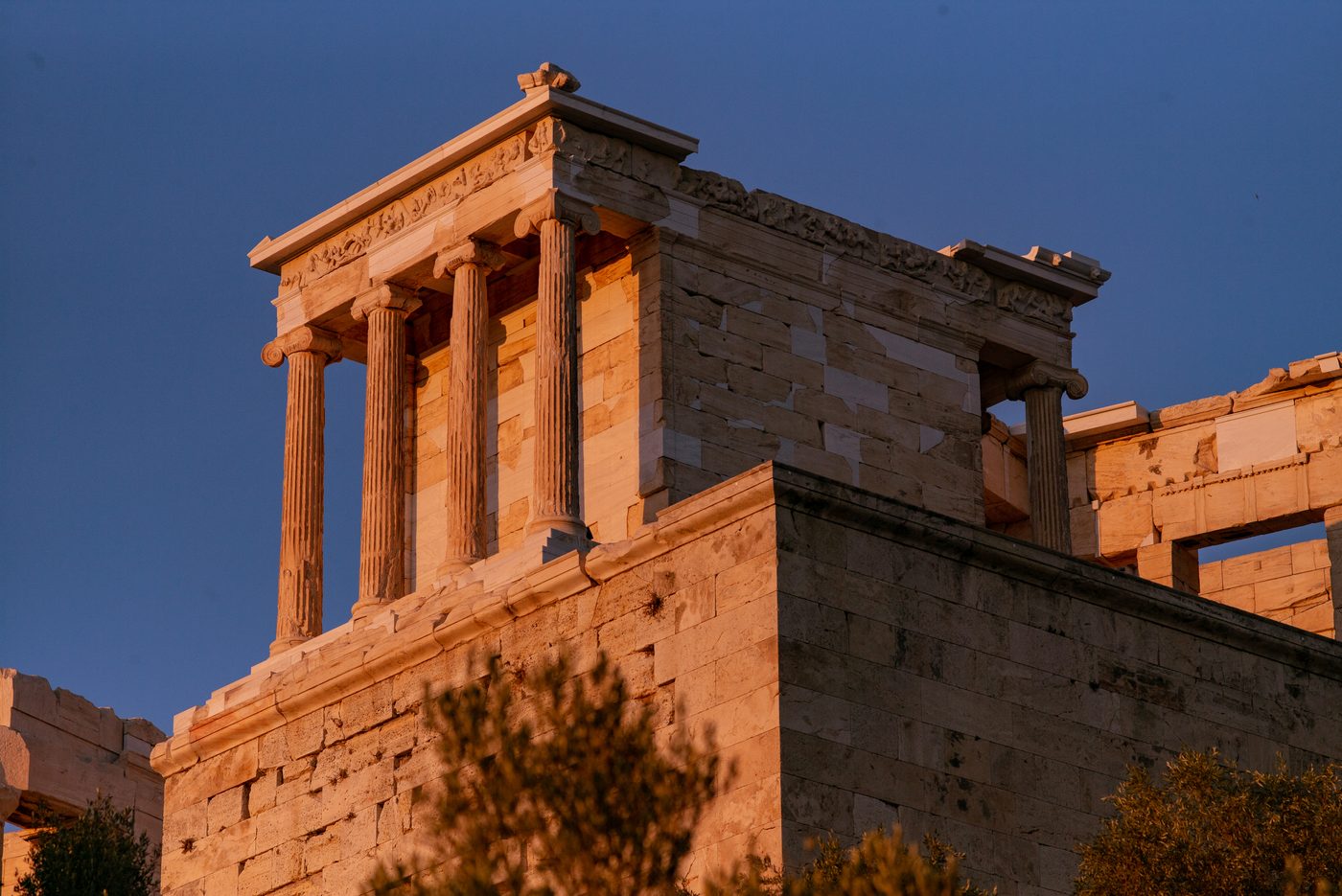
Take your time with the details most visitors walk past. The tiny Temple of Athena Nike, perched on a bastion to the right of the Propylaea, is an exquisite miniature, just four columns across, built to celebrate Athenian military victories. Below on the south side, the Theatre of Dionysus is where Greek drama was literally invented: Sophocles, Euripides, and Aristophanes premiered their plays to audiences of 17,000.
With two days, there is no need to hurry from the summit. Linger at the eastern end of the Parthenon, which most visitors skip because the crowds funnel them the other way. This was the temple's true front in antiquity, where the rising sun would have illuminated the massive gold and ivory statue of Athena inside.
Tickets: 30 EUR (year-round). Timed entry is mandatory. Book your slot in advance at tickets.hh.gr. Entry is by hourly time slot and daily visitor numbers are capped.
Mid-Morning: The Acropolis Museum (10:30-12:30)
With two days, you can give this museum the time it deserves, and it deserves more than most people give it. Plan for a solid two hours rather than the hurried 45 minutes that one-day visitors manage.
The building itself is part of the experience. Bernard Tschumi designed it so that the collections ascend chronologically as you move through the floors, mirroring your ascent up the Acropolis. The ground-floor gallery, built over glass panels revealing an excavated ancient neighbourhood beneath your feet, sets the tone immediately: this city's layers go deep.
Spend real time on the first floor with the Archaic Gallery's kore and kouros statues. These 6th-century BC figures still carry traces of their original paint: reds, blues, and greens that shatter the myth of monochrome antiquity. The Peplos Kore, with her reconstructed painted version displayed alongside, is one of the most arresting objects in any European museum.
The top-floor Parthenon Gallery is extraordinary. The room matches the temple's alignment, with surviving frieze sections mounted at eye level in their original positions. Where the Elgin Marbles should be, plaster casts fill the gaps. The visual argument for reunification needs no caption.
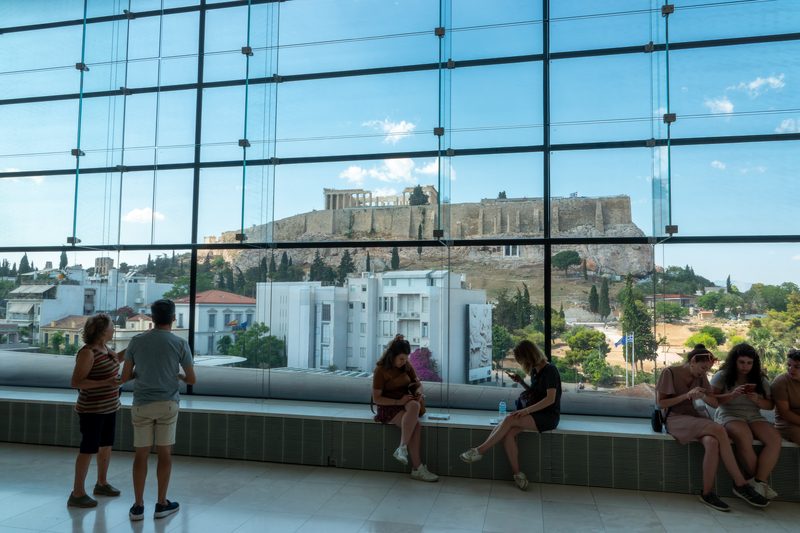
Before you leave, stop at the museum's cafe terrace. The Acropolis looms directly above you, which makes this one of the best coffees in Athens purely for the setting.
Tickets: 20 EUR. Separate from the Acropolis ticket. No advance booking required for individuals.
Lunch: Koukaki (12:30-14:00)
Walk south from the museum into Koukaki, the residential neighbourhood directly below the Acropolis's south face. This is where locals eat when they are not performing for tourists, and the difference in quality and price from the Plaka tavernas ten minutes north is striking.
The streets around Veikou and Drakou have a concentration of unpretentious neighbourhood restaurants that do classic Greek cooking properly. Grilled octopus, gemista (stuffed tomatoes and peppers), gigantes (giant white beans in tomato sauce), fresh bread, a carafe of house wine. Expect to pay 12-18 EUR for a full lunch.
If the weather is warm and you want something faster, pick up a pie from one of Koukaki's bakeries: the spinach-and-feta spanakopita or a cheese-filled bougatsa. Eat it on a bench in the small square on Zinni Street, watching the neighbourhood go about its day. This is Athens at its most lived-in, and it is a useful corrective to the all-ancient-ruins-all-the-time experience of the morning.
Afternoon: Ancient Agora and Plaka/Anafiotika (14:30-17:30)
This is where having two days pays off. The one-day visitor has to choose between the Ancient Agora and a proper wander through the old neighbourhoods. You get both.
Ancient Agora (14:30-16:00)
Enter from the Adrianou Street gate on the north side. The Agora was the beating heart of classical Athens, not a temple precinct but a working civic space. Courts, shops, assembly halls occupied this ground. Socrates was tried and sentenced here. The mechanisms of Athenian democracy were physically housed in these buildings.
The Temple of Hephaestus, on the western hill, is the star: the best-preserved classical Greek temple in existence, its roof intact, its columns unbroken. It receives a fraction of the Parthenon's visitors. Sit on the steps and look east across the Agora toward the Acropolis: this is the view that Pericles knew.
The reconstructed Stoa of Attalos houses a museum of everyday Athenian life. Jury ballots, ostraka (the pottery shards used to vote citizens into exile, giving us the word "ostracism"), children's toys, a water clock fragment. These mundane objects make the ancient world feel closer than any temple can.
Tickets: 10 EUR.
Plaka and Anafiotika (16:00-17:30)
From the Agora, walk east into Plaka, the old town beneath the Acropolis. The main streets are thick with souvenir shops, but abandon Adrianou and Kydathineon and climb the stepped lanes heading south and uphill. Within two minutes you will be in quiet residential streets with neoclassical houses, jasmine spilling over walls, and almost no other tourists.
Keep climbing toward Anafiotika, the tiny whitewashed settlement clinging to the Acropolis's northern rock face. Built in the 1840s by stonemasons from the Cycladic island of Anafi, it is an island village transplanted onto a clifftop: narrow alleys, blue-painted doors, cats on every step, birdsong instead of traffic. The entrance is unmarked; look for a narrow stairway near the Church of the Metamorphosis on Stratonos Street.
The combination of the Agora's civic history and Anafiotika's intimate atmosphere gives you a layered understanding of Athens: the monumental and the human-scaled.
Evening: Gazi and Dinner (18:00 onwards)
For your evening, head west to Gazi, the former industrial district built around the old gasworks (the tall chimneys are now a cultural centre called Technopolis). Gazi has reinvented itself as Athens's busiest going-out district: restaurants, bars, galleries, and live music venues packed into converted warehouses and neoclassical buildings.
The streets around Persefonis and Dekeleon have restaurants ranging from modern Greek cuisine to excellent Asian-influenced places. For something solidly Greek and unpretentious, the meze restaurants on Voutadon Street serve shared plates and local wine at neighbourhood prices.
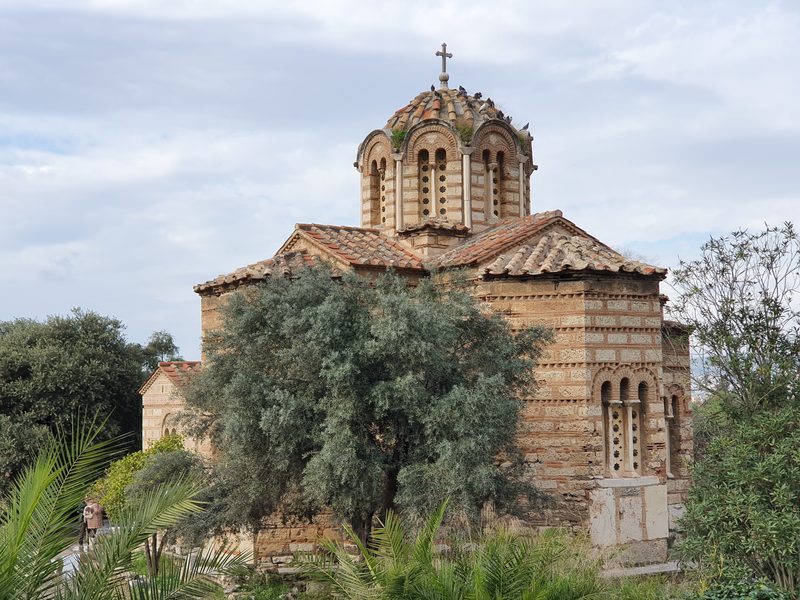
After dinner, walk back toward the centre along Ermou Street's pedestrianised western section. The 11th-century Byzantine church of Kapnikarea sits stranded in the middle of the modern shopping street, lit up at night. Athens has been continuously inhabited for longer than almost any city on earth.
Day 2: Cape Sounion and the Temple of Poseidon
Morning: A Slower Start (09:00-11:00)
After yesterday's walking, take advantage of your second day's more relaxed pace. You have earned a proper Greek breakfast: not the hotel buffet, but a neighbourhood bakery's fresh bougatsa (custard-filled pastry) or a koulouri (sesame bread ring) with a strong Greek coffee from a local kafeneio.
If you have energy for one more Athens sight before heading south, spend an hour at Syntagma Square. Watch the Changing of the Guard at the Tomb of the Unknown Soldier in front of Parliament (every hour on the hour, with the full ceremonial version on Sundays at 11:00). The Evzones are the presidential guards, in pleated kilts (foustanella) and pom-pom shoes, moving with slow-motion choreography. They are genuinely impressive, not kitsch. Behind Parliament, the National Garden offers a shaded walk through 15 hectares of greenery.
Alternatively, an early-morning visit to the National Archaeological Museum works brilliantly. The Mycenaean gold collection in Room 4 (including the Mask of Agamemnon) and the bronze Poseidon/Zeus statue are worth the detour. A 15-minute metro ride from Syntagma to Victoria station.
Getting to Cape Sounion (11:00-13:00)
Head south toward Cape Sounion, 70 km from central Athens at the southernmost tip of the Attica peninsula. You have two options:
By car (recommended): Take the coastal road (Leoforos Posidonos) south through Glyfada, Vouliagmeni, and Varkiza. The drive takes roughly 1.5 hours, and the Athens Riviera coastline (upscale seaside suburbs, rocky coves, swimming beaches) makes the journey part of the experience. Rental cars start from around 35-45 EUR per day.
By KTEL bus: Public buses depart from Pedion Areos (corner of Alexandras Avenue and Patision Street, near Victoria metro station). About two hours, roughly 6.50 EUR one way. Services are limited and the last return bus leaves before sunset, which is a significant drawback. Cash only.
If you are driving, consider a stop at Lake Vouliagmeni on the way down. This collapsed cave filled with warm mineral water sits right on the coastal road between Vouliagmeni and Varkiza. The thermal springs keep it between 22 and 29 degrees year-round, and a 45-minute swim in the mineral-rich water is a perfect way to break the drive. Entry is around 15-18 EUR.
The Temple of Poseidon (13:30-15:00 or later for sunset)
The temple appears as you round the final bend: fifteen white Doric columns on a cliff 60 metres above the sea. Built around 444 BC, the same generation as the Parthenon, it was the last thing Athenian sailors saw leaving home waters and the first landmark they looked for on return.
The site is compact: about 45 minutes to walk around the temple, fortification walls, and promontory. But the point of Sounion is not to rush. Sit on the rocks at the cliff edge, look south toward the islands of Kea and Kythnos on the horizon, and understand why the ancient Greeks put a temple to the god of the sea precisely here.
Look for Lord Byron's graffiti carved into one of the southern columns. The poet visited in 1810 and left his mark. It is roped off now. Byron's inscription is a historical curiosity; adding your own would just be vandalism.
For the full history and visitor details, see the complete Cape Sounion guide.
Tickets: 20 EUR. Open daily from 9:30 until sunset.
Timing decision: If you arrived early, explore the temple and then find lunch at the seafood tavernas near the entrance. If you timed your drive for late afternoon, eat on the way and arrive for the final two hours before sunset. The classic play is sunset: the sun drops behind the columns into the sea, the sky turns amber and rose, and you understand why this has been one of Greece's most photographed views for 200 years.
The Coast Road and Return (evening)
The drive back to Athens along the coast road at dusk, with the lights of the Riviera suburbs strung along the shoreline, is a fitting end to two days in Attica. If you are hungry, pull off in Vouliagmeni or Glyfada for a final seafood dinner: grilled sea bream, a Greek salad with good tomatoes, and a glass of cold Assyrtiko wine, watching the boats in the harbour.
If you took the KTEL bus, your return time is dictated by the schedule. Grab dinner back in central Athens instead. The Monastiraki and Psyrri neighbourhoods are reliably lively on any evening of the week.
Where to Stay
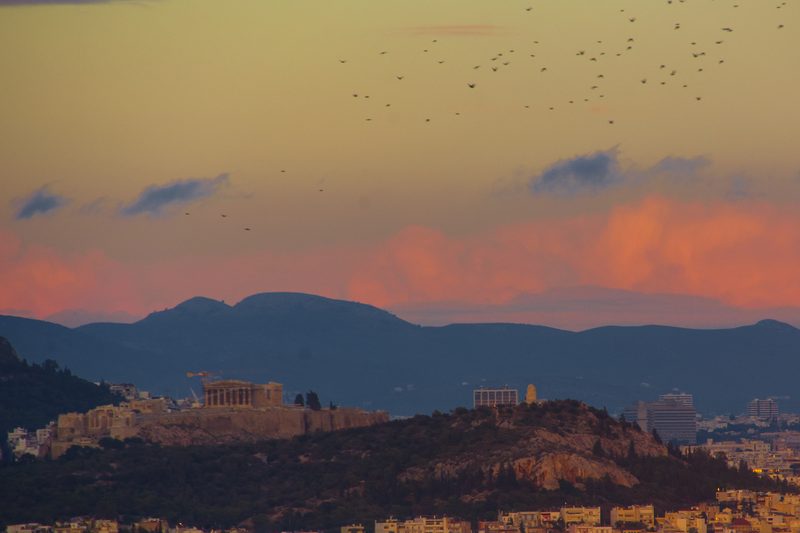
For a two-day visit following this itinerary, base yourself in Koukaki or Makriyanni, the neighbourhoods directly south of the Acropolis. You are within walking distance of the Acropolis, the Acropolis Museum, the Ancient Agora, and Plaka, but you are in a real neighbourhood with proper bakeries, local tavernas, and tree-lined streets rather than tourist infrastructure. The Acropoli metro station connects you to Syntagma, Monastiraki, and Piraeus.
Budget options start around 50-70 EUR per night for a clean double room. Mid-range boutique hotels run 100-150 EUR. Anything advertising an "Acropolis view" will charge a premium, but on a warm evening, it is worth every cent.
Budget Breakdown
Rough daily costs for two days in Athens (per person, mid-range):
| Category | Day 1 | Day 2 |
|---|---|---|
| Acropolis | 30 EUR | -- |
| Acropolis Museum | 20 EUR | -- |
| Ancient Agora | 10 EUR | -- |
| Cape Sounion entry | -- | 20 EUR |
| Car rental (split between 2) | -- | 20 EUR |
| Lake Vouliagmeni (optional) | -- | 16 EUR |
| Meals (lunch + dinner) | 30-40 EUR | 30-40 EUR |
| Coffee / snacks | 5-8 EUR | 5-8 EUR |
| Transport (metro / walking) | 5 EUR | -- |
| Daily total | 100-115 EUR | 90-105 EUR |
Two-day total: approximately 190-220 EUR per person, excluding accommodation and flights.
What Should You Know Before Going?
- Footwear matters. Both the Acropolis and Cape Sounion involve walking on uneven marble and rock. Trainers or sturdy walking sandals. Leave the flip-flops for the beach.
- Water. Carry a reusable bottle. Athens tap water is safe and good. The Acropolis and Sounion have no shade and limited water sources at the top.
- Sunscreen and hat from May through October. The Attic sun is fierce and there is no escaping it on archaeological sites.
- Best months: April-May and September-October. The weather is warm without being brutal, the sites are less crowded, and the light is extraordinary. July and August work but expect 35-40C and packed attractions.
- Cash: Most restaurants and museums accept cards, but carry 20-30 EUR in cash for bakeries, bus tickets, kiosks, and the Varvakeios market.
- The Athens transport card (24-hour pass, 4.10 EUR) covers all metro, bus, and tram journeys. Useful for Day 1. Buy at any metro station.
If You Have More Time
Two days covers the essentials of Athens and Attica beautifully, but if your schedule allows a third or fourth day, the options multiply. The best day trips from Athens include ancient Delphi, the theatre at Epidaurus, the Venetian town of Nafplio, and a handful of Saronic Gulf islands reachable by ferry in under two hours. An Athens food tour is also worth building into an extended stay. The guided tours reach corners of the food scene that are genuinely difficult to find independently.
This itinerary covers approximately 10-15 km of walking on Day 1. Day 2 involves a 140 km round trip to Cape Sounion. The Acropolis opens at 08:00 year-round (it closes at 20:00 in summer and 17:00 in winter). The Temple of Poseidon at Sounion opens daily at 09:30. Timed entry tickets for the Acropolis must be booked in advance at tickets.hh.gr. Slots sell out in peak season.
Planning more adventures from the capital? Browse our complete guide to the best day trips from Athens.
Last updated: 1 October 2026