If you only have one day in Athens, you can still see the best of it, but you need a plan. This is the itinerary I've refined over years of showing friends and family around the city, and it covers the essentials without the exhausting, see-everything sprint that most one-day guides suggest.
In this guide
Athens rewards focus. Trying to tick off every major site in a single day leaves you sunburnt, footsore, and unable to remember what you actually saw. This itinerary hits the highlights that genuinely matter, leaves room for a proper lunch, and gets you to a rooftop bar in time for sunset. I've lived here since 2015, and this is the day I'd give you.
Morning: The Acropolis (08:00-10:00)
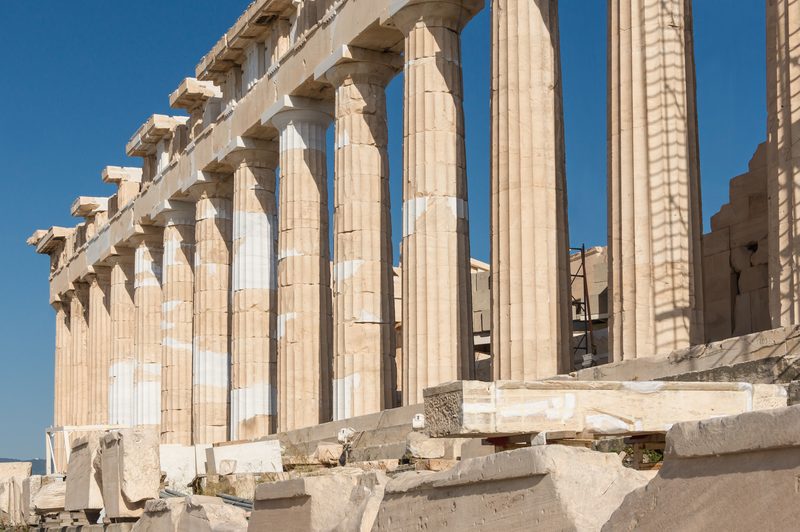
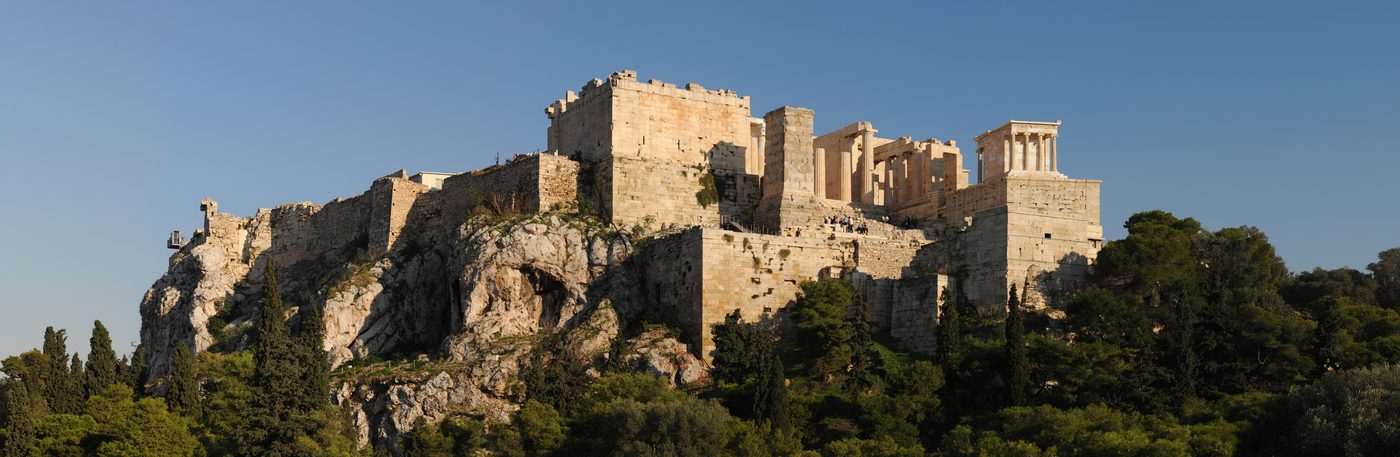
Start early. This is non-negotiable. The Acropolis opens at 08:00 year-round (closing at 20:00 in summer, 17:00 in winter), and the difference between arriving at opening and arriving at 10:00 is the difference between a transcendent experience and shuffling through a crowd of 3,000 people in 35-degree heat.
Get there before the gates open. Walk up from the south slope entrance (near the Acropolis Museum) rather than the main west entrance. It's a steeper climb but the queue is shorter and you approach the Parthenon from an angle that's more dramatic than the standard route.
What to focus on:
- The Parthenon. You can't go inside, but walking around it from every angle is essential. The east side (the back, from the standard approach) actually had the main entrance in antiquity. The scale only hits you when you're standing next to it.
- The Erechtheion. The temple with the Caryatid columns (the maiden statues holding up the porch). The originals are in the Acropolis Museum; these are copies. But the building itself is fascinating: it was built on uneven ground to house multiple shrines, which is why it has that unusual asymmetric design.
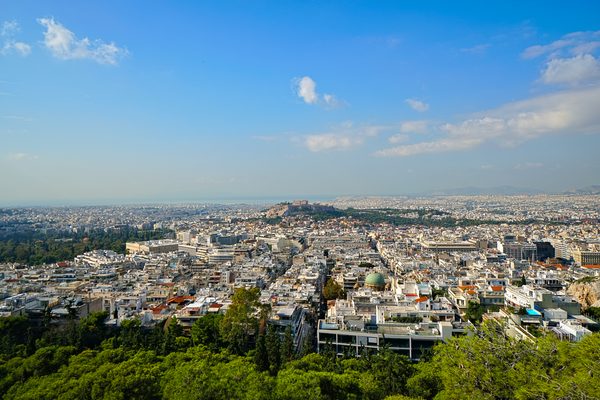
- The views. Athens sprawls in every direction. You can see Lycabettus Hill, the Ancient Agora, the Temple of Olympian Zeus, and on clear days, the sea. Spend a few minutes just looking.
Tickets: 30 EUR (year-round). Book a timed entry slot in advance through the official ticketing site. It is mandatory. Entry is by hourly time slot and daily visitor numbers are capped at 20,000.
Guided tours: A good guide transforms a pile of marble into a living story. Tour operators pre-book timed entry slots on your behalf, which removes the hassle of navigating the booking system yourself. Budget 40-60 EUR per person.
Allow about 1.5-2 hours for the Acropolis itself. Don't rush it, but don't linger in the sun longer than you need to either.
Mid-Morning: Acropolis Museum and Anafiotika (10:00-12:00)
Walk downhill to the Acropolis Museum, which sits at the base of the south slope. This is one of the best museums in Greece, and it's specifically designed to display the finds from the Acropolis in context.
The top-floor Parthenon Gallery is the highlight: a glass-walled room oriented exactly like the Parthenon itself, with the surviving frieze sections displayed in their original positions. The gaps where the Elgin Marbles should be are left deliberately empty, filled with white plaster casts. It makes the case for their return more powerfully than any argument.
The ground floor, with its glass panels revealing the excavated ancient neighbourhood beneath the building, is worth taking slowly. The Archaic Gallery on the first floor, with its painted statues and their eerie smiles, is genuinely surprising if you've only ever seen Greek sculpture in white marble.
Tickets: 20 EUR. Separate from the Acropolis ticket. No advance booking required for individuals.
Time needed: 1-1.5 hours. You could spend half a day here, but for a one-day itinerary, focus on the Parthenon Gallery and the Archaic Gallery.
After the museum, walk north into Anafiotika. This is one of Athens' best-kept secrets: a tiny neighbourhood clinging to the north slope of the Acropolis that looks and feels like a Cycladic island village. White-washed houses, narrow stepped paths, bougainvillea everywhere, cats dozing in doorways. It was built in the 19th century by workers from the island of Anafi who were brought to Athens to build King Otto's palace, and they recreated their island village on the hillside.
Anafiotika takes about 20 minutes to wander through, and most tourists walk right past it. The entrance is easy to miss. Look for a narrow staircase heading uphill from the northern edge of Plaka, near the Church of the Metamorphosis.
From Anafiotika, wind your way down through Plaka, the old town beneath the Acropolis. It's touristy, yes, but the architecture is genuinely beautiful. Stick to the quieter upper streets rather than the main pedestrian drag of Adrianou Street, which is wall-to-wall souvenir shops.
Stop for a Greek coffee at one of the small kafeneia on Mnisikleous Street or the stepped streets above it. Avoid any restaurant with a laminated photo menu and a tout standing outside.
Lunch: Monastiraki and Psyrri (12:30-14:00)
By now you're hungry. Head to the area around Monastiraki Square and into Psyrri, the old commercial district just north of it. This is where Athenians actually eat when they're in the centre.
For a quick, excellent, cheap lunch: get souvlaki. Athens does souvlaki better than anywhere else in Greece, and the debate about the best shop is a blood sport among locals. Kostas on Plateia Agia Irini (Monastiraki) has been serving its pork souvlaki with tomato and grilled pepper since the 1950s. The queue is part of the experience. Alternatively, walk into Psyrri for a sit-down meze lunch at one of the small tavernas on the backstreets.
If you'd rather sit down properly, the streets around Plateia Agia Irini (the small square just north of Monastiraki with the flower market) have a cluster of excellent small restaurants and wine bars. This square is where younger Athenians congregate, and the food reflects it: more creative than traditional, but still rooted in Greek ingredients.
For something more atmospheric, the Central Market (Varvakeios Agora) area on Athinas Street has old-school tavernas that serve excellent, no-frills Greek food to market workers. They open early and close mid-afternoon. The decor is basic, the food is plain and good, and a full meal with wine costs under 15 EUR.
If food is a real priority for you, consider booking an Athens food tour instead of doing this section on your own. The guided tours take you to places you'd never find independently and give you a crash course in Greek food culture.
Afternoon: Ancient Agora or National Archaeological Museum (14:30-16:30)
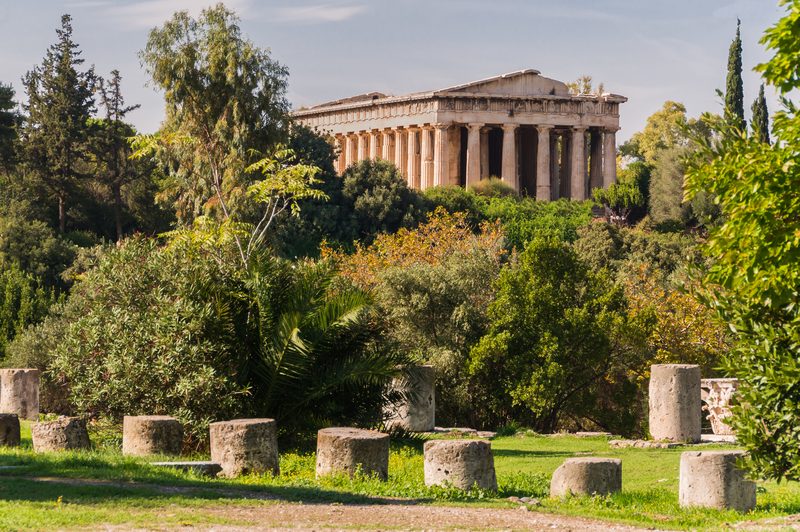
Here's where you have to make a choice. Both are excellent; neither is skippable if you had two days. But with one day, pick the one that suits you.
The Ancient Agora (my recommendation for most people)
The Agora was the civic heart of ancient Athens: the marketplace, meeting place, and political centre where Socrates argued, democracy was practised, and daily life happened. It sits just below the Acropolis to the north-west, and you've probably been looking down at it all morning.
It's less visually dramatic than the Acropolis but arguably more interesting. The reconstructed Stoa of Attalos houses an excellent small museum of everyday Athenian objects: voting tokens, children's toys, drinking cups. The Temple of Hephaestus, at the top of the hill, is the best-preserved ancient Greek temple in the world, far more intact than the Parthenon, though it gets a fraction of the visitors.
The Agora is also just a pleasant place to be. It's green, shaded by olive trees, and far less crowded than the Acropolis. In the heat of the afternoon, this matters.
Tickets: 10 EUR.
National Archaeological Museum (for history enthusiasts)
If you're genuinely interested in ancient Greek civilisation beyond what you can see on the Acropolis, this is the museum. It houses the finest collection of Greek antiquities in the world: the gold Mask of Agamemnon from Mycenae, the Antikythera Mechanism (an ancient analogue computer), the bronze statue of Poseidon/Zeus, Cycladic figurines that look like modern sculpture.
The downside: it's about 20 minutes north of the centre by foot (or a short metro ride to Victoria or Omonia), and it's big enough to swallow an entire afternoon. For a one-day visit, allow 1.5-2 hours and focus on the Mycenaean collection (Room 4) and the bronze sculptures.
Tickets: 20 EUR (reduced 10 EUR).
My advice: If this is your first time in Athens and you have one day, do the Ancient Agora. It's right there, it connects directly to what you saw on the Acropolis, and the Temple of Hephaestus alone is worth the visit. Save the National Archaeological Museum for a return trip or a rainy day.
Late Afternoon: Filopappou Hill or Monastiraki Browsing (16:30-18:00)
If you still have energy in your legs, walk up Filopappou Hill (also called the Hill of the Muses). The path starts from Dionysiou Areopagitou, the pedestrian street that runs along the south side of the Acropolis. It's a gentle 15-minute walk up a pine-shaded path to the Filopappou Monument at the top.
The reward: arguably the best view of the Acropolis in all of Athens. The Parthenon sits directly opposite at eye level, framed by pine trees. This is the angle you've seen in every photograph, and in the golden late-afternoon light, it's extraordinary.
If your feet are done, stay in the Monastiraki flea market area instead. The streets around Avyssinias Square have a jumble of antique shops, vintage stores, and junk dealers. On Sundays the flea market spills into the streets. Even on other days, browsing here is more interesting than the tourist shops on Adrianou.
If you want shopping of the conventional kind, Ermou Street runs from Monastiraki to Syntagma Square and is the main high-street shopping strip, with all the familiar brands. It's useful but not special.
Evening: Sunset and Dinner (18:00 onwards)
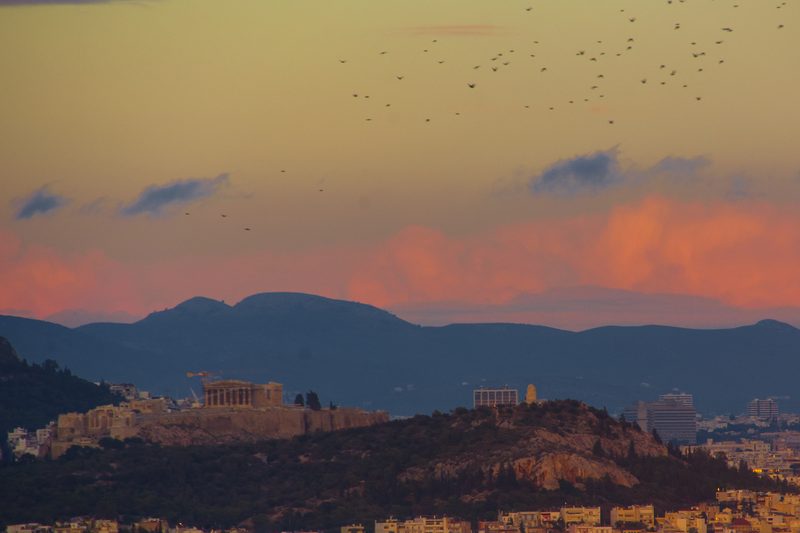
Athens does sunset well. You have two strong options:
Lycabettus Hill (for effort and reward)
The highest point in central Athens. You can take the funicular (operates from Aristippou Street in Kolonaki, about 10 EUR return) or walk up in roughly 30 minutes via the path from the same area. The summit has a small chapel, a restaurant, and 360-degree views of the city extending to the sea. The sunset from here is spectacular.
A Rooftop Bar (for comfort)
Dozens of rooftop bars in the centre offer Acropolis views with a cocktail in hand. The ones around Monastiraki Square and in Plaka are the most popular. A for Athens (on Miaouli Street, Monastiraki) is a reliable choice with a direct Acropolis view. Expect to pay 12-16 EUR for a cocktail, which is fair given the location. Arrive by 18:00-18:30 in summer to secure a good spot. They fill up fast.
Dinner
For dinner, head to Psyrri or Koukaki.
Psyrri is lively and central, with a mix of traditional tavernas and more contemporary places. The backstreets between Plateia Iroon and Avyssinias Square are full of options. Avoid anywhere that has someone standing outside trying to get you in.
Koukaki, south of the Acropolis, is more of a neighbourhood scene. The restaurants on and around Veikou Street serve locals, not tourists, and the quality reflects that. It's a 10-minute walk from the Acropolis Museum.
Expect to pay 15-25 EUR per person for a solid dinner with wine at a mid-range taverna. Order shared plates: meze-style eating is how Greeks do it, and you'll eat better than ordering individual mains.
What Should You Know Before Going?
- Best time of year for one day in Athens: April-May or September-October. Comfortable walking weather, manageable crowds, reasonable prices. July and August are brutally hot: 35-40C is normal, and walking around archaeological sites in that heat is genuinely unpleasant.
- Comfortable shoes are essential. You'll walk 15-20 km over the course of this itinerary. The Acropolis is steep, the marble is slippery, and Athenian pavements are uneven. Trainers or walking sandals with good grip.
- Carry water. There's no shade at the Acropolis. Buy a reusable bottle and refill it. Athens tap water is perfectly safe to drink.
- Sunscreen and a hat in summer. The sun is intense from June through September.
- Athens transport card: A 24-hour ticket for 4.10 EUR covers all metro, bus, and tram rides. Buy it at any metro station. You may not need it for this itinerary (most of it is walkable), but it's useful for getting to/from your accommodation or the airport.
- Cash: Most restaurants and attractions take cards, but carry some cash for small shops, koulouri carts, and the flea market.
Tours Worth Considering
I'm generally a do-it-yourself traveller, but there are two cases where a guided tour genuinely adds value in Athens:
Acropolis guided tours: A good guide gives you context that transforms the visit. You'll understand why the Parthenon's columns are slightly curved, what the buildings actually looked like with their paint and decoration, and the political dramas that played out here. Tour operators book timed entry on your behalf, which simplifies the process. Budget 40-60 EUR per person.
Food tours: If food matters to you, an Athens food tour can replace the self-guided lunch section of this itinerary and give you a much deeper introduction to Greek cuisine. Most run for 3-4 hours in the morning.
Getting Around
This entire itinerary is walkable from a base in the centre (Monastiraki, Syntagma, Plaka, Psyrri, or Koukaki). Total walking distance is roughly 8-12 km depending on your choices, plus the hill climbs.
Metro: Athens has three lines. Line 1 (Green) runs to Piraeus, Line 2 (Red) connects the centre to the south, and Line 3 (Blue) goes to the airport. For this itinerary, the most useful stations are Monastiraki, Syntagma, and Acropoli. Trains run every 3-5 minutes during the day.
Taxis: Cheap by European standards. A ride within the centre costs 4-8 EUR. Use the BEAT app (the Greek equivalent of Uber) for reliable pricing and no haggling. Avoid taxis that refuse to use the metre.
Walking distances: Monastiraki to the Acropolis entrance is about 10 minutes on foot. The Acropolis to the Acropolis Museum is 5 minutes. The Ancient Agora is a 5-minute walk from Monastiraki. Everything in this itinerary is within a 20-minute walk of Monastiraki Square.
If You Have More Time
One day gives you the essentials, but Athens has far more to offer. If you're staying longer, consider a day trip from Athens. The surrounding region of Attica and the nearby Peloponnese are packed with ancient sites, islands, and landscapes that most visitors never see.
Even a half-day addition can transform your trip. Cape Sounion and the Temple of Poseidon is an afternoon excursion with one of the most dramatic sunsets in Greece, and it pairs well with a morning spent in the city centre.
This itinerary covers approximately 8-12 km of walking. The Acropolis opens at 08:00 year-round (it closes at 20:00 in summer and 17:00 in winter). Timed entry tickets must be booked in advance at tickets.hh.gr. Slots sell out in peak season.
Planning more adventures from the capital? Browse our complete guide to the best day trips from Athens.
Last updated: 1 October 2026