Ramnous (Rhamnous) is the most remote and least visited major archaeological site in Attica: a fortified ancient town on the northeast coast, overlooking the strait to Evia, that housed the most important sanctuary of Nemesis in the ancient Greek world. It's about 50 km from Athens, roughly an hour by car, and you will almost certainly have the place to yourself.
In this guide
Most visitors to Greece never hear of Ramnous. It doesn't appear on standard Athens itineraries, no tour bus routes run there, and the road that leads to it dead-ends at the site. That isolation is precisely what makes it worth the effort.
This was a working military outpost, not just a sanctuary. The fortified deme of Ramnous guarded the sea passage between Attica and Evia (Euboea), protecting the grain ships that kept Athens fed. During the Peloponnesian War, after the Spartans seized the fort at Dekelia and cut off overland supply routes, Ramnous became a critical link in Athens' survival. The garrison controlled two small harbours below the acropolis, and the fortress walls, still standing in places, were built thick enough to prove the Athenians took the threat seriously.
But what drew the ancients here before the military installations was the cult of Nemesis, goddess of retribution and divine balance. The sanctuary predates the fortifications by at least a century, and the temple built here around 430 BC was the most significant shrine to Nemesis anywhere in Greece.
What Is There to See?
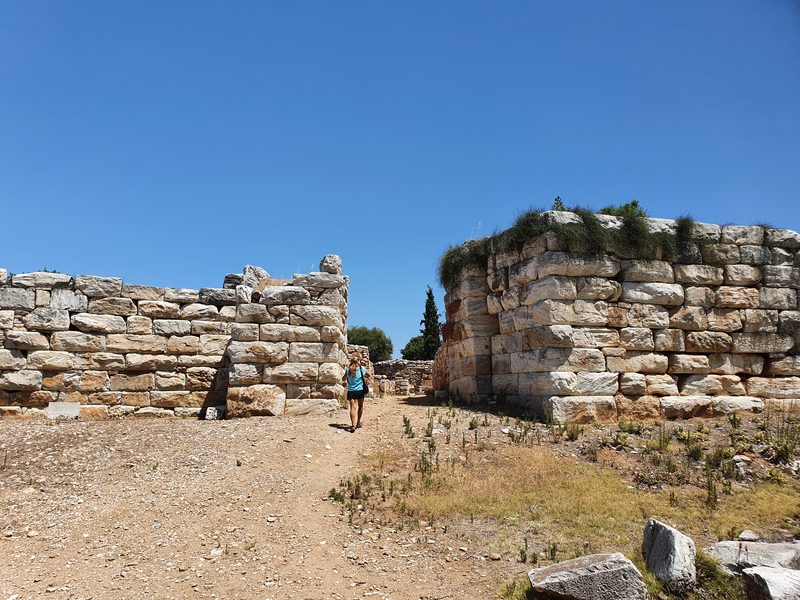
The site divides into two main areas: the Sanctuary of Nemesis at the upper end, and the fortified acropolis and settlement further down the hill toward the coast. A rough path of about 1 km connects them.
The Temple of Nemesis
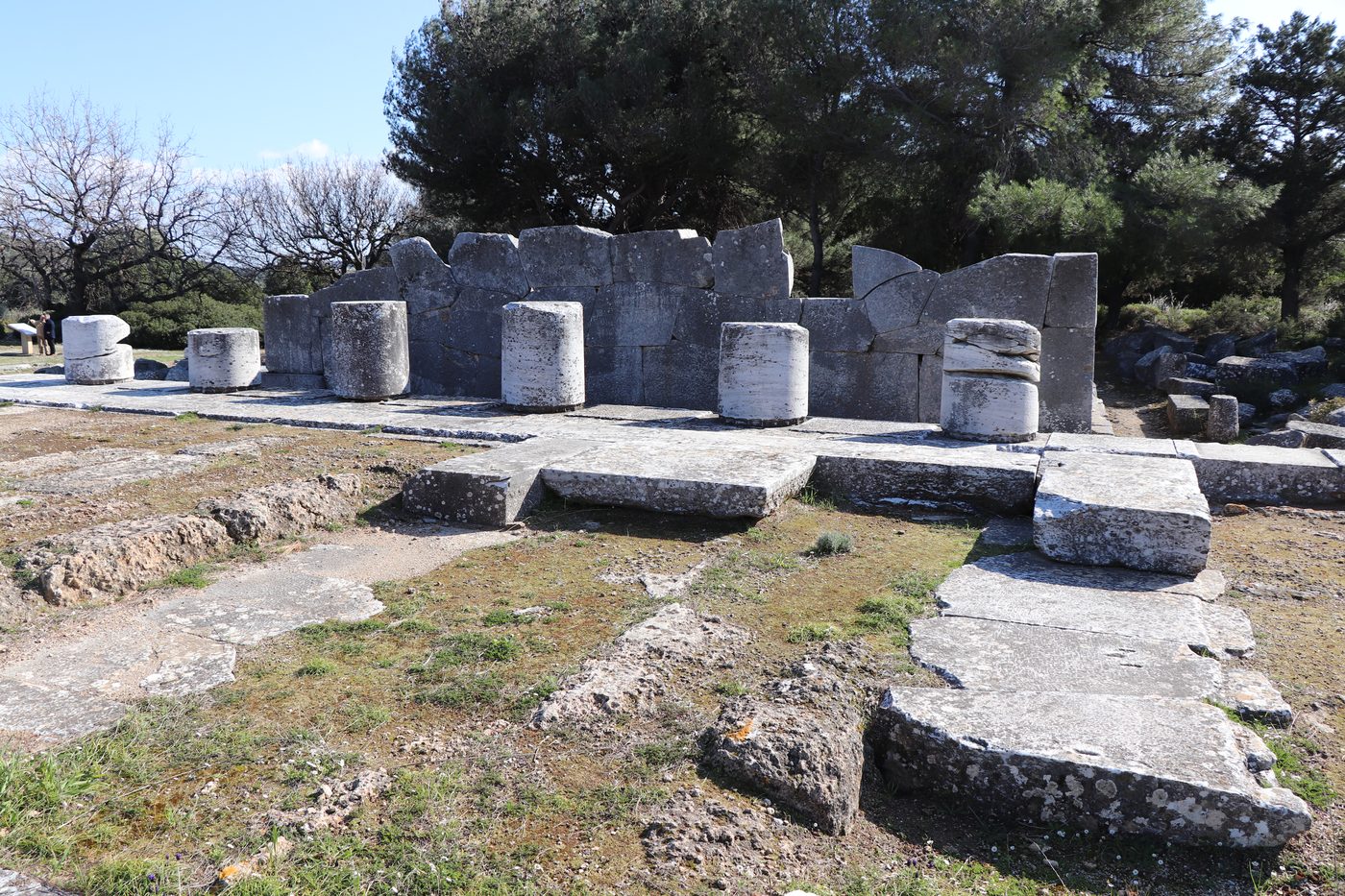
The larger of two temples at the sanctuary, built around 440-430 BC in the Doric order. What survives are the foundations and lower courses, but parts of the west pediment and the relief base of the cult statue have been reconstructed and displayed under a protective shelter on site.
The original cult statue was a colossal figure of Nemesis, roughly four metres tall, carved from Parian marble by Agorakritos, a pupil of the great Pheidias. According to Pausanias, the marble block had been brought by the Persians, who intended to carve a victory trophy from it. That was an act of hubris which Nemesis, goddess of retribution, would have appreciated being turned against them.
The statue was systematically destroyed in the 4th century AD, likely by early Christians. The head was removed in 1812 by members of the Society of Dilettanti and is now in the British Museum. The relief base, depicting Helen of Troy being presented to Nemesis by Leda, remains at the site.
The Temple of Themis
The smaller, older temple sits adjacent to the Temple of Nemesis and dates to the late 6th century BC. Dedicated to Themis, goddess of justice and divine law, a fitting companion to Nemesis. Excavation in 1890 produced a remarkable find: a 2.22-metre-tall statue of Themis carved from Pentelic marble, now in the National Archaeological Museum in Athens. Worth seeing there before or after your visit.
The Street of Tombs
The ancient road connecting the sanctuary to the fortified settlement is lined with burial enclosures (periboloi), mostly dating to the 4th century BC. These restored grave precincts are comparable to the Street of Tombs in the Kerameikos cemetery in Athens, but without the crowds. The marble tomb monuments, some reconstructed to considerable height, give an immediate sense of how an ancient Attic community honoured its dead.
The Fortress and Settlement
The fortified acropolis occupies a hill about 28 metres high, enclosed by walls that were roughly 6 metres tall and over 2 metres thick, built from locally quarried marble. The main gate on the southern side is flanked by rectangular towers. Inside the walls, the layout of the ancient garrison town is clearly readable: a small theatre (doubling as the agora), a gymnasium that shared space with military barracks, a sanctuary of Dionysos, and residential buildings with walls preserved to a surprising height.
The fortress is the part of the site most likely to be closed outside summer months due to staffing. Phone ahead to check (see below).
The Views
From the acropolis, you look directly across the strait to the mountains of Evia. Below, the coastline drops to the two ancient harbour inlets. On a clear day, the view explains everything about why this location mattered: you can see exactly what the Athenian garrison was watching.
I've visited a lot of archaeological sites in Greece, and Ramnous is the only one where I've never seen another tourist. The isolation is part of the experience: this is the ancient world with the volume turned all the way down.
How Do You Get There From Athens?
By Car (1 hour)
This is effectively the only practical option. From Athens, take the motorway toward Lamia and exit at Agios Stefanos, then follow the road to Marathon. After passing the Marathon Dam and the village of Vothonas, turn toward Agia Paraskevi and Grammatiko. Signs to Ramnous appear on the left. The last stretch is a quiet, narrow road through open countryside. Free parking at the site entrance under a cluster of trees.
By Public Transport
There is no direct bus service to Ramnous. You can take the KTEL bus from Pedio Areos (near Victoria metro station) to Marathon town: several services per day, about 1 hour 20 minutes, around 4 EUR. From Marathon, it's roughly 15 km to Ramnous by taxi (about 15 EUR one way). Arrange a pickup time with the taxi driver, as you will not find one at the site.
Frankly, without a car, this trip is more hassle than it's worth. Rent one.
How Much Does It Cost and When Is It Open?
| Entrance fee | 5 EUR (full), 3 EUR (reduced) |
| Free entry | EU citizens under 25; free Sundays (1st and 3rd) November-March |
| Opening hours | 08:30-15:30 daily, closed Tuesdays |
| Last entry | 20 minutes before closing |
| Phone | +30 22940 63477 |
Call before you go. The sanctuary area (temples and street of tombs) should be open year-round during the stated hours, but the fortified acropolis section is officially open only in summer. In practice, even the main site has been known to close without notice due to staffing shortages. A quick phone call saves a wasted journey.
What Should You Know Before Going?
- Wear proper walking shoes. The path between the sanctuary and the fortress is about 1 km on uneven, rocky ground. Sandals are a bad idea.
- Bring water and food. There are no facilities at the site: no cafe, no shop, no vending machine. The nearest village with amenities is Grammatiko, several kilometres back.
- Allow 1.5-2 hours for the full site if both sections are open. The sanctuary alone takes about 45 minutes.
- There is almost no shade. A hat and sun protection are essential in summer.
Phone ahead before you go. I've driven out there once to find it unexpectedly closed due to staffing. One phone call saves you a wasted 90-minute round trip.
- You will likely be alone. This is one of the great pleasures of the site, but it means there's no one to ask for directions. The path is mostly obvious, though signage is minimal.
What Else Can You Visit Nearby?
Ramnous pairs naturally with Marathon, which is only about 15 km to the south. The two sites share the same landscape and the same military history: the Persian fleet that was defeated at Marathon in 490 BC would have been visible from the headland at Ramnous.
A logical day itinerary:
- 09:00: Leave Athens by car
- 10:00: Arrive at Ramnous, explore the sanctuary and fortress
- 12:00: Drive to Marathon (20 minutes)
- 12:30: Marathon Archaeological Museum and Tumulus
- 14:00: Lunch in Marathon town or at Schinias Beach
- 15:00: Schinias Beach for a swim
- 17:00: Return to Athens
You could also add Brauron (Vravrona) to the south for a full day of eastern Attica archaeology, though that makes for a long day with a lot of driving.
Is It Worth the Trip?
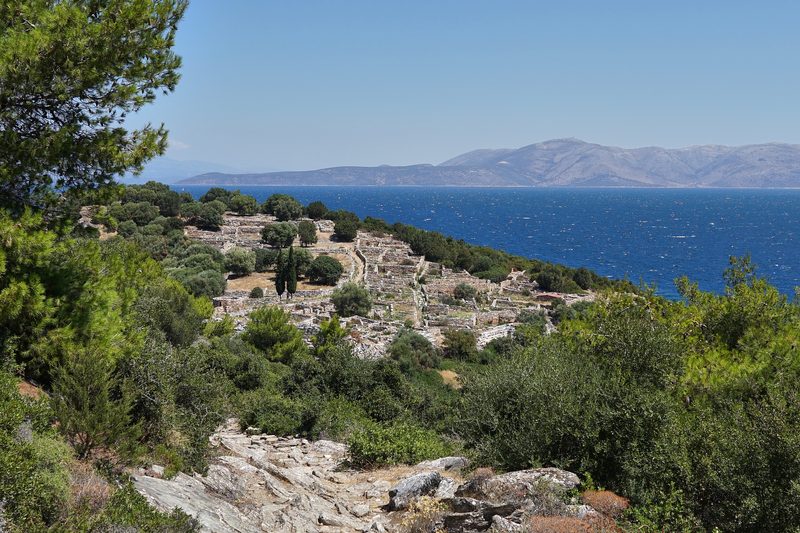
This is not a site for everyone. If you want photogenic columns, reconstructed temples, or a polished museum experience, Ramnous will disappoint. The ruins are foundations and lower walls, the setting is wild and unkempt, and the infrastructure is minimal.
But if you care about ancient Greek history beyond the headline sites, if you want to understand how an Attic deme actually functioned, how a military garrison protected a coastline, and why the Greeks built a temple to retribution on a remote headland facing the sea the Persians sailed, then Ramnous is one of the most rewarding sites in Attica. The sanctuary, the fortress, the street of tombs, and the unchanged landscape give you something no amount of reconstruction at bigger sites can replicate: the ancient world as it actually was.
It is the opposite of a tourist attraction. That is precisely the point.
Ramnous is approximately 50 km northeast of Athens, about 1 hour by car. The site takes 1.5-2 hours to explore. Combine with Marathon (15 km south) for a full day.
Planning more adventures from the capital? Browse our complete guide to the best day trips from Athens.
Last updated: 27 August 2026