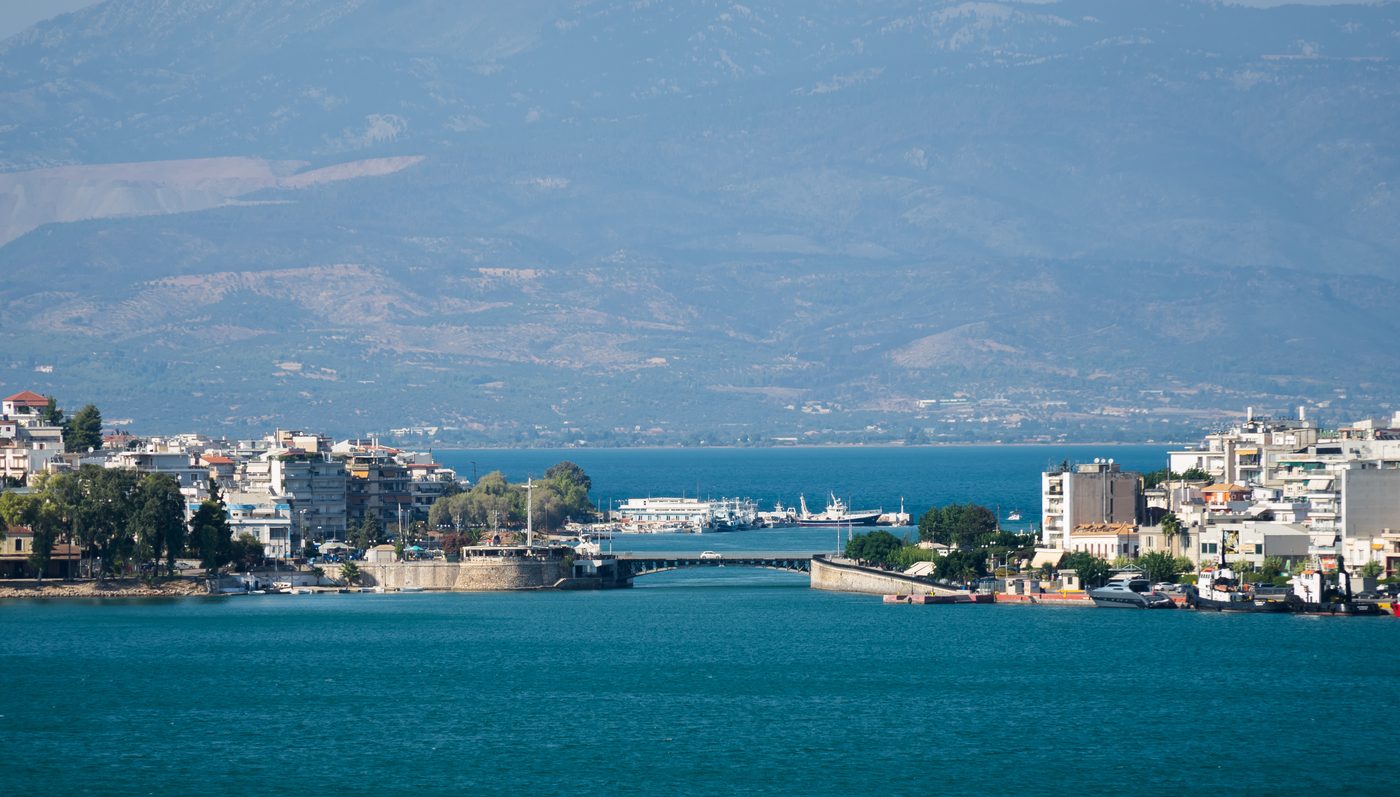
Greece's second-largest island is right next to Athens: barely an hour's drive to the bridge at Chalkida, or a quick ferry hop from Oropos to Eretria. Most tourists skip Evia entirely in favour of the Cyclades, which is precisely why it's worth your time. You won't find infinity pools or Instagram backdrops here, but you will find genuine archaeology, a bizarre natural phenomenon, and a coastline that Athenians have quietly kept to themselves.
In this guide
Evia (Euboea in its ancient spelling) stretches 180 km along the mainland coast, separated by the narrow Euboean Gulf. It's so close to the continent that at Chalkida, the gap is just 38 metres wide, narrow enough for a bridge since antiquity. The island has been continuously inhabited for thousands of years. Chalkida and Eretria were major city-states that colonised half the Mediterranean, from Sicily to the coast of modern Turkey. Homer lists Eretria among the Greek cities that sent ships to Troy.
Today, Evia is a place Greeks go on weekends and foreigners drive past on the motorway to Thessaloniki without realising it's an island at all. The southern and central parts (Chalkida, Eretria, and the coast between them) make a comfortable day trip from Athens. Northern Evia, with its thermal springs at Edipsos and forest-clad mountains, is better suited to an overnight stay.
What Is There to See?
Chalkida and the Euripus Strait
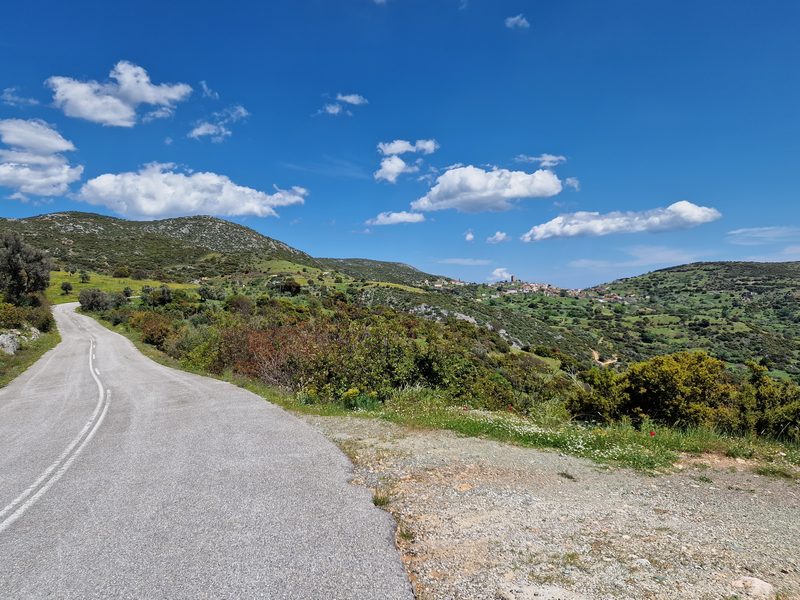
Chalkida (also written Halkida or Chalcis) is Evia's capital and the first thing you'll encounter if you drive from Athens. The city itself is a working Greek town rather than a tourist destination, but two things make it worth a stop.
The Euripus Strait. The narrow channel between Chalkida and the mainland has a tidal current that reverses direction roughly every six hours. Water rushes through at up to 12 km/h, first north, then south, with an eerie eight-minute pause of total stillness in between. During the equinoxes in March and September, the current switches without any pause at all and flows at its strongest. This phenomenon baffled the ancient Greeks. Legend has it that Aristotle, unable to explain the tides, threw himself into the strait in frustration. He didn't, but the story captures how genuinely strange this place is. The best viewpoint is the old sliding bridge in the centre of town, right at the narrowest point. Stand there at a changeover time and watch the water stop, then start flowing the opposite direction. It's oddly compelling.
I've stood on that bridge three times trying to catch the exact moment the current reverses. It's one of those things you have to see in person. No video does it justice.
The Old Town. Behind the waterfront, Chalkida's castle district has narrow streets where a Byzantine church, an Ottoman mosque, and a Jewish synagogue stand within a block of each other, a reminder of the city's layered history. The waterfront promenade is lined with seafood tavernas and ouzo bars. Chalkida is known across Greece for its fish restaurants, and prices are lower than Athens. The 17th-century Karababa Castle on the hill above the mainland side of the strait gives a good overview of the town and channel.
Ancient Eretria
Twenty kilometres southeast of Chalkida along the coast, the small port town of Eretria sits on top of its ancient predecessor. The ruins are scattered through the modern town, which makes for an unusual experience: you walk past a temple foundation, turn a corner, and there's a bakery.
The Archaeological Museum. Small but excellent. The star exhibit is the Centaur of Lefkandi, a 10th-century BC terracotta figure found in two pieces in separate graves at nearby Lefkandi. It has a deliberate gash on one knee, leading archaeologists to believe it depicts Chiron, the centaur wounded by Heracles. There's also a striking 4th-century BC terracotta Medusa head and finds from across Eretria's long history. The museum ticket includes a walking map of all the ruins scattered around town. Entrance: 5 EUR. Open 08:30-15:30, closed Tuesdays.
The Ancient Theatre. One of the oldest theatres in Greece, dating from the 5th century BC. What makes it unusual is that it was built on a man-made hill supported by retaining walls, rather than carved into a natural slope. The lower tiers still have their original limestone seating, and behind the stage building there's a vaulted underground passage leading to the orchestra, a special effects tunnel for dramatic entrances.
The House of Mosaics. A 4th-century BC private house with well-preserved pebble mosaics depicting mythological scenes. Access is included with the museum ticket, but the site is kept locked. Ask the museum staff for the key. They'll either open it for you or point you to the caretaker. Go in the morning to avoid finding it closed early.
Temple of Apollo Daphnephoros. The remains of an 8th-century BC temple, one of the oldest in Greece, with later additions from subsequent centuries. Not much stands above ground level, but the foundations give a sense of scale.
Beaches Near Eretria
The beaches along the western coast of Evia face the sheltered Euboean Gulf, which means calm water but not the dramatic Aegean blues of the east coast. For a day trip, they're perfectly fine for a swim. The town beach at Eretria is basic but convenient. Slightly better options lie a few kilometres south along the coast. Look for signposted coves between Eretria and Amarynthos. Don't expect loungers and cocktail bars. Bring a towel and your own water.
Dragon Houses of Styra (If You Have Time)
About 50 km south of Eretria, near the village of Styra, you'll find some of Evia's strangest monuments. The Drakospita (Dragon Houses) are megalithic stone structures built from massive limestone slabs without mortar, with pyramid-shaped roofs. Nobody knows who built them or why. They date from roughly the 5th century BC, but no ancient source mentions them. Local legend says dragons built them, which at least explains the ten-ton stone lintels.
The most accessible examples are near Styra, reachable on foot from the village. The most impressive one sits on the summit of Mount Ochi (1,398 m) above Karystos, but that's a proper hike and too far for a day trip from Athens unless you make it the sole focus.
How Do You Get There From Athens?
You have two distinct options, and they suit different kinds of trips.
Option 1: Drive Over the Bridge at Chalkida
The most flexible approach. Take the Athens-Thessaloniki motorway (E75) north and exit for Chalkida. The drive is 76 km from central Athens, roughly an hour without traffic. You cross onto Evia via the modern cable-stayed bridge south of town (built 1992) or the old road through Chalkida centre, which takes you right past the sliding bridge and the Euripus Strait.
From Chalkida, Eretria is another 22 km southeast along the coast road (about 20 minutes).
This option lets you combine Chalkida and Eretria in one trip, exploring the strait and old town first, then driving on to the archaeological sites.
Option 2: Ferry from Oropos to Eretria
The more scenic route. Drive from Athens to Skala Oropou, about 50 km northeast (45-55 minutes depending on traffic). Two competing ferry companies alternate departures every 30 minutes between roughly 07:00 and 20:00 in summer. The crossing takes 25 minutes.
View ferry prices and available times at Ferryscanner.
| Ticket Type | Price (one way) |
|---|---|
| Adult passenger | 3 EUR |
| Child (half fare) | 1.50 EUR |
| Car | 7 EUR |
| Motorcycle | 3 EUR |
| Driver | 3 EUR |
So a car with driver costs 10 EUR each way. No need to book in advance. Buy tickets at the port booth. The only times it gets busy are Easter and major holiday weekends.
This option drops you directly in Eretria, which is ideal if the archaeology is your main interest.
Without a Car
KTEL buses run from Liosion bus station in Athens to Chalkida roughly every hour. The journey takes 1.5 hours and costs 7 EUR one way. Trains from Larissa station reach Chalkida in about 1 hour 20 minutes for around 6 EUR. From Chalkida bus station, local buses connect to Eretria, though services are infrequent. Check times on arrival.
What Should You Know Before Going?
- Start early if you want both Chalkida and Eretria. The two are only 22 km apart but there's enough to see at each to fill a morning and an afternoon.
- The Eretria museum closes at 15:30 and is shut on Tuesdays. Plan around this. If you're taking the ferry, catch an early one.
- Bring cash. The museum, smaller tavernas, and the ferry ticket booth may not take cards.
- Chalkida's waterfront is best at lunchtime. Grab a table at one of the fish tavernas along the promenade. Portions are generous and a meal for two with wine runs 25-35 EUR.
Eat lunch in Chalkida, not Eretria. The fish tavernas on the waterfront are some of the best-value seafood you'll find within an hour of Athens.
- Swimming is realistic from June to October. The Euboean Gulf warms up faster than the open Aegean. Water is usually pleasant by late May.
- Don't try to see all of Evia in a day. The island is 180 km long. Stick to the Chalkida-Eretria corridor unless you're prepared for a lot of driving.
- Motorway tolls between Athens and Chalkida will add about 3-4 EUR to the journey.
How Should You Plan Your Day?
- 08:00: leave Athens. Drive to Chalkida via the E75 motorway.
- 09:00: arrive Chalkida. Walk to the old sliding bridge, watch the Euripus current, explore the castle district.
- 10:30: drive to Eretria (20 minutes along the coast).
- 11:00: visit the Archaeological Museum, collect the map of ruins, ask about the House of Mosaics.
- 12:00: walk the ancient theatre and scattered ruins around town.
- 13:00: lunch at a taverna on the Eretria waterfront or drive 8 km to Amarynthos for seafood.
- 14:30: swim at a nearby beach.
- 16:30: return to Athens via the bridge (1 hour) or take the ferry back to Oropos.
What Else Can You Visit Nearby?
- Marathon and the Battlefield. On the road to Oropos. If you're taking the ferry route, stop at Marathon on the way. The burial mound of the Athenian dead is just off the main road. Nearby Schinias Beach is one of the best beaches in Attica if you want a swim stop.
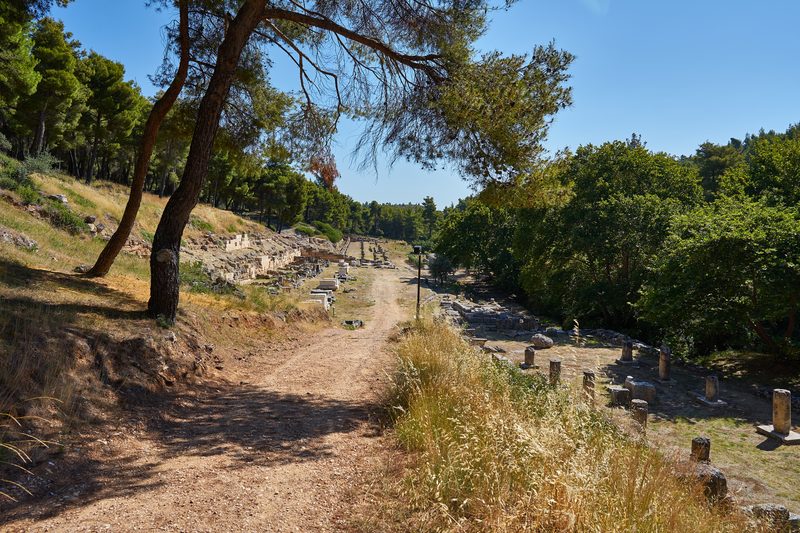
- Amphiareion of Oropos. An ancient healing sanctuary just 6 km from Oropos port. Peaceful, uncrowded, and free to visit. Combines naturally with the ferry route.
- Southern Evia (overnight). If Eretria hooks you, consider returning for a weekend and pushing south to Karystos, the Dragon Houses, and the Dimosaris Gorge. The ferry from Rafina to Marmari serves southern Evia directly.
- Northern Evia (overnight). The thermal springs at Edipsos are roughly 3 hours from Athens. Famous since antiquity (Aristotle and Plutarch both wrote about them), but too far for a comfortable day trip.
Is It Worth the Trip?
Evia won't compete with Santorini for spectacle or Delphi for archaeological grandeur. That's not the point. It's the closest large island to Athens, it has genuine historical substance in Eretria and Chalkida, and the Euripus tidal phenomenon is one of those things you need to see in person to appreciate. The ferry from Oropos is cheap, quick, and gives you the satisfaction of arriving on an island, even if the locals would remind you it's connected to the mainland by a bridge.
If you've already ticked off the big-name day trips and want something that most visitors overlook, Evia rewards the effort. It's not glamorous, but it's real.
Evia is 76 km from Athens via the Chalkida bridge (1 hour) or 50 km to Oropos port plus a 25-minute ferry crossing. The Eretria Archaeological Museum is open 08:30-15:30, closed Tuesdays.
Planning more adventures from the capital? Browse our complete guide to the best day trips from Athens.
Heading to Santorini? See our guide to the best day trips from Santorini.
Last updated: 28 July 2026