Ancient Nemea is one of the most underrated archaeological sites in Greece: home to a partially reconstructed Temple of Zeus, a beautifully preserved ancient stadium with the oldest stone starting blocks in the world, and a tunnel where athletes scratched nervous graffiti into the walls 2,400 years ago. It's 120 km from Athens, about 90 minutes by car, and you'll likely have the place almost to yourself.
In this guide
Nemea was never a city. Like Olympia, it was a sanctuary, a sacred site where the ancient Greeks gathered every two years to honour Zeus with athletic competitions, sacrifices, and feasting. The Nemean Games were one of the four great Panhellenic festivals, alongside the Olympics at Olympia, the Pythian Games at Delphi, and the Isthmian Games near Corinth. Winners received a wreath of wild celery. Their names were carved into stone.
The site fell into ruin after the games moved permanently to Argos in the 3rd century BC. Earthquakes toppled the temple columns; locals carted off the stones. For centuries, Nemea was farmland. It took an American archaeologist, Stephen G. Miller of UC Berkeley, to bring the sanctuary back through decades of excavation starting in 1974. His work revealed a complete athletic complex, and his vision led to the modern revival of the Nemean Games.
Today the site is compact and deeply atmospheric. You can see everything in two to three hours, and unlike Delphi or Olympia, there are no coach-loads of tourists competing for the good angles.
What Is There to See?
The Temple of Zeus
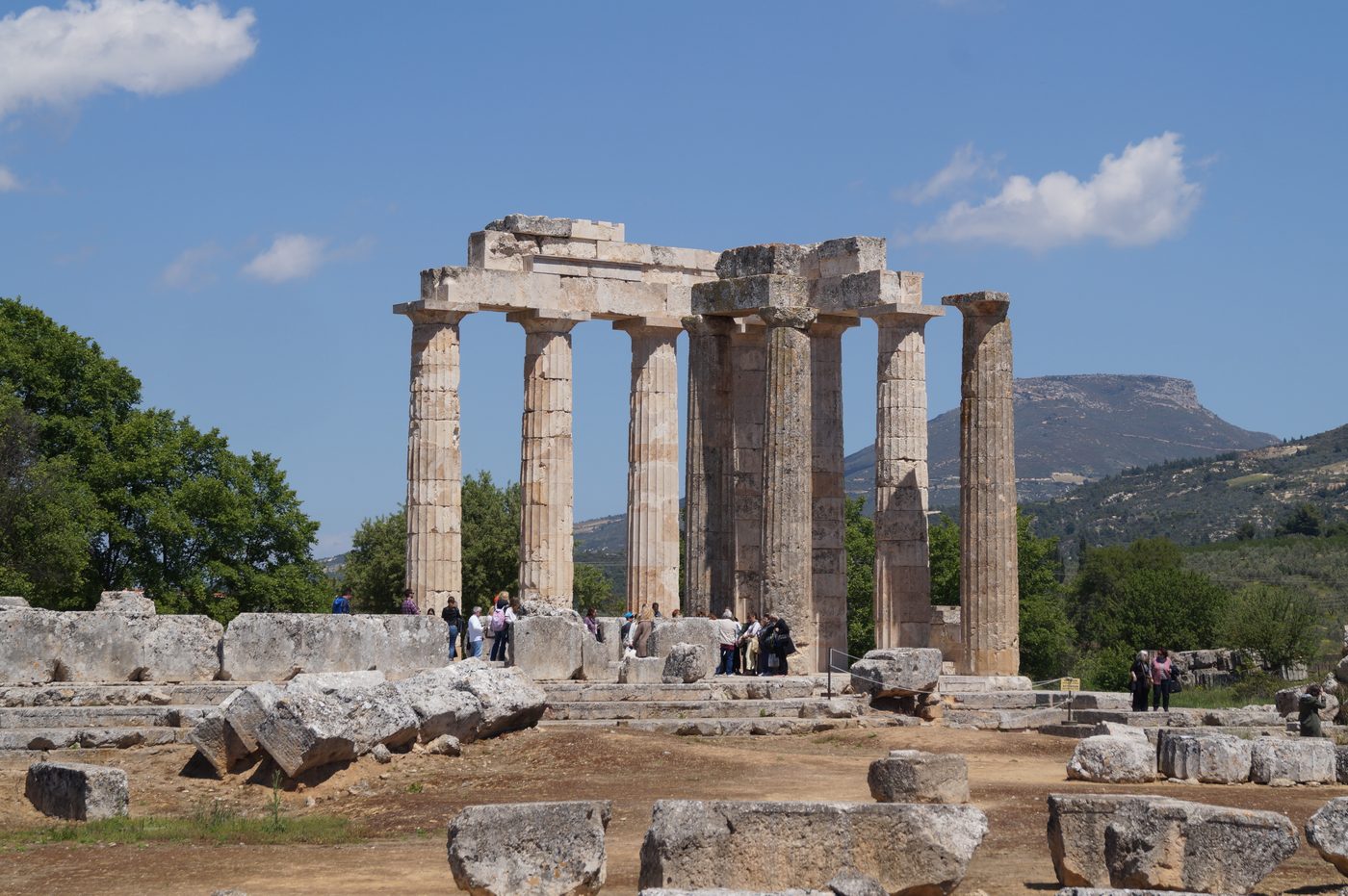
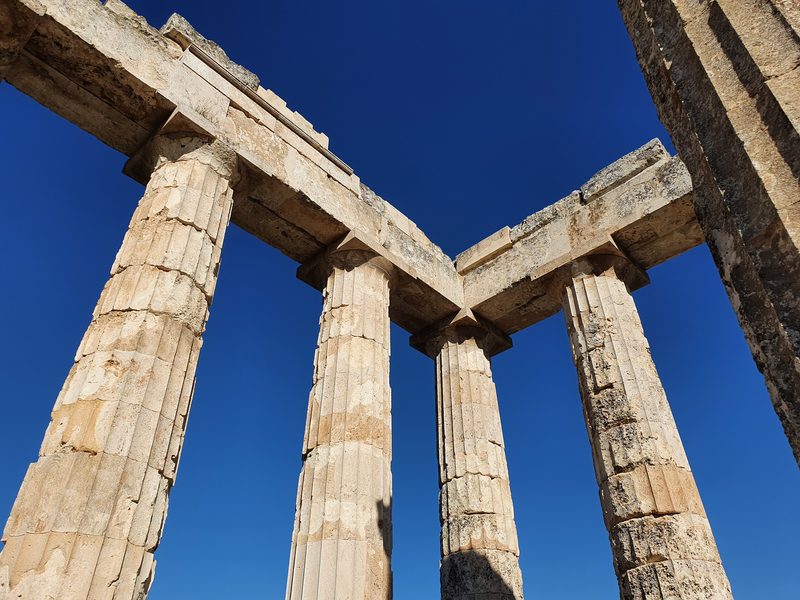
The Temple of Zeus at Nemea, built around 330 BC, was one of the last great Doric temples of the Classical era. It originally had 32 limestone columns, each 13 metres tall, arranged six across and twelve along the sides. Three of those columns never fell: they've stood continuously for over 2,300 years.
Between 2002 and 2012, an international team re-erected six more columns using original stone drums catalogued from the site. Nine columns now stand, enough to give you a genuine sense of the building's scale. It's archaeological reconstruction done well: careful, scholarly, using actual ancient materials.
Around the temple lie the remains of the wider sanctuary: a long altar, treasuries where city-states stored offerings, a hostelry for visitors, and a well-preserved bathhouse with stone washbasins still intact. Athletes oiled themselves here before competition.
The Ancient Stadium
The stadium is a 400-metre walk southeast of the temple, and it's the highlight of the visit. Built in the 4th century BC, it could hold an estimated 40,000 spectators on its earthen banks.
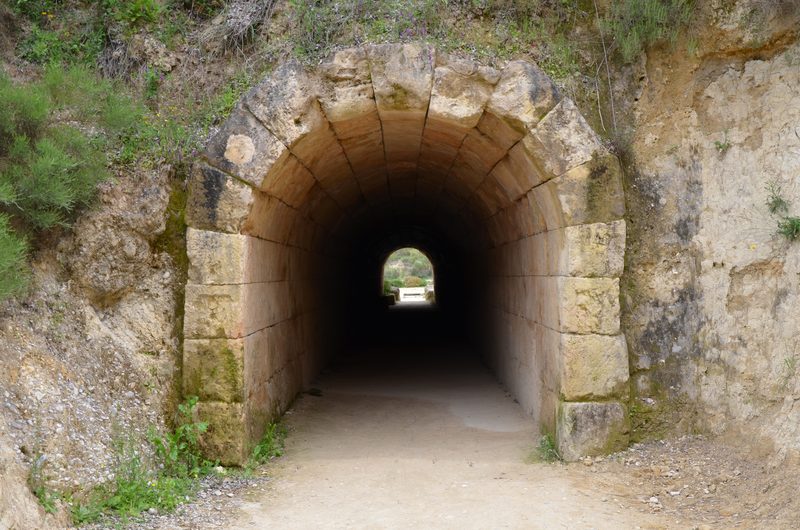
The entrance tunnel. This is what makes Nemea special. A 36-metre vaulted stone tunnel, the krypte eisodos (hidden entrance), runs from the changing room into the stadium. Athletes waited here for the herald to announce their names. While they waited, some scratched their names into the limestone walls. You can still read these, including one that says NIKO ("I conquer"). It's one of the earliest known vaulted tunnels in Greece, contemporary with structures in Macedonia from Alexander the Great's era.
The starting blocks. The original stone starting line (balbis) is preserved in place. Grooves cut into the stone gave athletes' toes something to grip, and a mechanical starting gate (the hysplex) ensured fair starts. These are among the oldest surviving starting blocks from any ancient stadium.
The track. The racing surface stretches 178 metres (one stadion, the measurement that gave the building its name). A stone water channel runs along both sides with drinking basins at intervals.
You can walk the track, touch the starting blocks, and read the graffiti. The stadium hasn't been roped off or turned into a concert venue. That kind of direct contact with antiquity is increasingly rare.
Standing in that tunnel, reading the scratched names of athletes who competed here 2,400 years ago, is the most powerful moment I've had at any Greek archaeological site. It deserves to be far more famous than it is.
The Archaeological Museum
Start here before exploring the ruins. The museum is small but well-organised, and the context makes the site much more meaningful.
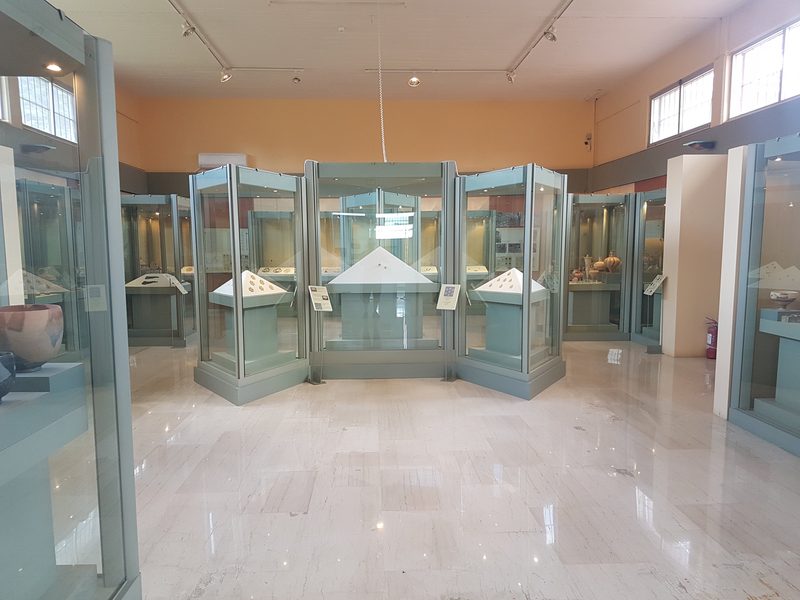
Two scale models show the sanctuary at its peak around 300 BC and again in decline around AD 500. Display cases hold athletic equipment, coins, pottery with athletes' names, and architectural fragments from the temple.
The prize exhibit is the Gold of Aidonia, a collection of Mycenaean gold jewellery (rings, seals, beads) dating to the 15th century BC, found nearby. These pieces were looted, sold internationally, and eventually recovered and returned to Greece.
Allow 30 to 45 minutes for the museum.
How Do You Get There From Athens?
By Car (1.5 hours)
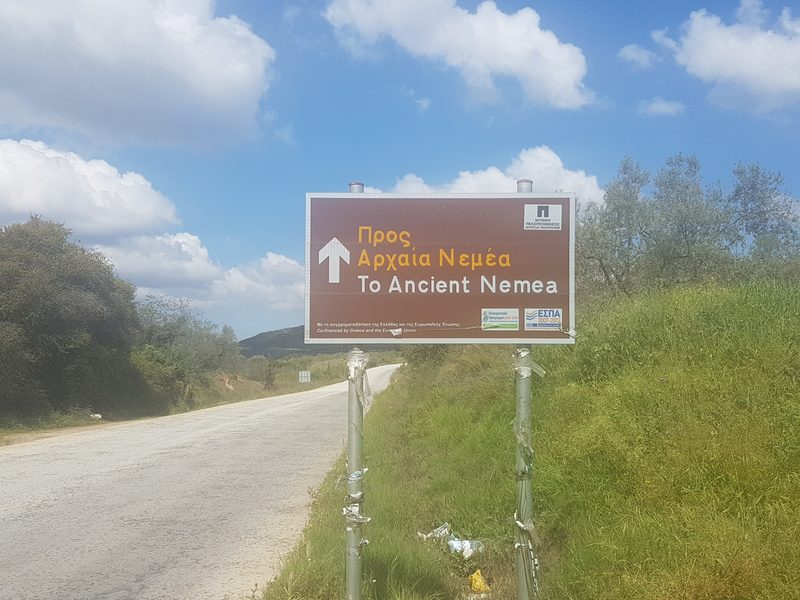
The most practical option. Take the A7 (Athens-Tripoli) motorway from Athens, passing Corinth. About 12 km past the Corinth Canal, exit for Nemea. The site is roughly 5 km from the motorway exit. The road is straightforward and well signposted. Free parking at the site.
By Bus
KTEL buses run from the Kifissou bus terminal (100 Kifissou Avenue) in Athens to Nemea, but service is limited: roughly two departures per day. The journey takes 1.5 to 3 hours depending on the service. Check current schedules with KTEL Korinthia, as timetables change seasonally. The bus drops you in modern Nemea village, about a 20-minute walk from the site.
Public transport to Nemea is not convenient for a day trip. If you don't have a car, a rental or organised tour is a better option.
By Guided Tour
Some Peloponnese day tours from Athens include Nemea alongside Mycenae and Nafplio. These typically run 80-130 EUR per person. Nemea-specific tours are rare: it's usually bundled into a broader Argolid itinerary.
How Much Does It Cost and When Is It Open?
| Price | |
|---|---|
| Full ticket | 10 EUR |
| Reduced ticket | 5 EUR |
| EU citizens under 25 | Free |
| Non-EU citizens under 18 | Free |
A single ticket covers the archaeological site (temple), the stadium, and the museum.
| Season | Hours | Notes |
|---|---|---|
| April | 08:00-19:00 | Daily |
| May-August | 08:00-20:00 | Daily |
| September-October | 08:00-18:00 to 19:30 | Gradually earlier closing |
| November-March | 08:00-15:30 | Closed on Tuesdays |
Last admission is 20 minutes before closing. Free entry on certain national holidays and the first and third Sunday of each month from November to March.
The Revived Nemean Games
Every four years, the Society for the Revival of the Nemean Games organises a modern recreation of the ancient footraces in the original stadium. Participants from dozens of countries wear white tunics and run barefoot on the same track. No medals, no records kept: just the experience of running where people ran 2,300 years ago.
The 8th Modern Nemead took place in June 2024 with over 1,600 participants. The next edition has not been officially announced, but the games have followed a four-year cycle since 2008. Check nemeangames.org for updates.
What Should You Know Before Going?
- Wear proper shoes. The ground is uneven between the temple and stadium.
- Bring water and sun protection. Minimal shade at both the temple and the stadium.
- Start at the museum. The scale models make the ruins far more legible.
- Don't skip the stadium. The tunnel and starting blocks are the best parts of the visit.
- Allow 2-3 hours total. Museum, temple complex, walk to the stadium, explore, walk back.
- The site is quiet. Nemea gets a fraction of the visitors that Delphi or Epidaurus receive. You may have the stadium to yourself.
- Food options are limited. No cafe at the site. Plan to eat in Nafplio or at one of the Nemea wineries.
If you're combining Nemea with the wineries, do the ruins first and the tasting second. You'll appreciate the wine more after walking in the heat, and you won't want to drive to an archaeological site after sampling Agiorgitiko reds.
What Else Can You Visit Nearby?
- Mycenae (30 km south, 25 minutes): the Bronze Age citadel of Agamemnon. The obvious combination, and you can comfortably do both in a day from Athens.
- Nafplio (45 km south, 40 minutes): Greece's first capital, a handsome seaside town. Ideal for a late lunch after Nemea and Mycenae.
- Nemea wine region (immediate surroundings): vineyards start right outside the archaeological site. Several wineries offer tastings, and the Agiorgitiko reds are excellent.
- Ancient Corinth (35 km north, 30 minutes): Roman-era ruins and the Acrocorinth fortress. On the route between Athens and Nemea.
- Corinth Canal. A brief photo stop on the motorway, about 45 minutes before you reach Nemea.
The classic combination is Nemea in the morning, Mycenae after, lunch in Nafplio. A full day covering 3,000 years of history.
Is It Worth the Trip?
Nemea won't compete with Delphi for drama or Epidaurus for that single jaw-dropping monument. What it offers is something different: an intimate, unhurried encounter with a genuinely important site. The stadium tunnel, with its ancient graffiti still visible on the walls, creates a connection to individual athletes that no amount of temple columns can match. Someone stood in that tunnel, nervous before a race, and scratched their name into the stone. That was a real person, and you're standing exactly where they stood.
At 10 EUR for the combined ticket, with free parking and hardly any crowds, Nemea is outstanding value. It pairs naturally with Mycenae and Nafplio for a packed Peloponnese day, or with the local wineries for something more relaxed. Either way, it deserves to be far better known than it is.
Ancient Nemea is 120 km from Athens. The drive takes about 1.5 hours via the A7 motorway. The site is open daily from 08:00 (closed Tuesdays in winter).
Planning more adventures from the capital? Browse our complete guide to the best day trips from Athens.
Last updated: 27 August 2026