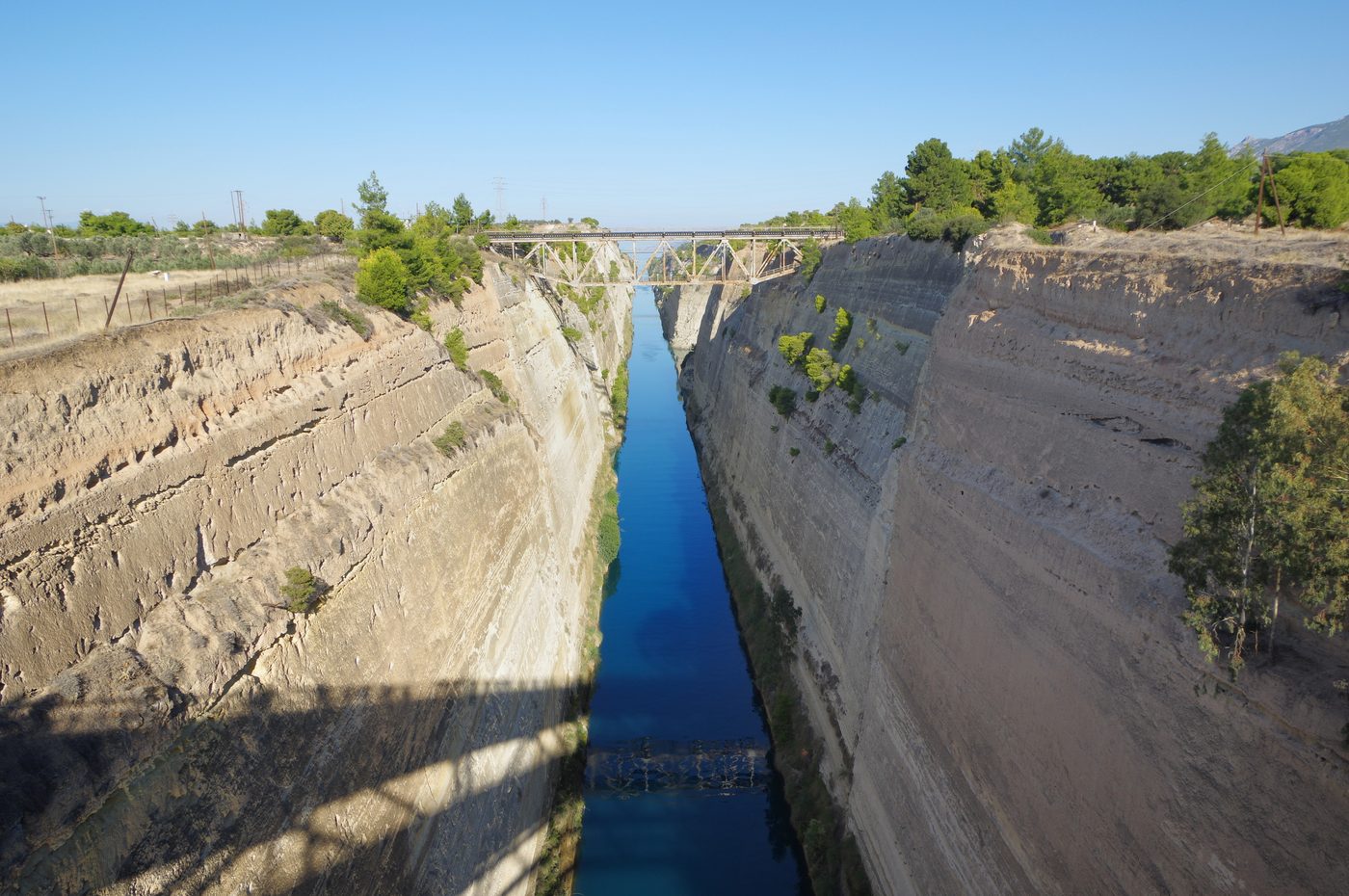
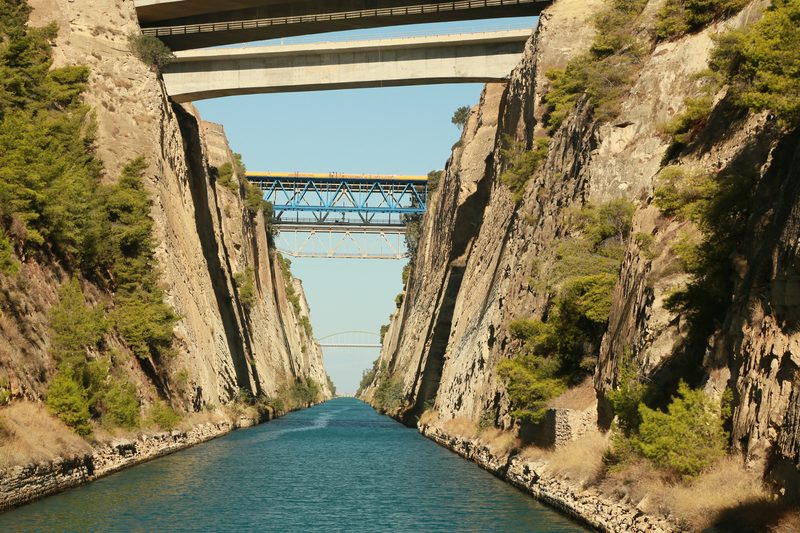
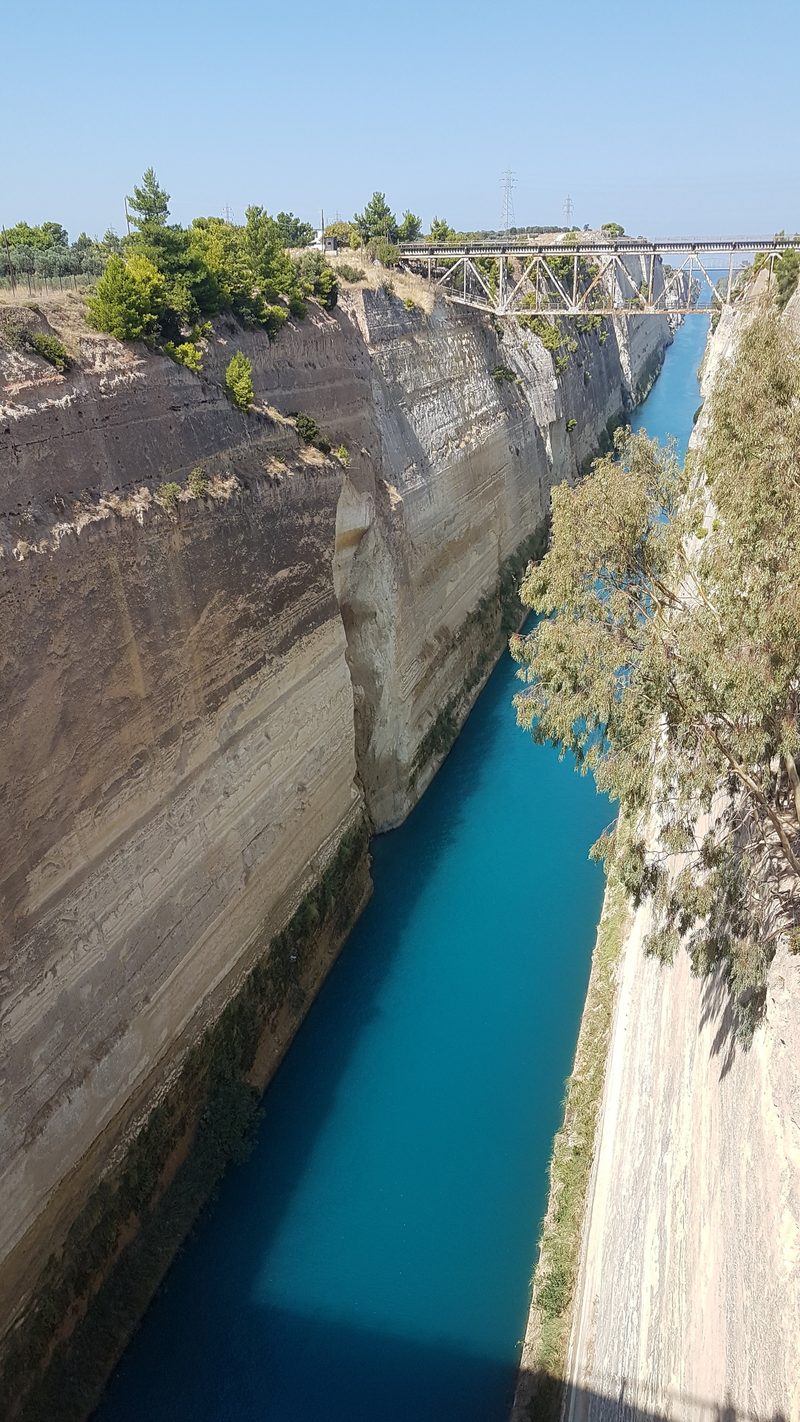
The Corinth Canal is one of those places that's more impressive in person than in photos: a 6.4 km slot carved through solid rock, with sheer 80-metre limestone walls dropping straight to the water below. It's about 80 km from central Athens, right on the road to the Peloponnese, and takes just over an hour to reach by car.
In this guide
For over 2,500 years, people tried to cut through the Isthmus of Corinth. The tyrant Periander considered it in the 7th century BC but gave up, building the Diolkos instead, a paved trackway where ships were dragged overland on greased wooden carriages. Emperor Nero had a crack at it in 67 AD, personally breaking ground with a golden pickaxe before sending 6,000 prisoners of war to dig. He died the following year and the project died with him. A carved relief of Hercules left by Nero's workforce is still visible in the rock face today.
The canal that finally opened in 1893 took twelve years to build and followed essentially the same route Nero had planned. It connects the Saronic Gulf in the Aegean Sea with the Gulf of Corinth in the Ionian Sea, saving ships a 700 km voyage around the Peloponnese. At just 25 metres wide at sea level, it's far too narrow for modern container ships, but around 11,000 smaller vessels still transit each year, tugboats hauling them through one convoy at a time.
The canal has had a rough few years. Landslides in 2021 forced a closure, and restoration work on the slopes has continued in phases since then. It reopened from March to October 2025 before closing again for the final phase of repairs. The expected reopening is late March 2026, but check current status before planning a boat cruise. The viewing bridges and surrounding area remain accessible regardless of whether ships are transiting.
What Can You See and Do?
The Old Road Bridge
This is where most people stop, and for good reason. The pedestrian walkway across the old road bridge puts you directly above the canal with unobstructed views straight down to the water 80 metres below. The scale is difficult to grasp until you're standing there: the walls are almost perfectly vertical, cut through layers of limestone and marl. If a ship happens to be passing, the effect is extraordinary.
To get here, take the signposted Corinth tourist exit off the motorway. On the Peloponnese side of the bridge there's plenty of parking, along with souvenir shops, cafes, and souvlaki joints. It's touristy, but it's the best vantage point.
The Submersible Bridges
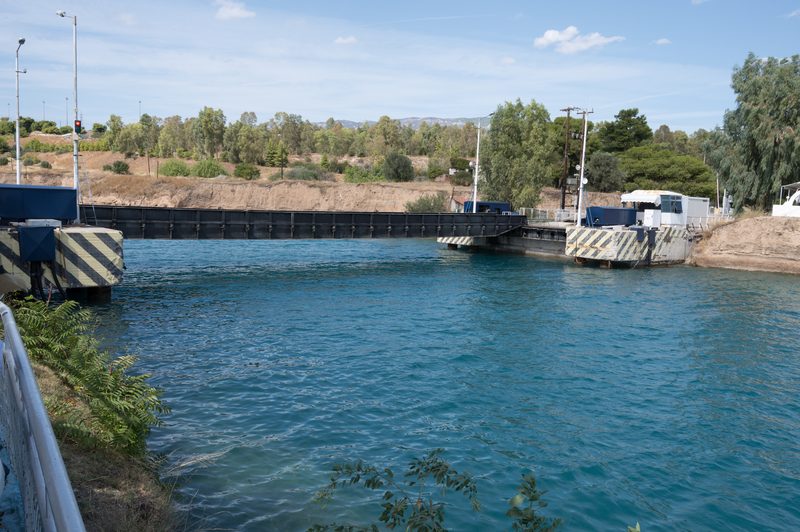
At each end of the canal, Isthmia to the east and Poseidonia to the west, sit a pair of submersible bridges. Unlike drawbridges that lift up, these sink. When a vessel needs to pass, the centre span lowers to 8 metres below the waterline, removing any height restriction on ship traffic. The whole operation takes about four minutes and is genuinely fascinating to watch.
The Isthmia submersible bridge is the easier one to reach. Follow the old national highway east from the main bridge and you'll find it. There are a couple of tavernas on either side where you can sit with a coffee and wait for a ship to come through. This is a far quieter and more interesting stop than the main tourist bridge, and locals know it.
The submersible bridge at Isthmia is the stop most people miss, and it's the one I always recommend. Watching the bridge deck sink below the water as a ship comes through is far more interesting than staring down from the main tourist bridge.
Bungee Jumping
Zulu Bungy has operated from the canal bridge since 2002, and a jump here is one of the more dramatic bungee experiences in Europe. You leap from 78 metres above the water, dropping between the sheer rock walls of the canal. It's not for everyone, but if you're the type, this is a memorable one.
| Package | Price |
|---|---|
| Zulu Standard (jump + GoPro recording) | 100 EUR |
| Zulu Premium (jump + GoPro + drone recording) | 130 EUR |
| Back2Back (2 jumps, same day, with recording) | 150 EUR |
Open Tuesday to Sunday, 10:00--18:00. Closed Mondays. Book through zulubungy.com or just turn up: walk-ins are accepted when it's not too busy. The jump itself takes minutes, but allow an hour for the whole process including safety briefing and harness fitting.
Canal Boat Cruise
When the canal is open to navigation, you can take a boat through it. Sailing between those towering walls with barely any clearance on either side is a different experience entirely from looking down from the bridge.
Corinth Canal Cruises operates the vessel Anna 2 from Isthmia, with crossings costing around 20 EUR per person. The transit takes roughly 30 minutes, with drinks and snacks available on board at cafe prices. Departures depend on the season and demand. Check corinthcanalcruises.gr for current schedules.
Note: Boat cruises only run when the canal is open to maritime traffic. Given the ongoing restoration works, confirm availability before making this the centrepiece of your trip.
The Diolkos Remains
Near the western end of the canal, you can see remnants of the ancient Diolkos, the 6th-century BC trackway that served as the canal's predecessor for over 600 years. Deep grooves worn into the stone slabs by wheeled trolleys carrying ships are still visible. It's not signposted brilliantly, but it's a remarkable piece of ancient engineering hiding in plain sight.
How Do You Get There From Athens?
By Car (recommended)
The fastest route from central Athens takes about 1 hour via the A8/E94 motorway towards Corinth. The road is a modern dual carriageway the entire way. You'll pass through 2-3 toll stations; budget about 5-7 EUR in total for tolls each way.
For the main viewing bridge, take the exit signed for Corinth/Loutraki. For the submersible bridges at Isthmia, take the earlier Isthmia exit.
Free parking is available on both sides of the old road bridge.
By Bus (budget option)
KTEL Korinthias buses run from Athens' Kifissou (Terminal A) bus station to both Corinth and Loutraki, passing the canal area en route.
| Route | Frequency | Journey Time | Price (one way) |
|---|---|---|---|
| Athens -- Corinth (Isthmos) | Roughly hourly | 1 hr 10 min | 7-10 EUR |
| Athens -- Loutraki | Every 4 hours | 1 hr 15 min | 9 EUR |
Ask to be dropped at the Isthmos stop for the canal. From there it's a short walk to the bridge. The return is less convenient: you'll need to flag down a bus on the main road or walk to the nearest proper stop. Having a bus timetable on your phone is wise.
By Guided Tour
Several operators run half-day tours from Athens that combine the Corinth Canal with Ancient Corinth and sometimes Mycenae. Expect to pay 40-80 EUR per person for a group tour including transport and a guide. The canal stop on these tours is typically brief (20 to 30 minutes for photos), so if you want to do the bungee or a boat cruise, drive yourself.
What Should You Know Before Going?
- Time needed: A quick photo stop takes 20-30 minutes. If you want to see the submersible bridges, do the bungee, or take a boat cruise, allow 2-3 hours for the canal area alone.
- Best time of day: Morning light is better for photography from the main bridge, with the sun illuminating the eastern wall. Midday sun hits the water directly and makes the canal floor visible.
- Footwear: The bridge and viewing areas are paved. No special shoes needed. The Diolkos site is rougher ground.
- Food: The cafes by the bridge are overpriced and unremarkable. Eat in Loutraki or Ancient Corinth instead.
Don't make the canal your only stop: it's impressive for 15 minutes, then you've seen it. Combine it with Ancient Corinth or Loutraki and you'll have a proper day trip instead of a slightly anticlimactic drive.
- Wind: The bridge is exposed and can be windy. Hold onto hats and phones.
- Vertigo warning: Looking straight down from the bridge is genuinely vertiginous. The railing is solid, but if heights bother you, be prepared.
How Should You Plan Your Day?
Morning: Leave Athens by 09:00. Drive to the main bridge for canal views (30 minutes). Then head to the Isthmia submersible bridge to see if any ships are transiting.
Late morning: Drive to Ancient Corinth (20 minutes from the canal). Explore the archaeological site and museum. The Temple of Apollo and the Roman agora are the highlights. Allow 1.5-2 hours.
Afternoon: If you're feeling energetic, drive up to Acrocorinth, the massive fortress perched 575 metres above the plain. The views from the top stretch across the entire Corinthian Gulf. Entry is free. Then head to Loutraki for a late lunch by the sea, or try the thermal spa if you fancy it.
Return: Back in Athens by 17:00-18:00.
What Else Can You Visit Nearby?
The Corinth Canal sits at the gateway to the Peloponnese, which makes it a natural first or last stop on longer trips. It pairs well with:
- Ancient Corinth. 20 minutes from the canal. One of the most important cities in ancient Greece. The archaeological site includes the 6th-century BC Temple of Apollo, a Roman forum, and a solid museum. Entrance is 15 EUR. Open daily.
- Acrocorinth. 3 km above Ancient Corinth. A huge medieval fortress with layers of Byzantine, Frankish, Venetian, and Ottoman building. Free entry. The drive up is steep and the walk around the walls takes an hour, but the panorama is superb.
- Loutraki. A seaside spa town on the western side of the canal. Known for its thermal springs and long waterfront promenade. The municipal thermal spa has indoor and outdoor pools. Good for a relaxing afternoon after clambering around ruins.
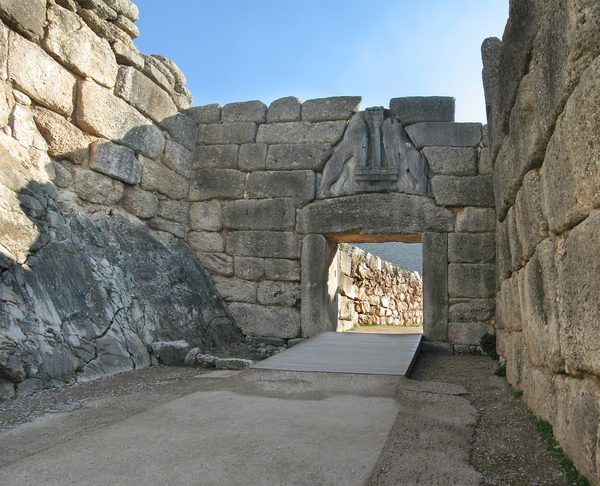
- Mycenae. About 50 minutes south of the canal. If you're combining the two, it makes for a full but rewarding day. The Lion Gate and Treasury of Atreus alone justify the trip.
Is It Worth the Trip?
The Corinth Canal is not a full-day destination on its own. If all you do is drive out, look over the bridge, and drive back, you'll wonder what the fuss was about: it's impressive for ten minutes, then you've seen it. The real value is in combining it with the surrounding area: Ancient Corinth, Acrocorinth, and Loutraki all add substance to what would otherwise be a very short stop.
That said, there's something about standing above that narrow cut in the rock that photos simply don't convey. The depth, the geometry, the absurdity of the engineering: it hits differently in person. If you're driving to the Peloponnese anyway, stopping at the canal costs you nothing but 30 minutes. And if you're the sort of person who'd bungee jump into a 19th-century shipping canal, well, you already know this trip is for you.
The Corinth Canal is approximately 80 km from central Athens. The drive takes about 1 hour via the A8/E94 motorway. The viewing bridges are accessible year-round.
Planning more adventures from the capital? Browse our complete guide to the best day trips from Athens.
Last updated: 28 July 2026