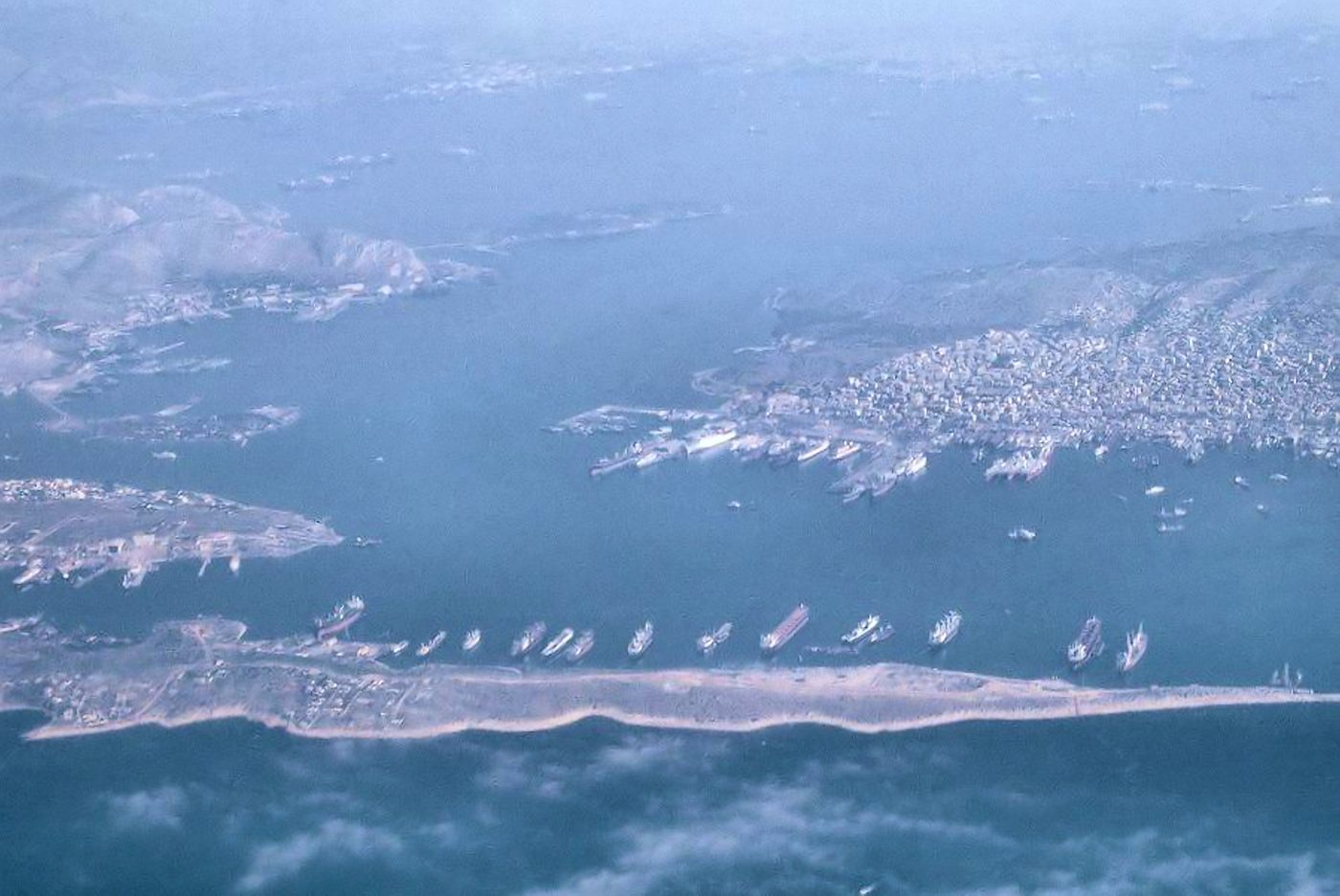
The closest island to Athens and one of the most historically significant places in the Western world, yet almost no tourists go there. Salamis is a 15-minute ferry ride from Perama, costs 1.20 EUR to reach, and sits on the strait where the outnumbered Greek fleet destroyed the Persian navy in 480 BC. It's not pretty in the postcard sense. But it's real.
In this guide
Salamis (Salamina in Greek) is a big island: 93 sq km with a permanent population of around 37,000. It sits so close to the mainland that locals treat it as a suburb of Athens, commuting daily by ferry. The eastern shore, facing the industrial port of Perama, is built-up and unremarkable. But push south and west through the pine forests and you'll find quiet beaches, an important monastery, the cave where Euripides supposedly wrote his tragedies, and the waters where Western civilisation was arguably saved.
This is not Santorini. There are no boutique hotels, no Instagram spots, no tourist menus in four languages. Salamis is a working Greek island where people live, fish, and go about their business. The tavernas serve locals, the prices are rock-bottom, and if you want to see how ordinary Greeks spend a summer weekend, this is the place.
What Is There to See?
The Battle of Salamis Strait
In September 480 BC, the Greek fleet of around 370 triremes faced a Persian armada of perhaps 800 ships in the narrow strait between Salamis and the mainland. The Athenian general Themistocles lured the Persians into the confined waters where their superior numbers became a liability: ships collided, couldn't manoeuvre, and were rammed by heavier Greek vessels. The Persians lost over 200 ships. Xerxes, watching from a throne on the shore, retreated to Asia. Had the Persians won, there would have been no golden age of Athens, no Parthenon, no democracy as we know it. Historians rank it among the most consequential battles in human history.
You can't "visit" the battle site in any traditional sense. It's open water between Perama and Paloukia, the stretch you cross on the ferry. But knowing what happened there changes the 15-minute crossing entirely. The narrows are strikingly tight. You can see exactly why a smaller, more disciplined fleet would have the advantage.
For up-to-date ferry times and online booking, try Ferryscanner.
Read up on the battle before you take the ferry. The 15-minute crossing suddenly becomes genuinely moving when you know what happened in that narrow stretch of water.
The Archaeological Museum
The Archaeological Museum of Salamis. Housed in a renovated Kapodistrian-era school building in Salamina town, this small museum punches above its weight. Three well-organised galleries cover the island's history from prehistoric times through the classical period. The standout is the room dedicated to the Battle of Salamis, with battle diagrams, hero accounts, and strategic analysis that brings the 480 BC engagement to life. Artefacts include pottery and sculpture from across the island.
| Entrance fee | 5 EUR (full), 3 EUR (reduced) |
| Opening hours | Wed-Mon 08:30-15:30 year-round |
| Closed | Tuesdays |
The Cave of Euripides
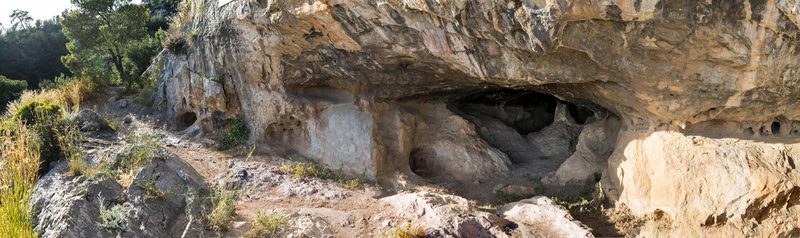
The Cave of Euripides. A narrow, ten-chambered cave at 115 metres elevation near the village of Peristeria on the south coast. Ancient writers Philochorus and Satyrus described Euripides retreating here to write his tragedies in solitude, and the Roman author Aulus Gellius claimed to have visited the "grim and gloomy cavern" himself. Archaeological excavations in the 1990s found a 5th-century BC drinking cup inscribed with part of Euripides' name, lending real weight to the literary tradition.
The cave has yielded finds from the Late Neolithic (5,300 BC) onwards, including a treasure of 39 silver coins from the Roman period, hidden during the Gothic invasion of 267 AD. Reaching the cave requires a marked footpath between Peristeria and Kolones. It's a proper walk, not a stroll. Wear decent shoes. Findings from the excavations are displayed in the Archaeological Museum.
Faneromeni Monastery
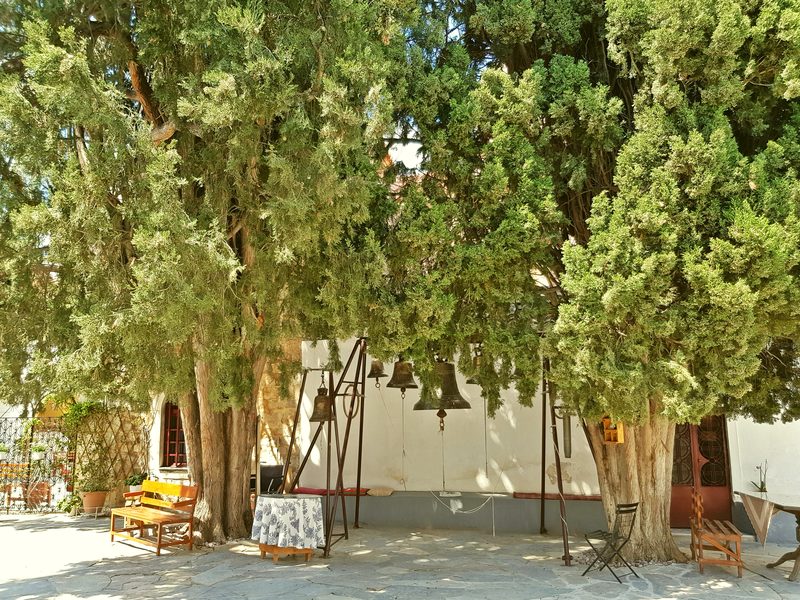
Faneromeni Monastery (Panagia Faneromeni). Founded in 1670 on the north side of the island, this fortified monastery sits in a pine-covered area and has genuine historical substance. The monastery sheltered women, children, and the elderly during the Greek War of Independence in 1821, and operated a hospital within its walls from 1822 to 1826. The Turks never managed to take it.
The central church (catholicon) is an 18th-century three-aisled basilica with 1735 frescoes by George Markos. A small museum holds religious relics, documents, and weapons from the 1821 revolution. The monastery is still active: 18 nuns live here. Free entry. Dress modestly (covered shoulders and knees).
Beaches
Salamis beaches are not the island's main draw, and the eastern coast near the port is best avoided for swimming. Head south and west for cleaner water.
Kanakia. The best beach on the island. On the western coast, reached through a thick pine forest. Pebble beach with natural shade from tamarisk trees, crystal-clear water, and views across to Aegina. Undeveloped and rarely crowded. The drive through the forest is half the experience.
Selinia. A crescent-shaped bay on the southeast coast with a sandy beach and an old-money resort feel from the 1960s. Holiday villas, a relaxed promenade, and a few tavernas. More civilised than Kanakia but less wild.
Kolones. A secluded sandy beach on the western side, near the Cave of Euripides. Clear water, surrounded by trees, and usually quiet. No facilities.
How Do You Get There From Athens?
By Bus and Ferry (the standard route)
The route is Athens to Perama by bus, then the car ferry to Paloukia on Salamis.
Step 1: Bus to Perama. Take bus 843 from Piraeus (ISAP/Metro station). Buses run every 15 minutes and take about 30 minutes. Cost: standard Athens transit fare (1.20 EUR). You can also take bus 841 or 842.
Step 2: Ferry from Perama to Paloukia. Ferries run 24/7, departing every 15-30 minutes. The crossing takes 15 minutes. No advance booking needed. Buy your ticket at the port office.
| Passenger ticket | 1.20 EUR one way |
| Car (under 4.25 m) | 6.15 EUR |
| Motorcycle (under 250cc) | 1.10 EUR (driver 0.60 EUR) |
Total one-way cost from Piraeus to Salamis by public transport: about 2.40 EUR. That makes this the cheapest island day trip from Athens by a wide margin.
By Car
Drive from Athens to Perama (about 40 minutes depending on traffic), then take the car ferry. Having a car on the island is genuinely useful. Salamis is 93 sq km with scattered attractions and a limited bus network. The local buses (KTEL) connect major villages but timetables are in Greek and services are infrequent.
Alternative Ferry Route
A second ferry runs from Nea Peramos (near Megara) to Faneromeni on the north side of the island, roughly every 30 minutes. This is useful if you're coming from the west or want to start at the monastery.
What Should You Know Before Going?
- Bring a car or rent a scooter. Salamis is too big and spread out to explore on foot. The key sights are scattered across the island.
- The east coast near the port is not representative. Don't judge the island by Paloukia or the built-up eastern strip. The south and west are where the beauty is.
- Eat where locals eat. Seafood tavernas in Selinia and Aianteio serve fresh fish at Athens prices or cheaper. Grilled octopus and fried red mullet are staples.
Salamis is not beautiful in the way the other islands are, but it's the most authentic. The tavernas serve locals, the prices are what locals pay, and nobody is performing for tourists. I find that refreshing.
- Bring cash. Card acceptance is patchy outside Salamina town.
- The archaeological museum closes on Mondays. Plan accordingly.
- The Cave of Euripides requires a real walk. It's on a hillside at 115 metres elevation with a narrow entrance. Not suitable for mobility-impaired visitors.
- Summer weekends get busy with Athenian day-trippers, particularly at Selinia and Kanakia. Weekdays are noticeably quieter.
What Else Can You Visit Nearby?
Salamis doesn't combine easily with other Saronic islands. There's no direct ferry to Aegina or Hydra. But you could pair it with a morning at the port of Piraeus (the Archaeological Museum of Piraeus is underrated) or with Perama's own attractions. The town of Megara, accessible via the alternative Nea Peramos ferry route, has its own quiet charms.
If you're doing multiple Saronic island day trips during a longer Athens stay, Salamis makes a good contrast: the history-and-authenticity day versus the beaches-and-pistachios day on Aegina.
Is It Worth the Trip?
That depends entirely on what you want.
If you're after a classic Greek island beach day with turquoise water and white-washed villages, go to Agistri or Hydra. Salamis will disappoint you. The eastern coast is industrial, the infrastructure is functional rather than charming, and nobody has prettified anything for tourists.
But if you care about history, Salamis is extraordinary. You're standing where Western civilisation pivoted. The strait is still narrow, the hills still overlook the water, and with a bit of imagination you can see why Themistocles chose this ground. The Cave of Euripides, the Faneromeni Monastery, the little museum: they're all genuine, unpolished, and crowd-free.
And there's something to be said for visiting a Greek island that hasn't been reshaped for foreign consumption. The 2.40 EUR total cost from Piraeus doesn't hurt either.
Salamis is 2 km from the mainland coast and 16 km from Athens centre. The ferry from Perama takes 15 minutes and costs 1.20 EUR.
Planning more adventures from the capital? Browse our complete guide to the best day trips from Athens.
Heading to Santorini? See our guide to the best day trips from Santorini.
Last updated: 27 August 2026